A bipartisan-adjacent bloc of 30 progressive House Democrats has issued an unprecedented call for the U.S. government to abandon its 55-year policy of deliberate ambiguity around Israel’s undeclared nuclear program, demanding that Washington hold Israel to the same nonproliferation and transparency standards applied to all other nations in the Middle East.
Led by Texas Congressman Joaquin Castro, the group — which includes high-profile progressive lawmakers Alexandria Ocasio-Cortez, Ro Khanna, Rashida Tlaib, Ilhan Omar, and Pramila Jayapal — sent a formal joint letter to Secretary of State Marco Rubio on Monday laying out their demands. In the letter, the lawmakers highlight a glaring contradiction at the heart of current U.S. policy: Washington is deeply entangled in ongoing conflict in the region alongside Israel, yet the executive branch still officially refuses to acknowledge the country’s widely documented nuclear capabilities.
The representatives argue that Congress holds a clear constitutional obligation to gain full clarity on the regional nuclear balance, given that thousands of U.S. service members are deployed across the Middle East. Without transparent information about Israel’s program, they say, Congress cannot properly assess the risk of nuclear escalation in any regional conflict, nor evaluate the Biden administration’s contingency planning for high-stakes nuclear scenarios. The letter explicitly states that lawmakers have not yet received the level of detailed information they deem necessary to fulfill this oversight duty.
Currently, Israel stands as one of just five nations worldwide that have refused to join the Treaty on the Non-Proliferation of Nuclear Weapons (NPT), the global agreement that blocks non-nuclear states from acquiring atomic weapons and mandates international inspections for all signatories. Because of Israel’s non-participation, the International Atomic Energy Agency (IAEA) has no legal authority to inspect or verify the size and status of Israel’s reported nuclear stockpile.
For decades, Israel has maintained its iconic policy of nuclear opacity: officials neither confirm nor deny the existence of a nuclear arsenal, even though the program has been an open international secret for more than half a century. Independent analysis from the Nuclear Threat Initiative estimates that Israel currently holds approximately 90 assembled nuclear warheads, with enough separated plutonium — between 750 and 1,110 kilograms — to build an additional 90 to 180 weapons, bringing the country’s total potential stockpile to between 187 and 277 nuclear devices.
The lawmakers argue that Washington cannot build a consistent, credible nonproliferation policy for the Middle East — which currently targets Iranian civilian nuclear activities and addresses emerging Saudi nuclear ambitions — while continuing to maintain official silence about Israel’s program at a time when the U.S. is a direct participant in regional conflict. “We ask that you hold Israel to the same standard of transparency that the United States expects from any other country that may be pursuing or retaining nuclear weapons capability,” the letter concludes.
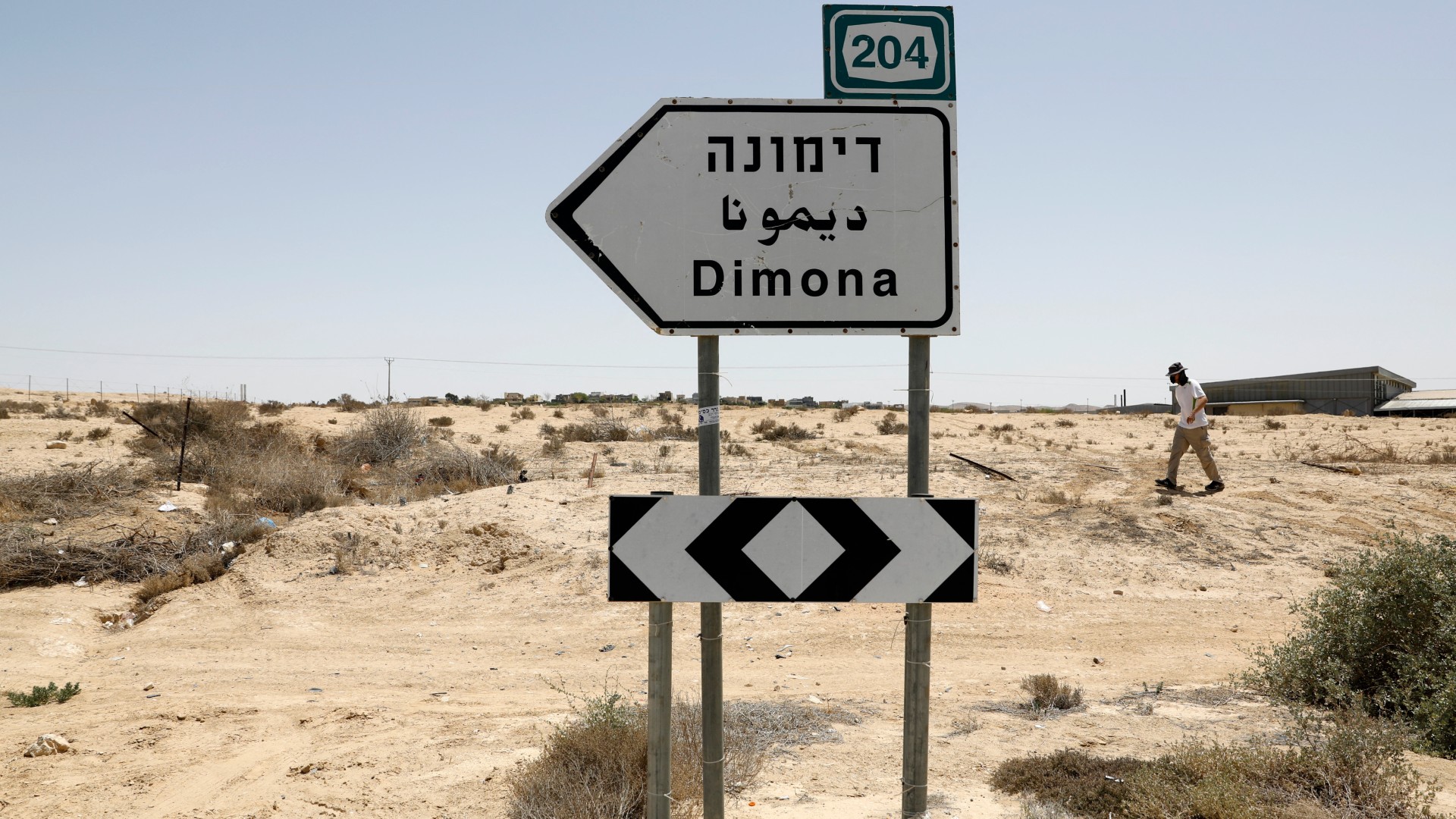
The history of the U.S.-Israeli nuclear ambiguity stretches back to the founding of Israel’s program in the 1950s. Initially developed with covert French support, without the knowledge of the U.S. government, the program was centered at the Dimona nuclear complex in Israel’s Negev Desert. According to declassified U.S. documents analyzed by prominent Israeli-American nuclear historian Avner Cohen, author of *Israel and the Bomb*, U.S. officials grew suspicious of Dimona’s purpose as early as the late 1950s and conducted eight official inspections of the site between 1961 and 1969. During each visit, Israeli officials concealed an underground plutonium separation plant — critical for producing weapons-grade material — and camouflaged other sections of the complex to hide its true military purpose.
By the end of the 1960s, the U.S. had uncovered the full scale of Israel’s nuclear project, and a secret bilateral agreement was struck that remains in place today. As documented by Cohen, the 1969 Nixon-Meir deal — named for then-U.S. President Richard Nixon and Israeli Prime Minister Golda Meir — saw Washington agree to refrain from public questioning of Israel’s program, in exchange for Israel maintaining its policy of official opacity. “About half a century ago Israel acquired nuclear weapons capability, but it has done so in a manner unlike any other nuclear weapons state did, prior or after,” Cohen explained in a 2023 interview with Middle East Eye. Over the decades that followed, successive U.S. administrations have upheld this agreement, even reportedly threatening disciplinary action against any U.S. official who publicly acknowledges Israel’s nuclear program. As recently as 2009, when then-President Barack Obama was asked directly whether any Middle Eastern nation possessed nuclear weapons, he declined to answer, stating he would not speculate on the issue.
The only major public breach of Israel’s opacity came in 1986, when Mordechai Vanunu, a former technician who worked at Dimona for nine years, leaked full details of the program and 60 on-site photographs to the U.K.’s *The Sunday Times*. Vanunu’s disclosures confirmed that Dimona produced enough plutonium to build roughly 12 new nuclear warheads per year, confirming the program’s large scale. Before the story could be published, Vanunu — who was staying in London with support from the newspaper — was lured to Rome by a female Israeli Mossad agent, drugged, and abducted back to Israel. He was convicted of espionage and treason, serving 18 years in prison, more than half of that time in solitary confinement. Since his release in 2004, Vanunu has remained subject to strict travel bans and restrictions on speaking with foreign journalists, limitations that remain in force decades later.