In a landmark unanimous ruling by Australia’s highest judicial body, an Iranian man convicted of murdering his wife has lost his final legal challenge to prevent his deportation to the Pacific island nation of Nauru, clearing the way for the Australian government’s controversial multi-million-dollar resettlement deal to move forward.
The 61-year-old perpetrator, identified in court documents only as TCXM to protect refugee confidentiality standards in Australia, had appealed a lower court’s 2023 ruling that greenlit his deportation to Nauru under a 30-year visa arrangement. All seven High Court justices rejected his appeal, closing off the last avenue of legal recourse for the convicted murderer.
TCXM first arrived in Australia from Iran in 1990 and was granted a protection visa five years later. In 1999, he was sentenced to 22 years in prison for the fatal murder of his wife. His visa was canceled in 2015 following his conviction, and he was moved from prison to immigration detention, where he remained for eight years. Iran does not allow the forced repatriation of its citizens from other countries, and Australia maintains a longstanding policy of not refouling refugees to nations where they would face persecution, leaving Australian authorities with no clear path to remove him from the country until the Nauru deal was struck.
The Nauru resettlement agreement emerged as a policy solution to a political and legal crisis created by a 2023 High Court ruling. That earlier decision found that Australia could no longer hold stateless people or non-citizens who cannot be returned to their home countries in indefinite immigration detention with no path to third-country resettlement. In response to that ruling, more than 350 non-citizens — many of them convicted criminals, including TCXM — were released from detention on temporary bridging visas, creating widespread public and political pressure on the government to find a long-term solution.
Under the 2023 bilateral deal, Australia agreed to pay Nauru a total of AU$408 million (US$296 million) to host up to an agreed number of unwanted non-citizens over a 30-year period, with an additional annual ongoing payment of AU$70 million (US$51 million) to the small island nation, which has a total population of just 12,000 people. To date, eight men have already been resettled in Nauru under the agreement, which has faced fierce domestic criticism for what opponents call its exorbitant and unjustified cost to Australian taxpayers.
In his appeal to the High Court, TCXM put forward two core arguments against his deportation. First, he claimed that Nauru’s limited public health infrastructure could not provide adequate care for his severe chronic asthma. Second, he argued that the bilateral resettlement agreement between Canberra and Nauru was unlawful, and that his deportation amounted to punitive action by the executive branch of government, which violates the Australian Constitution — the document reserves the power of punishment exclusively to the judicial system, not the government. Both arguments were rejected by the court’s full bench.
Immigration Minister Tony Burke, who had defended the deportation order through the legal process, praised the High Court’s outcome as a critical victory for Australia’s sovereign control of its immigration system. “I welcome the decision of the court. A canceled visa must have consequences in our migration system,” Burke said in a post-ruling statement.
TCXM was permitted to remain in Australian territory during his legal challenge, and no official timeline has been announced for when his deportation will be carried out. He was one of the first three non-citizens selected for resettlement in Nauru under the new program, and his legal challenge was widely viewed as a key test case for the validity of the government’s entire deal with the Pacific nation.
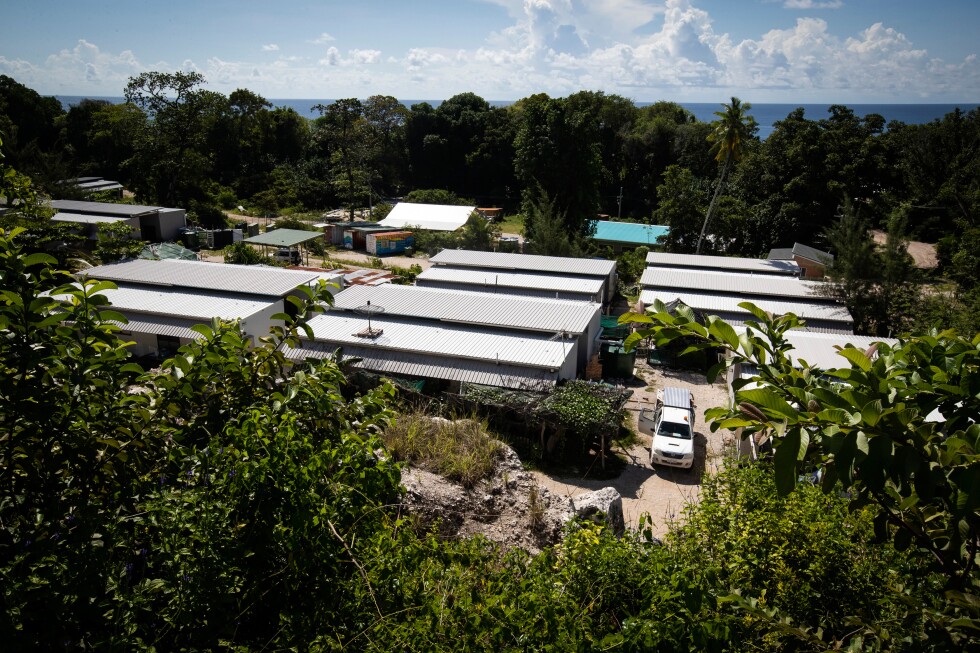
This is not the first time Australia has partnered with Nauru to manage irregular migration and unwanted non-citizens. For more than a decade, Canberra funded offshore detention camps on Nauru and in Papua New Guinea for asylum seekers who attempted to reach Australia by boat, a policy that largely ended the large-scale people smuggling trade that once flourished in Southeast Asia, as thousands of asylum seekers attempted the dangerous crossing on rickety, overloaded fishing vessels.