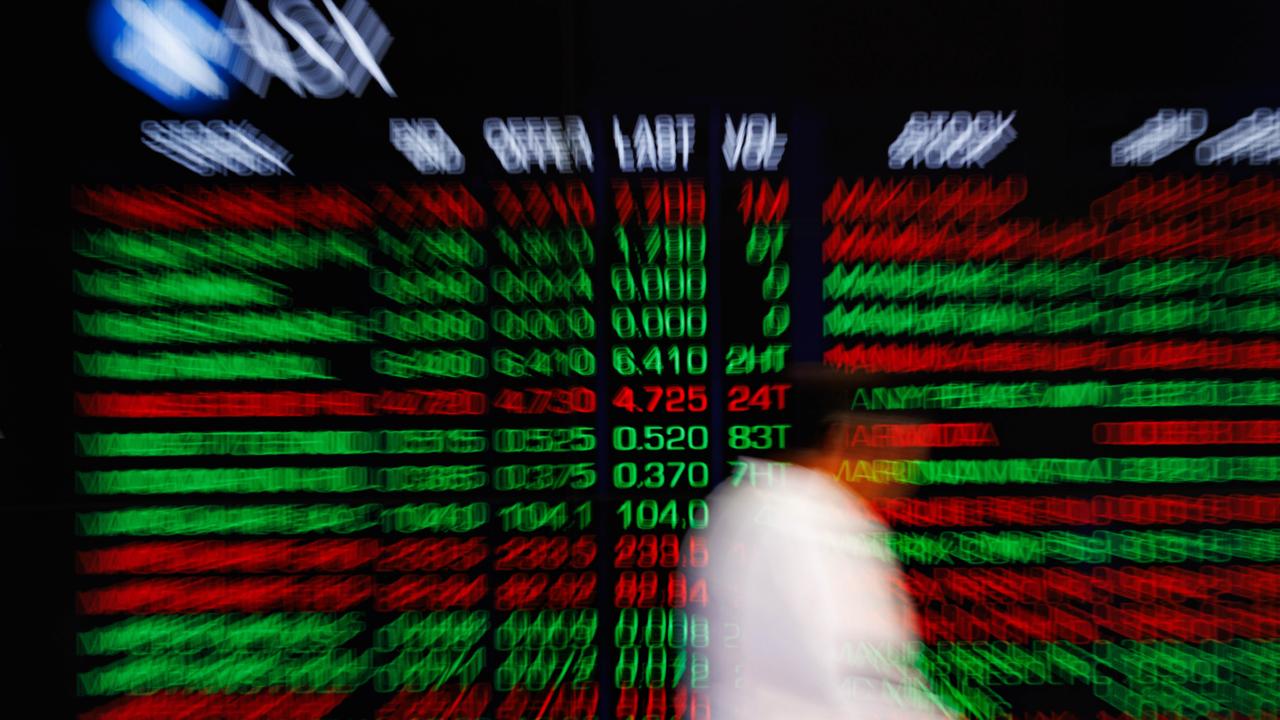
The Australian equities market has booked its most robust single-day gain since mid-April, fueled by market optimism triggered by new comments from former U.S. President Donald Trump that eased geopolitical tensions in the Middle East. Both the benchmark ASX 200 and the broader All Ordinaries notched double-digit percentage gains, alongside a four-year high for the Australian dollar, as leading banking and mining stocks powered the market uptick.
On the day, the ASX 200 climbed 112.10 points, a 1.30% jump that closed the index at 8796.60, while the All Ordinaries rose 112.80 points (1.27%) to settle at 9016.10. The Australian dollar also advanced to 72.47 U.S. cents, its highest level in four years. Despite the headline market rally, only five of the ASX’s 11 industry sectors finished the trading day in positive territory, with the country’s largest retail banks and major mining operators leading the upward charge.
Market analysts attributed the broad positive momentum to Trump’s announcement that he would pause Operation Freedom, a planned naval blockade of the strategically critical Strait of Hormuz. The waterway is one of the world’s most vital chokepoints for global energy shipments, and a blockade had threatened to disrupt international oil supplies and trigger a major global economic shock.
“Keeping the Strait open is critical, because a closure would stifle global energy supply and raise the risk of the global economy falling off a steep, damaging supply cliff,” noted Capital.com analyst Tim Rodda. “Still, markets are holding out hope that this worst-case outcome will be avoided — and crucially, that it won’t erode the exceptional corporate profits that have lifted Wall Street to recent record highs.”
Trump’s comments pulled global oil prices down 2% to $107 U.S. dollars per barrel, a shift that delivered immediate benefits to Australia’s major mining firms, which count energy costs among their largest operating expenses. On the ASX, BHP shares rose 3.05% to close at $56.39, Rio Tinto gained 2.30% to settle at $174.60, and Fortescue Metals added 3.15% to finish at $20.65. The falling oil prices hit Australia’s domestic energy sector, however: Woodside Petroleum shares slumped 2.66% to $31.84, Santos dipped 0.25% to $7.89, and Ampol fell 1.24% to close at $35.02.
Easing geopolitical tensions also lifted gold prices, which pushed above $4600 U.S. dollars per ounce, according to Vivek Dhar, head of commodities and sustainability at Commonwealth Bank. Dhar explained that gold futures have moved inversely to the intensity of Middle East tensions since the outbreak of regional conflict in late February, a dynamic that may seem counterintuitive to many investors.
“Gold is widely viewed as a safe-haven asset, so many would expect prices to rise when tensions spike, but the historical correlation between broad market risk and gold prices is actually very weak,” Dhar added.
Among the country’s major banking stocks, which also posted strong gains, Commonwealth Bank climbed 2.96% to $177.98, Westpac rose 3.48% to $38.94, National Australia Bank gained 2.77% to $40.03, and ANZ rose 3.12% to close at $37.07. Judo Bank also notched a 3.55% gain to $1.46 after the regional lender confirmed it remains on track to hit its full-year pre-tax profit guidance of $180 million to $190 million.
Not all stocks gained ground on the day, however. Leading consumer electronics retailer JB Hi-Fi saw its shares drop 6.28% to $72.98 after the company warned of significant rising component costs and ongoing stock availability shortages. The firm did report modest comparative sales growth for the March quarter: 4% growth for its core brand, and 2.5% growth for its subsidiary The Good Guys.
One of the day’s biggest single-stock gains came from infrastructure investor Infratil, whose shares surged 14.95% to $12.07 after the company announced that its 49.8%-owned data center subsidiary CDC had secured Australia’s largest ever data center contract, a 555MW deal that will drive years of future revenue growth.