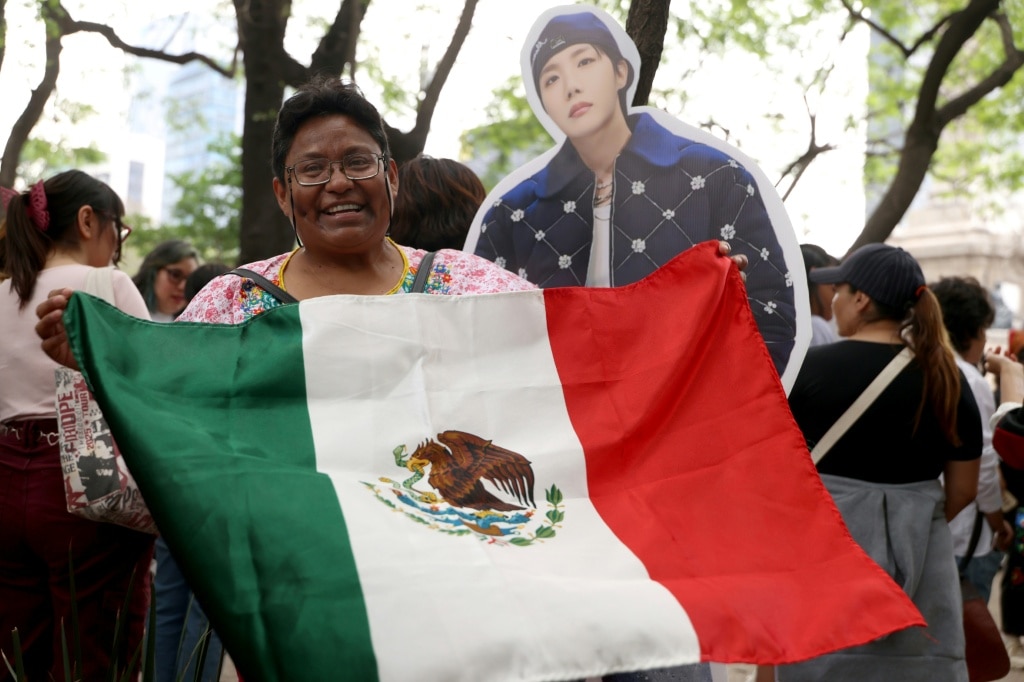
As the highly anticipated return of South Korean K-pop supergroup BTS draws near, Mexican fans have erupted in collective excitement, turning public spaces across Mexico City into vibrant hubs of celebration ahead of the band’s first string of shows in the country following a nearly four-year hiatus.
The countdown to the trio of concerts—scheduled for May 7, 9 and 10 in the Mexican capital—kicked off with a lively pep rally on Paseo de la Reforma, one of the city’s most iconic central thoroughfares. Hundreds of fans gathered here, bouncing in sync to BTS’s chart-topping hits, clapping along and cheering as they prepped for the upcoming shows. Attendees tried on band-themed temporary tattoos, posed for photos next to a towering black-and-white poster of all seven members, and bonded over their shared love for the group.
Jude Pelaez, one of the dancers who participated in the May 3 pre-concert event, told Agence France-Presse that gatherings like this are more than just fun—they help fans build the right energy ahead of the shows. “Like everyone here, I’m so happy,” Pelaez said. “We do these types of events to emotionally and psychologically prepare ourselves, and to prepare the energy and vibe of the place. That makes Mexico different.”
The BTS fervor that has taken hold of Mexico extends far beyond one-off public rallies, weaving its way into everyday life for fans of all ages. For many young supporters, the band’s message of self-acceptance and authenticity has created a welcoming community where anyone can be themselves. Sixteen-year-old Mare Sousa, who studies K-pop choreography at a local dance studio with roughly 30 other students, says BTS mania is defined by this open, inclusive spirit: “everyone is free to be who they are.” At the studio, students arrive early to rehearse choreography in front of the mirror before class even starts, and often spend break times helping each other perfect tricky steps, according to instructor Ginna Montoya, 22.
Even many parents have embraced their children’s passion for BTS, drawn to the group’s positive messaging that stands out from some of Mexico’s most popular local music genres. Lucio Campos, a father whose 15-year-old daughter Ana is a devoted fan, decided to take Korean language classes at the South Korean cultural center after Ana asked to travel to Seoul for her birthday. Campos said he appreciates BTS’s core mission of encouraging healthy, intentional living among young people—a stark contrast he noted to the often violent or hypersexualized themes common in reggaeton and narcocorridos, a popular Mexican subgenre that glorifies drug trafficking. “BTS was born with the idea of transmitting healthy questions for young people,” Campos explained. “Their war cry is ‘let’s live life, let’s live it healthily, let’s live well,’ and obviously this fascinates me.” For Ana, the impact is even more personal: “BTS taught me to love myself,” she said, flipping through a photo album filled with band memorabilia and motivational quotes.
Demand for BTS’s Mexico City shows has been unprecedented: all 135,000 tickets available to the public sold out in mere minutes, leaving tens of thousands of fans empty-handed and desperate for more dates. Even Mexican President Claudia Sheinbaum stepped in to help, urging her foreign ministry to send an official letter to South Korean President Lee Jae Myung to request that the band add additional performances in the country. Sheinbaum said the South Korean leader was “very open” to the request and agreed to forward it to BTS’s production team, but no new concert dates have been announced as of yet. On secondary ticketing platform StubHub, resold tickets are currently being scalped for as much as $13,000 apiece, a testament to the extreme demand for the shows.
BTS’s global comeback, which launched in March 2025, comes after the group paused group activities for nearly four years to allow all seven members to complete their mandatory South Korean military service. For the South Korean government, the band’s global popularity has become a major soft power asset: officials cite a 26-nation study that found 82% of respondents hold a favorable view of South Korea, a shift widely attributed to the global spread of K-pop led by BTS.