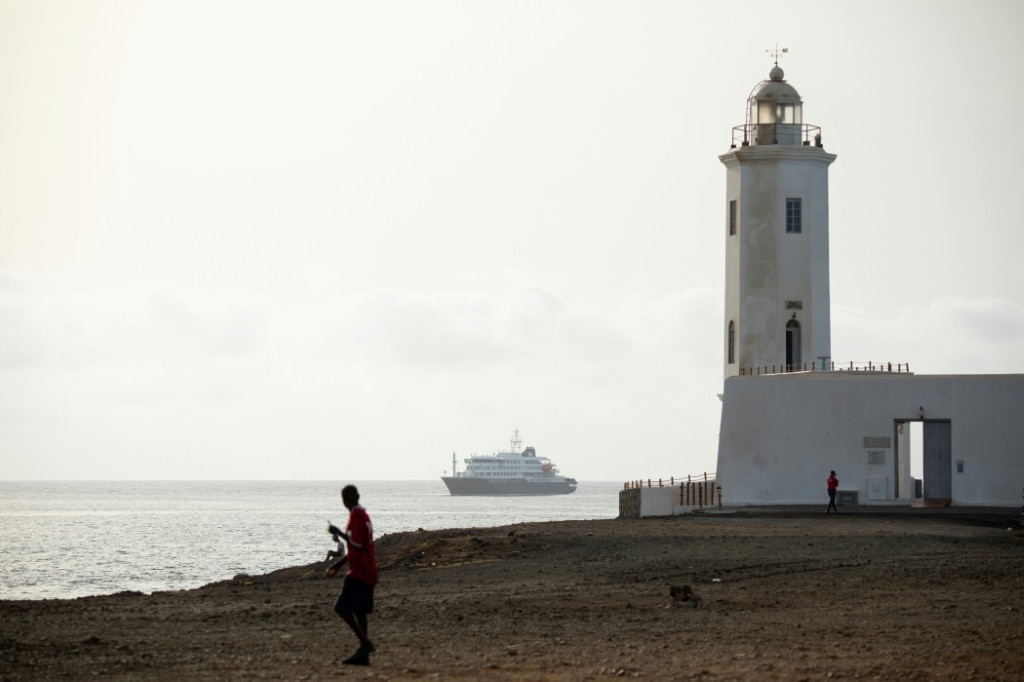
A rare hantavirus outbreak that has claimed three lives on a Dutch-flagged polar expedition cruise ship has triggered an international public health response, with authorities finalizing plans to evacuate severely ill crew members and redirect the vessel to Spain’s Canary Islands. The MV Hondius, operated by Netherlands-based Oceanwide Expeditions, has been anchored off the coast of Praia, the capital of Cape Verde, since Saturday when Cape Verdean authorities barred the ship from docking over virus fears, placing all remaining 85 passengers and 59 crew members in isolation onboard.
Operators confirmed Tuesday that two gravely ill crew members will be medically evacuated through Cape Verde to the Netherlands for urgent treatment, alongside a third individual who had close contact with a German passenger that died after developing the infection over the weekend. Following the evacuation, the vessel will set sail north for the Canary Islands, a three-to-four day journey that will bring it to the closest destination with the specialized medical infrastructure required to manage the outbreak, according to the World Health Organization (WHO).
Spanish health officials noted that once the ship docks at either the port of Gran Canaria or Tenerife, all passengers and crew will undergo comprehensive health screenings, receive necessary care, and be arranged for repatriation to their home countries. There are 23 nationalities represented among the people onboard the voyage, which departed Ushuaia, Argentina on April 1 bound for Cape Verde, carrying an original complement of 88 passengers and 59 crew.
As of the latest update from the WHO, two cases of hantavirus have been laboratory confirmed: one of the three fatalities, and a British passenger who remains in intensive care in Johannesburg, South Africa. Five additional suspected cases have been recorded, bringing the total affected to seven. Among these cases, three have died; the British patient in Johannesburg remains in critical condition, and three people still onboard the MV Hondius experienced mild symptoms, one of whom has since become asymptomatic.
The timeline of infections has raised questions about how the virus spread onboard. The first fatality was a Dutch man who developed symptoms on April 6 and died on April 11. His wife, also Dutch, accompanied his body off the ship at Saint Helena, a remote Atlantic island, and flew to Johannesburg with gastrointestinal symptoms. She deteriorated mid-flight and died in South Africa on April 26, making her the second fatality. The third death was the German passenger who died onboard Saturday.
Contact tracing efforts are already underway for the 82 passengers and six crew members onboard the Airlink flight that carried the Dutch couple to Johannesburg. Airlink representative Karin Murray confirmed that the airline has followed South African health authority instructions to notify all passengers on the flight to contact local health departments for monitoring.
Investigators are still working to identify the origin of the outbreak and confirm the specific strain of the virus. WHO epidemic preparedness director Maria Van Kerkhove told reporters that while full genomic sequencing is being conducted by South African researchers, the working hypothesis is that the responsible virus is the Andes strain, the only hantavirus variant previously linked to human-to-human transmission. Notably, Van Kerkhove added that there are no rats onboard the ship, which eliminates the common rodent-based transmission route that causes most hantavirus infections. The WHO also currently suspects the original Dutch couple were infected before boarding the vessel during travel in South America, opening the possibility that limited secondary transmission occurred among close contacts onboard.
Ann Lindstrand, WHO representative to Cape Verde, confirmed that the evacuation process clears the way for the ship to continue to the Canary Islands as planned, bringing an end to the days-long standoff that left the vessel stranded off the African island nation’s coast.