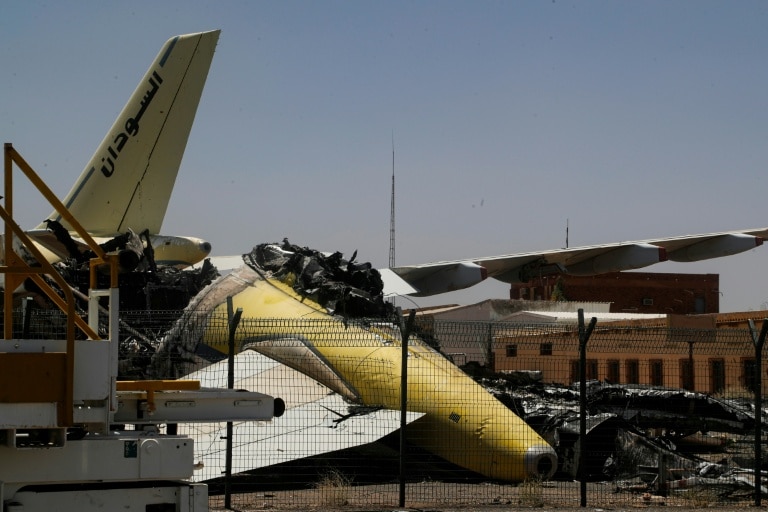
Fresh cross-border accusations have sent already strained relations between Ethiopia and Sudan into a dangerous new phase, with Khartoum leveling claims of direct military aggression involving the United Arab Emirates that Addis Ababa has roundly rejected. On Tuesday, the neighboring nations traded blistering allegations of territorial incursions and support for hostile insurgent groups, a escalation that analysts warn is deepening the overlap between the two countries’ ongoing internal conflicts and drawing outside powers into an increasingly volatile regional crisis. Sudan, which has been gripped by a brutal civil war between the national army and the Rapid Support Forces (RSF) paramilitary since 2023, has faced expanding conflict that has pushed against its border with Ethiopia, which itself grapples with multiple active insurgencies across its territory. Experts warn these parallel conflicts are merging, creating risks of a wider regional confrontation.
The latest exchange of accusations opened with a public statement from Ethiopia’s foreign ministry, released via the social platform X from its Addis Ababa headquarters. The ministry claimed that Sudan’s regular army has become a logistics and training hub for anti-Ethiopia factions, specifically providing weapons and funding to mercenary fighters aligned with the Tigray People’s Liberation Front (TPLF). The TPLF waged a two-year civil war against Ethiopia’s federal government that ended in 2022, but tensions between the group and national authorities remain unresolved. The Ethiopian statement also accused TPLF fighters of operating as mercenaries inside Sudan in exchange for Sudanese backing for cross-border raids into Ethiopia’s western frontier.
Senior TPLF official Amanuel Assefa quickly dismissed the federal government’s claims in comments to AFP, denying any official connection to Sudanese authorities and arguing that the Addis Ababa government is scapegoating external actors to distract from its own policy failures.
Hours before Ethiopia released its accusations, Sudan had already announced it would recall its ambassador to Addis Ababa for urgent consultations following a series of alleged drone strikes. At a Khartoum press conference, Sudanese army spokesperson Assim Awad made the unprecedented allegation that drone attacks targeting Sudanese army positions were launched from Ethiopian territory in direct collaboration with the United Arab Emirates, a claim that adds a new international dimension to the ongoing Sudanese conflict.
The UAE is widely perceived as the primary foreign backer of the RSF, the paramilitary group fighting to overthrow Sudan’s civilian-military government, though it has repeatedly denied all allegations of military support. Awad told reporters that Khartoum holds conclusive evidence linking UAE-manufactured drones launched from Ethiopia’s northeastern Bahir Dar airport region to strikes on Sudanese army positions across multiple states on March 1 and March 17. He added that drone attacks originating from the same base have targeted sites in Khartoum since last Friday, including Khartoum International Airport on Monday. To back the claims, Awad said data recovered from a drone shot down over El-Obeid, capital of North Kordofan state, confirms the aircraft belonged to the UAE and took off from Bahir Dar.
“Based on this documented evidence, we affirm that what the two states of Ethiopia and the United Arab Emirates have carried out constitutes direct aggression against Sudan and will not be met with silence,” Awad stated, adding that Sudanese armed forces have been placed on the highest level of operational readiness. At the same press conference, Sudan’s army-aligned foreign minister Mohieddin Salem went further, saying Khartoum is fully prepared to enter into an open military confrontation with Ethiopia if the situation requires it.
Ethiopia’s foreign ministry immediately dismissed Sudan’s allegations as completely baseless, marking the second time in recent months it has denied claims of facilitating attacks from its territory. Back in March, the Sudanese military first made public claims that drone attacks were launched from inside Ethiopian territory, a charge Addis Ababa rejected at that time, along with repeated claims that it hosts RSF or UAE military personnel on its soil. The UAE has also yet to respond to AFP’s request for comment on the latest round of accusations.
Beyond the high diplomatic standoff, drone attacks across Sudan have intensified in recent months, carried out by both the Sudanese army and the RSF. On Tuesday, a drone strike hit a civilian fuel station in Kosti, White Nile state, around 300 kilometers south of Khartoum, killing three civilians and wounding two more, according to security and medical sources speaking to AFP. Last year, the RSF launched a wave of drone strikes across Khartoum that mostly targeted military infrastructure, power grids and water facilities. After a period of relative calm in the capital over recent months, attacks resumed last week: five civilians were killed in southern Omdurman, across the Nile from central Khartoum, and a hospital in the southern Jebel Awliya district was damaged.
According to militia sources speaking to AFP, a Sunday RSF drone strike targeted the home of Abu Aqla Kaykal, commander of the army-aligned Sudan Shield Forces in central Sudan, killing nine of his relatives. Kaykal, a former RSF commander who defected to the Sudanese army in October 2024, has led recent government offensives that recaptured large swathes of central Sudan, including parts of Al-Jazirah state and sections of Khartoum. Just last week, another senior RSF commander, al-Nour al-Guba, also defected and was received in Khartoum by army chief Abdel Fattah al-Burhan, in what is seen as a major boost for government forces. Despite these small gains, active fighting continues across most of Sudan, including the war-torn western region of Darfur and southern Kordofan. The conflict has recently spread into southeastern Blue Nile state, which borders both Ethiopia and South Sudan, stoking international fears of a prolonged, fragmented conflict that could destabilize the entire Horn of Africa region.