BANGKOK – In a significant shift to decades-long bilateral dispute resolution mechanisms, Thailand’s cabinet announced Tuesday it is terminating a 2001 Memorandum of Understanding (MoU) with neighboring Cambodia that established a bilateral framework for negotiating overlapping maritime territorial claims. The development comes 22 years after the agreement was signed, following a years-long deadlock in talks and a sharp deterioration in cross-border relations that erupted into deadly armed clashes last year.
The original 2001 MoU was designed to create a collaborative foundation for the two Southeast Asian nations to peacefully delimit their shared maritime boundaries and jointly manage overlapping claimed marine resources in line with international law. However, despite five rounds of negotiations held over more than two decades, the two sides failed to make any tangible progress toward a settlement.
The termination will not enter into legal force until Thailand formally delivers an official notification letter to Phnom Penh. Its end dashes long-held hopes in both countries that resolving the competing claims would unlock development of untapped offshore oil and gas reserves located in the disputed waters – resources that could deliver major economic gains to both nations.
Thailand’s decision to scrap the bilateral agreement follows a dramatic escalation of border tensions that spilled into open armed conflict last year. Clashes over competing land border claims broke out in both July and December 2023, leaving dozens of civilian and military casualties on both sides and forcing hundreds of thousands of residents to evacuate their homes near the border. A fragile ceasefire was reached in late December, but low-level sporadic incidents continue to be reported, and both sides have maintained large-scale military deployments along the contested border.
The 2023 fighting reignited domestic political pressure in Thailand over border sovereignty, pushing nationalist sentiment to the forefront of national politics ahead of 2024 general elections. Prime Minister Anutin Charnvirakul’s ruling Bhumjaithai Party included terminating the 2001 MoU as a key campaign pledge to address public concerns over territorial integrity.
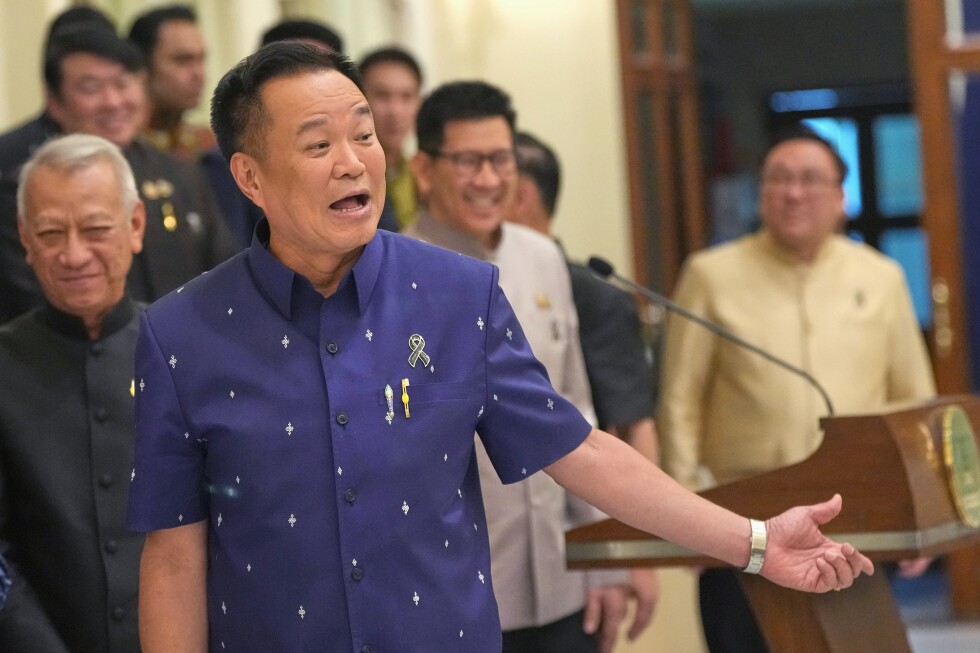
Speaking after Tuesday’s cabinet meeting, Anutin sought to downplay concerns over the impact of the decision on the current fragile border calm. He emphasized the termination is unrelated to ongoing land border tensions and will not alter the existing ceasefire arrangements. He added that negotiations over the maritime dispute will continue under alternative frameworks, specifically citing the United Nations Convention on the Law of the Sea (UNCLOS) as a preferred platform moving forward.
Thai government spokesperson Rachada Dhnadirek echoed the prime minister’s framing, stressing that the move is a strategic adjustment to the dispute resolution framework, not a break in bilateral relations or an end to negotiations. “Thailand will continue discussions with Cambodia, but we propose shifting to mechanisms under UNCLOS, which is clearer, more comprehensive and more systematic to allow maritime disputes to be resolved effectively,” she explained.
In Phnom Penh, Cambodian officials reacted with measured regret to the Thai decision. Foreign Minister Prak Sokhonn called the move “a departure from the spirit and political will that enabled our two countries to establish a framework for peacefully resolving these issues in accordance with international law.”
Despite the disappointment, Cambodia reaffirmed its commitment to peaceful resolution of the dispute under international law. Prak Sokhonn announced Cambodia will proceed with compulsory conciliation under UNCLOS mechanisms, a step that reaffirms Phnom Penh’s commitment to a peaceful, rules-based settlement.
Cambodia’s newly installed Prime Minister Hun Manet emphasized his country’s commitment to peaceful coexistence in a social media statement. “Cambodia’s approach reflects our sincere hope that both countries can reach a just and lasting solution in line with international law, allowing our peoples to live together in peace, stability, and harmony,” he wrote.
Sopheng Cheang, reporting from Phnom Penh, contributed to this report.