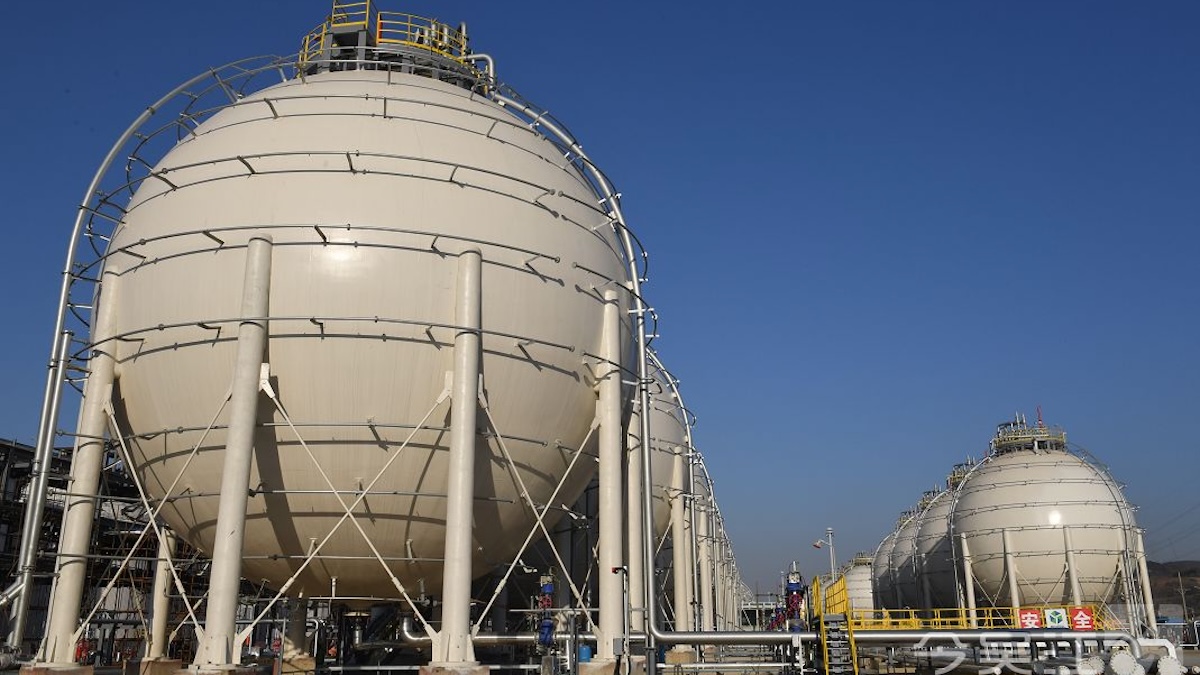
In a landmark move marking the first practical deployment of a half-decade-old Chinese counter-sanctions legal framework, Beijing has moved to block the enforcement of United States sanctions targeting five independent Chinese “teapot” oil refiners, including Dalian-headquartered Hengli Petrochemical Refinery, which Washington blacklisted over accusations of violating US restrictions on Iranian crude imports.
Issued on May 2, the order from China’s Ministry of Commerce relies on the *Rules on Counteracting Unjustified Extraterritorial Application of Foreign Legislation and Other Measures*, widely known as China’s “Blocking Rules.” The ministry formally ruled that all US sanctions measures—including placing the five petrochemical firms on the US Treasury’s Specially Designated Nationals (SDN) list, freezing their assets under US jurisdiction and imposing transaction bans—“shall not be recognized, enforced or complied with” within Chinese territory. The order also bars Chinese domestic companies and financial institutions from participating in the US sanctions regime, though it did not explicitly clarify whether the prohibition extends to Hong Kong, which processes a large share of China-Iran crude oil transactions.
The five refiners were added to the US SDN list in staggered actions between March 2025 and April 2026: Shandong Shouguang Luqing Petrochemical Co Ltd on March 20, 2025; Shandong Shengxing Chemical Co Ltd on April 16, 2025; Hebei Xinhai Chemical Group Co Ltd on May 8, 2025; Shandong Jincheng Petrochemical Group Co Ltd on October 9, 2025; and Hengli Petrochemical (Dalian) Refinery Co Ltd on April 24, 2026.
In an April 28 statement, the Office of Foreign Assets Control (OFAC), the US Treasury department’s sanctions enforcement arm, said that beginning in March 2025, it had designated multiple China-based independent refiners that had collectively processed billions of dollars in crude oil originating from Iran, which it claimed ultimately supports the Iranian government. OFAC also issued a formal warning to global financial institutions, noting that the US was prepared to leverage its full range of regulatory authorities and deploy secondary sanctions against any foreign financial institutions that continue to facilitate transactions tied to Iran’s oil sector.
Chinese policy analysts and state media have framed the first-ever use of the Blocking Rules—originally adopted in January 2021 at the end of US President Donald Trump’s first term—as a measured, principled response to US unilateralism, representing a shift from holding counter-sanctions tools in reserve to active deployment against extraterritorial US pressure.
Liu Chunsheng, an associate professor of international trade at the Central University of Finance and Economics, told Hong Kong media that the Blocking Rules were activated because the US has repeatedly abused unilateral sanctions and long-arm jurisdiction, acting as a self-appointed global police force that uses sanctions to disrupt legitimate economic and trade activity by Chinese firms. He characterized the US actions as a form of economic and trade bullying designed to coerce other nations into aligning with its policy priorities.
“The Blocking Rules are a targeted legal mechanism to counter unreasonable external sanctions, protect the legitimate rights of Chinese companies operating overseas, safeguard the stability of global industrial and supply chains, and uphold a fair international economic and trade order,” Liu explained, adding that the move sets a critical precedent for other countries, particularly developing economies, facing similar unilateral pressure from the US.
Cui Fan, a professor of international trade at the University of International Business of Economics and chief expert at the China Society for World Trade Organization Studies, noted that since 2025, the US has steadily expanded sanctions targeting Chinese refining, shipping and port companies connected to Iranian oil trade, imposing asset freezes and broad transaction bans while rejecting legitimate claims from Chinese firms. He warned that allowing these unilateral measures to go unchallenged would disrupt China’s energy supply chain stability and undermine China’s energy security and core development interests.
“Against this backdrop, activating the Blocking Rules is a necessary step to safeguard China’s national and corporate interests, while the framework establishes formal institutional mechanisms to protect the lawful rights of Chinese citizens, legal entities and other organizations,” Cui said. He also pointed to the rapid growth of the US SDN list, which now includes roughly 18,900 global entities and individuals, more than 1,100 of which are linked to mainland China and over 400 connected to Hong Kong. Washington’s so-called “50% rule,” which designates any entity directly or indirectly 50% or more owned by a sanctioned party as also blocked, even if not explicitly named, extends sanctions impact to a vast network of affiliated firms across the global economy.
The escalating sanctions dispute has further strained already tense bilateral relations between Beijing and Washington just two weeks before a scheduled May 13-14 meeting between US President Donald Trump and Chinese President Xi Jinping in China. The two leaders are expected to address a wide range of contentious issues during the summit, including ongoing conflicts in Ukraine and the Middle East, persistent trade frictions, and competing export control regimes.
The escalation builds on a series of recent US actions targeting Sino-Iranian energy ties: In mid-April, US Treasury Secretary Scott Bessent announced that the US had sent formal warnings to two unnamed Chinese banks, alerting them to potential secondary sanctions if they continued facilitating transactions tied to Iranian oil. On April 24, OFAC added Hengli Petrochemical to the SDN list, calling the refiner one of Iran’s most important crude customers, alongside blacklisting roughly 40 shipping firms and vessels it accuses of being part of Iran’s “shadow fleet” for undocumented oil shipments. Four days later, OFAC issued its broader warning to financial institutions over secondary sanctions risks tied to Chinese independent teapot refiners.
Adopted in January 2021, the Blocking Rules establish a formal interagency process led by the Ministry of Commerce, working alongside China’s national planning agency and other relevant departments, to assess whether foreign laws and measures constitute improper extraterritorial application. The assessment is based on four core criteria: whether the foreign measure violates international law or foundational norms of international relations; its potential impact on China’s sovereignty, security and development interests; its potential harm to the lawful rights and interests of Chinese individuals and entities; and other relevant contextual factors.
The framework also includes a formal exemption process: Chinese entities seeking permission to comply with restricted foreign sanctions must submit a written request to the Ministry of Commerce outlining the rationale and scope of the requested compliance, and the ministry issues a decision within 30 days, with accelerated processing for urgent cases. Some independent analysts note that this exemption structure could allow large Chinese banks with global operations and US-based assets to seek approval to comply with US sanctions, while smaller regional Chinese banks can continue processing Iranian oil transaction settlements while absorbing the associated regulatory risk.
Zhou Chengyang, a Chinese current affairs commentator, told Russian media outlet Sputnik that independent refiners including Hengli are expected to continue settling crude purchases in Chinese renminbi, diversifying settlement channels and combining strategic reserve drawdowns with market-based procurement to maintain stable oil supply operations. The framework for processing these transactions has already been tested in recent years: In 2012, OFAC added China’s Bank of Kunlun to the SDN list for its role in settling Iranian oil trades, which resulted in the bank being expelled from the global SWIFT dollar clearing system. In 2019, OFAC added Bank of Kunlun to its stricter CAPTA sanctions list, which restricts foreign banks from maintaining US correspondent accounts for the institution.
Chinese state media reports confirm that despite sweeping US sanctions, Bank of Kunlun has continued facilitating Iranian and Russian oil transaction settlements through China’s own Cross-Border Interbank Payment System (CIPS), relying on a barter-style clearing mechanism that offsets payments through matched reciprocal trade flows rather than direct US dollar transfers. Under this structure, Chinese importers and Iranian exporters settle accounts through reciprocal credit arrangements via partner banks, allowing trade to proceed without relying on the US dollar or Western clearing infrastructure.