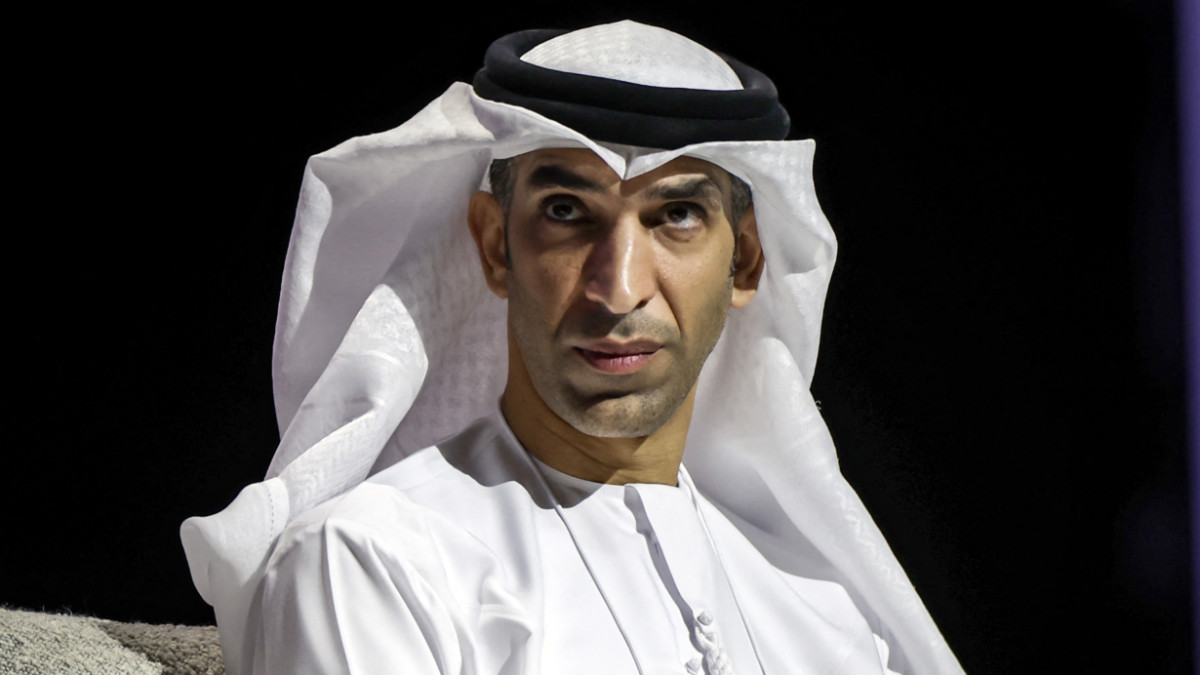
On a Monday marked by renewed regional volatility following fresh Iranian air strikes against the United Arab Emirates, senior Emirati officials made the first public confirmation that the country is negotiating a currency swap agreement with the United States, framing the arrangement as a marker of membership in an exclusive cohort of US allies rather than a financial lifeline.
Speaking at the “Make It In The Emirates” manufacturing conference hosted in Abu Dhabi, UAE Trade Minister Thani bin Ahmed al-Zeyoudi clarified the context of the ongoing discussions. “We have this discussion and conversation with many, it’s part of an elite group that the US is having this swap policy with. They are only having it with five countries,” Zeyoudi told attendees. He emphasized that the agreement would not act as a bailout, noting instead that it reflects the deep integration of trade and investment ties between the two nations that have created a practical need for the swap arrangement.
Zeyoudi’s remarks mark the first on-the-record confirmation of the talks from an Emirati government official, after months of conflicting public statements from both sides of the negotiation. The confirmation comes against a backdrop of heightened military tension across the Persian Gulf: a fragile ceasefire collapsed into uncertainty Monday after Iran launched a wave of missiles and drones targeting the UAE, an attack widely viewed as retaliation for a planned US naval transit through the Strait of Hormuz amid ongoing US-Israel military operations against Iran-linked forces.
Weeks prior, UAE Ambassador to the US Yousef al-Otaiba pushed back against early speculation that the country was seeking external financial support. In a lengthy post on the social platform X, Otaiba noted the UAE holds roughly $2 trillion in sovereign wealth investments and $300 billion in foreign exchange reserves, stating that “Any suggestion that the UAE requires external financial backing misreads the facts.” He did not, however, explicitly deny that negotiations were underway.
Former US President Donald Trump first confirmed the existence of talks last month, and US Treasury Secretary Scott Bessent later noted that multiple Gulf states and Asian economies had requested access to US currency swap lines. Zeyoudi’s framing of the potential agreement aligns with Otaiba’s earlier pushback, designed to quell rumors that the UAE’s financial position has weakened amid regional conflict.
Currency swap lines are traditionally a tool to provide central banks with access to US dollar liquidity during periods of economic distress. Historically, Washington has extended these short-term loan arrangements to two distinct groups: lower and middle-income economies facing financial instability, such as Mexico and Argentina, and large developed economies whose stability is seen as critical to global economic health, including Canada, the United Kingdom and Japan. Even with regional disruptions that have cut the UAE’s oil exports by more than half compared to pre-conflict levels – the country continues to ship crude through the port of Fujairah, which bypasses the blockaded Strait of Hormuz – experts note the wealthy Gulf state does not fit neatly into either existing category.
Brad Setser, a former US Treasury economist now based at the Council on Foreign Relations, described the UAE’s request as slightly unusual given the substantial reserves held by its central bank and the scale of its sovereign wealth funds.
Beyond economic considerations, the ongoing negotiations are unfolding alongside major shifts in the UAE’s geopolitical alignment. The country has publicly and privately lobbied Washington to adopt a far more aggressive stance against Iran, a position that puts it at odds with neighboring Saudi Arabia, which has backed Pakistani-led mediation efforts to de-escalate regional tensions. The talks also follow the UAE’s high-profile decision to withdraw from the Saudi-led OPEC oil cartel, a move that some analysts have linked directly to the negotiations with the US.
Ellen Wald, a senior fellow at the Atlantic Council and author of *Saudi Inc: The Rise and Fall of the World’s Richest Company*, laid out the broader geopolitical hypothesis in a recent LinkedIn post. “It is possible that this break could also be [the] result of some sort of ‘deal’ between [the] UAE and Israel [and the] US, wherein they helped defend the UAE from Iran in exchange for delivering a major blow to Opec, which Trump has long sought,” Wald wrote. She added that she would not be surprised to see a formal defense agreement between the UAE and US announced in the near future.