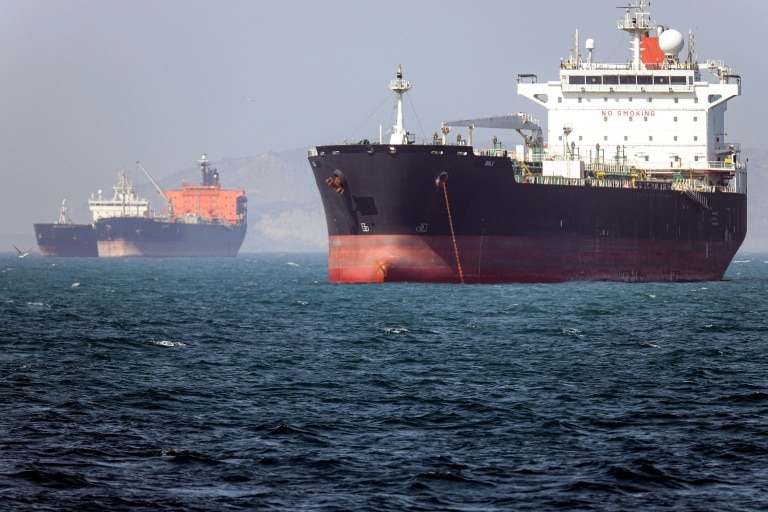
Tensions across the Middle East have surged dramatically in the last 24 hours, with a series of interconnected clashes, competing claims from Tehran and Washington, and spillover violence hitting regional states that has sent global energy markets into a sharp upward swing. The escalation centers on the Strait of Hormuz, the world’s most critical chokepoint for global oil supplies, where U.S. and Iranian forces have exchanged hostile actions and conflicting accounts of what unfolded.
Admiral Brad Cooper, head of U.S. Central Command, confirmed to reporters that American military forces destroyed six small Iranian boats that posed a direct threat to commercial shipping moving through the strategic waterway. The operation, carried out by U.S. Apache and Seahawk helicopters, was paired with a successful defense against a barrage of projectiles: all missiles and drones launched by Iranian forces at both U.S. Navy vessels and nearby commercial shipping were intercepted and neutralized, Cooper said.
Iran has quickly and categorically rejected the U.S. claims. A statement from Iran’s Revolutionary Guards dismissed the assertion that any Iranian boats were sunk as entirely false. The Guards also pushed back on a separate U.S. announcement that two U.S.-flagged merchant vessels had passed through the strait under American military escort, calling that report “baseless and completely false” in a Telegram statement and denying any commercial ships had transited the waterway following the clashes.
Former U.S. President Donald Trump, commenting on the situation on his Truth Social platform, sought to downplay the severity of the escalation. He acknowledged that Iran had fired on vessels moving through the Strait of Hormuz after U.S. warships entered the area, but claimed that only a South Korean vessel suffered any damage, with no other harm reported as of his statement.
Beyond the direct U.S.-Iran confrontation, spillover attacks have been reported across the Gulf region. The United Arab Emirates confirmed it was targeted by Iranian strikes, including an attack on the key Fujairah energy infrastructure hub that left three Indian nationals wounded. The UAE Foreign Ministry condemned the strikes as a dangerous escalation and an unacceptable violation of the country’s sovereignty, noting that it reserves the full right to respond to the aggression. A senior Iranian military official denied the claim, saying Iran had no plans to attack the UAE.
Neighboring Oman also reported casualties from an attack on a coastal residential building in Bukha, a town located along the Strait of Hormuz. Oman’s state news agency confirmed two expatriate workers suffered moderate injuries in the strike, with four additional vehicles damaged in the incident.
The sudden escalation has already roiled global energy markets, as nearly 20% of global oil supplies pass through the Strait of Hormuz annually. The Brent crude contract for July delivery jumped more than 5% within minutes of news of the clashes breaking, reflecting widespread investor concern over potential disruptions to global oil supplies.
The United States has confirmed that it deployed destroyers to the Gulf to carry out escort missions for commercial shipping transiting the strait. Following that deployment, Iranian state television reported that the Iranian Navy launched cruise missiles, rockets, and combat drones near the U.S. vessels after firing multiple warning shots.
Tensions also remain high along the Israel-Lebanon border, where a fragile ceasefire that has held since mid-April is facing new strains. Hezbollah, the Lebanese armed group, announced that its fighters had engaged in heavy clashes with Israeli troops in southern Lebanon near the border. The clash followed an attempted advance by Israeli forces near the town of Deir Seryan, located inside an Israeli-declared “yellow line” zone where Lebanese residents have been ordered not to return. Israeli military officials confirmed that the Israel Defense Forces remain on high alert and are closely monitoring all developments across the region following the U.S.-Iran confrontation.
Lebanese President Joseph Aoun has pushed back on U.S. calls for a meeting with Israeli Prime Minister Benjamin Netanyahu, saying that any such summit can only take place after a comprehensive security deal is reached and all Israeli attacks on Lebanese territory end. Aoun’s office added that the current moment is not appropriate for any meeting between the two leaders, given the ongoing volatility.