Weeks of indirect negotiations between Israeli and Palestinian representatives over Gaza’s long-term future, mediated by Egypt and Turkey, have hit a major impasse after the United States and Israel formally rejected a joint proposal from Palestinian factions — including Hamas and Palestinian Islamic Jihad — that links the disarmament of armed groups to clear progress toward Palestinian statehood and binding reciprocal security guarantees.
A senior Palestinian source briefed on the closed-door talks told Middle East Eye that the factions’ framework, submitted to mediators in Cairo on Friday, conditions any negotiation over disarming Hamas and other armed groups on two core demands: formal recognition of Palestinian political rights within a unified national governing structure, and an ironclad commitment to end all targeted killings of Palestinian civilians in Gaza.
The core point of contention that has widened the divide between the two sides has never shifted: Washington and Jerusalem insist that Hamas and all other Palestinian armed factions must fully disarm before a neutral technocratic government can be installed to govern Gaza. Palestinian factions, by contrast, have flatly rejected sequencing disarmament ahead of a permanent political resolution that delivers on longstanding Palestinian demands for sovereign statehood, framing disarmament as one component of a final settlement rather than a non-negotiable precondition.
According to the Palestinian source, mediators confirmed on Saturday that both U.S. representatives and Israeli negotiators rejected the factions’ proposal outright, and conveyed explicit threats to the Palestinian negotiating team over the impasse.
The proposal emerged alongside parallel talks hosted in Cairo led by a Hamas delegation headed by Gazan movement leader Khalil al-Hayya, focused on advancing implementation of the U.S.-brokered October 2025 ceasefire agreement that paused active large-scale combat. That original deal, which was published in full by Middle East Eye when it took effect, laid out a six-phase roadmap including expanded humanitarian access, the withdrawal of Israeli forces to pre-agreed boundary lines, and the creation of an international task force to oversee implementation.
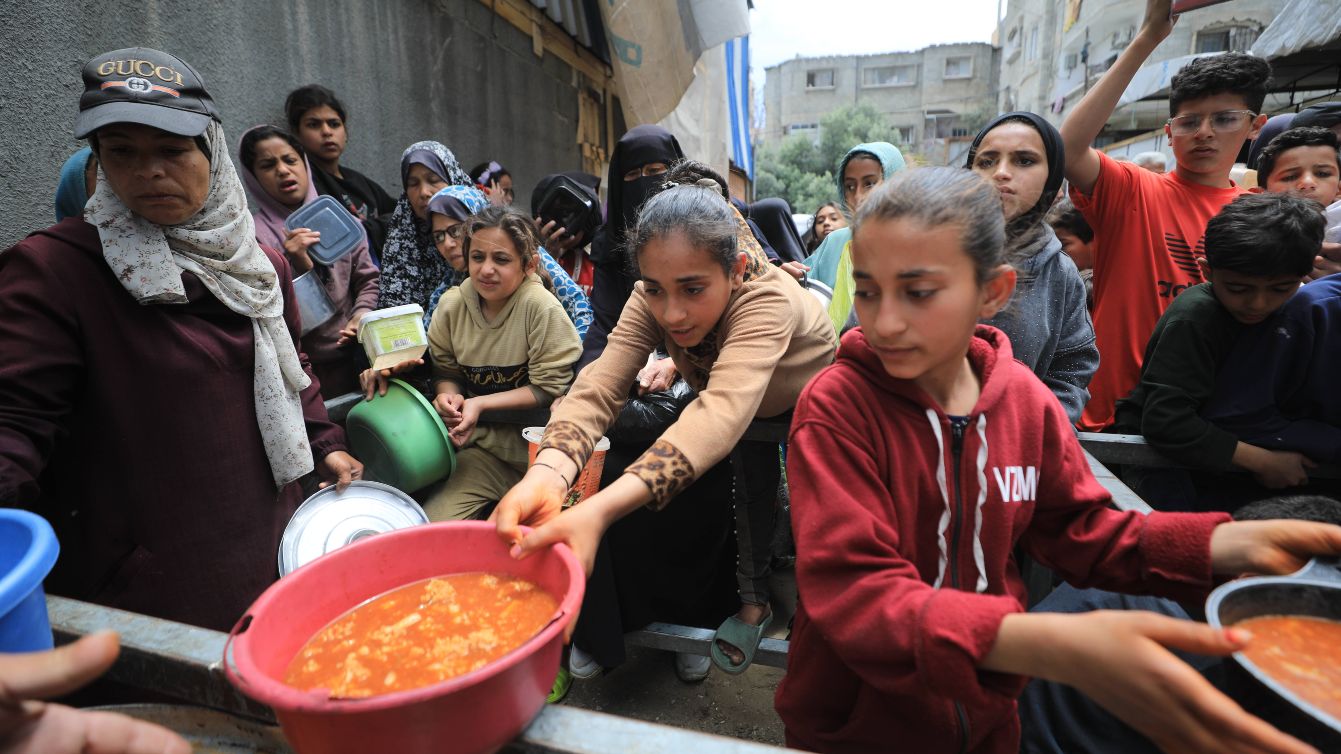
In the six months that have passed since the ceasefire was signed, however, United Nations data confirms Israel has killed 738 Palestinians in Gaza, and has failed to meet the agreement’s requirement to allow up to 600 trucks of critical aid — including food, fuel, medicine, shelter materials, and commercial goods — to enter the enclave daily. The overall Palestinian death toll from the conflict has now surpassed 72,000, with thousands more missing and presumed dead under rubble from Israeli airstrikes and ground operations.
A full review of the Palestinian proposal, obtained by Middle East Eye, shows factions explicitly appreciate mediation efforts to reach a consensus aligned with the terms of U.S. President Donald Trump’s regional peace framework. The document demands that Israel immediately and fully implement all its obligations under the October ceasefire (officially the Sharm el-Sheikh agreement) on an agreed timeline, end all violations of the truce, reverse its recent military expansion into western Gaza beyond the pre-agreed “yellow line” boundary, honour the agreed daily humanitarian aid shipment quota, and complete a full withdrawal from all of Gaza.
Under the original ceasefire terms, the “yellow line” split Gaza into an eastern half under Israeli control and a western zone where Palestinian civilians could remain, with Israel holding roughly 53 percent of the enclave’s territory. Multiple on-the-ground reports confirm Israeli forces have now pushed past this boundary into western Gaza, establishing a new “orange line” of control that alters the territory’s security and geographic status quo.
The Palestinian framework endorses a mediation roadmap presented on April 19 as a basis for further talks, and calls for a swift final deal that cement a permanent ceasefire, end Gaza’s catastrophic humanitarian crisis, and enable full reconstruction of the enclave. It also calls for the entry of an international peacekeeping force to monitor the ceasefire, and the full transfer of governing authority over Gaza to a unified Palestinian national committee with full sovereign powers.
On the core issue of weapons, the proposal explicitly ties any progress on disarmament to progress on Palestinian political rights within a unified national framework, with reciprocal security guarantees for both Palestinians and Israelis. It reaffirms the Palestinian people’s inalienable right to self-determination and the establishment of a sovereign Palestinian state, a goal the document says mediators and all relevant parties are committed to delivering under Trump’s peace plan.
The U.S.-Israeli rejection of the proposal has raised immediate fears of a resumption of full-scale war: Israeli public media reported Sunday that the country’s security cabinet will convene to discuss restarting active military operations in Gaza. An unnamed Israeli official told Israel’s public broadcaster Kan on Saturday evening that “Hamas is not standing by the agreement on disarmament. We are holding discussions with mediators.”
The current impasse dates back to March, when Nickolay Mladenov, the former Bulgarian foreign minister leading Trump’s “Board of Peace” initiative, held weeks of talks with Hamas leaders and gave the group until April 11 to begin a gradual handover of weapons. Mladenov’s original mandate was to oversee the transition of Gaza from Hamas rule to a new technocratic administration led by former Palestinian Authority deputy minister Ali Shaath. A previous disarmament proposal presented by mediators in Cairo demanded all armed groups in Gaza surrender all weapons within 90 days, including heavy weaponry such as missiles and rocket launchers, along with full maps of Hamas’s underground tunnel network. Israeli Prime Minister Benjamin Netanyahu has further demanded that even individual members of Palestinian factions surrender their personal weapons.
Palestinian negotiators push back that Israeli violations of the existing ceasefire — including ongoing military raids, expansion into new territory, and repeated delays to humanitarian aid — have already gutted confidence in the peace process. They argue that political progress on statehood and self-determination must move in lockstep with security arrangements, rather than being treated as an afterthought to disarmament.