On April 28, the U.S. State Department released a joint statement purporting to stand “in solidarity with Panama” after an alleged increase in detentions of Panama-flagged ships at Chinese ports. The statement frames these detentions as a “blatant attempt to politicize maritime trade” — a framing that collapses under scrutiny when examined against the backdrop of recent U.S. and Panamanian actions targeting Chinese-controlled logistics infrastructure across the region. This diplomatic move is just the latest step in a broader, coordinated U.S. geostrategic push that includes blockades of the Strait of Hormuz, new defense partnerships with Indonesia, and aggressive rhetoric targeting China-backed infrastructure projects like Peru’s Port of Chancay.
Five Latin American and Caribbean nations joined the U.S. as co-signatories: Costa Rica, Bolivia, Paraguay, Guyana, and Trinidad and Tobago. A closer look at this group reveals a deliberate alignment with longstanding U.S. economic and security priorities in the Western Hemisphere, rather than a random collection of like-minded states.
The irony of the U.S.’s sudden stance on Panama is difficult to overstate. Just a few months prior, Washington executed a coordinated two-pronged campaign to oust Chinese operators from key Panamanian ports: diplomatic coercion through high-stakes bilateral security dialogues, and a politicized legal campaign targeting Chinese concession agreements near the Panama Canal. This effort culminated in a widely expected Panamanian Supreme Court ruling that forced Hong Kong-based port operator CK Hutchinson to exit its operations at the Balboa and Cristobal terminals. The contract was subsequently awarded to a subsidiary of Danish logistics giant Maersk. This history of interference undermines the State Department’s claims of defending neutral maritime trade: even as far back as the Trump administration, U.S. negotiators openly threatened to retake the Panama Canal by force if Washington’s demands were not met, turning hollow the rhetoric about defending Panamanian sovereignty and opposing politicization of trade.
Breaking down the co-signatories further exposes the strategic logic behind the joint statement. Guyana, one of the world’s fastest-growing producers of high-quality sweet light crude, has attracted major new downstream investment as a result of U.S. blockades of Persian Gulf oil exports. Trinidad and Tobago is a leading regional producer of critical petrochemicals including urea and ammonia. Costa Rica has long been a dependable U.S. ally and hosts the Caribbean’s most technologically advanced commercial port. Paraguay, meanwhile, remains the only South American nation that recognizes Taiwan, a longtime point of alignment with U.S. foreign policy goals.
The most surprising co-signatory is Bolivia, a landlocked Andean nation that would seem to have no direct stake in Caribbean maritime security. This move makes strategic sense, however, when viewed through the lens of global green energy competition: Bolivia holds the world’s largest proven lithium reserves, a critical mineral for manufacturing electric vehicle batteries and large-scale grid energy storage. Extraction of Bolivian lithium, however, faces major barriers: the country’s brine deposits have an unusually high magnesium-to-lithium ratio, requiring costly, largely unproven extraction technology. There is also the massive logistical challenge of moving extracted lithium hundreds of kilometers over rugged terrain to Pacific ports in neighboring Chile, before shipments travel north through the Panama Canal to reach major consumer markets. These constraints push up the cost of every ton of exported Bolivian lithium dramatically.
Bolivia’s new President Rodrigo Paz has signaled a clear shift away from the previous socialist government’s partnerships with China and Russia. His recent decision to replace the leadership of state-owned lithium producer Yacimientos de Litio Bolivianos indicates a willingness to scrap existing deals in favor of new agreements with Western capital, provided Western markets offer guaranteed access for Bolivian lithium exports. For Paz’s administration, signing onto the U.S.-led statement framing Panama as a “pillar of our maritime trading system” is a low-cost, transactional diplomatic gesture to curry favor with Washington.
As a landlocked nation, Bolivia’s ability to become a major lithium export powerhouse depends entirely on access to ports through Chile, its longstanding historical rival that borders the Pacific. Chile already has a thriving, profitable lithium sector of its own, and was the source of Bolivia’s loss of coastline in the 19th century War of the Pacific. By aligning with the U.S. against China’s trade and infrastructure presence in the region, Bolivia is signaling to Chile, Panama, and other Latin American states that it will abide by Washington’s rules of the game in exchange for access to their critical maritime logistics networks.
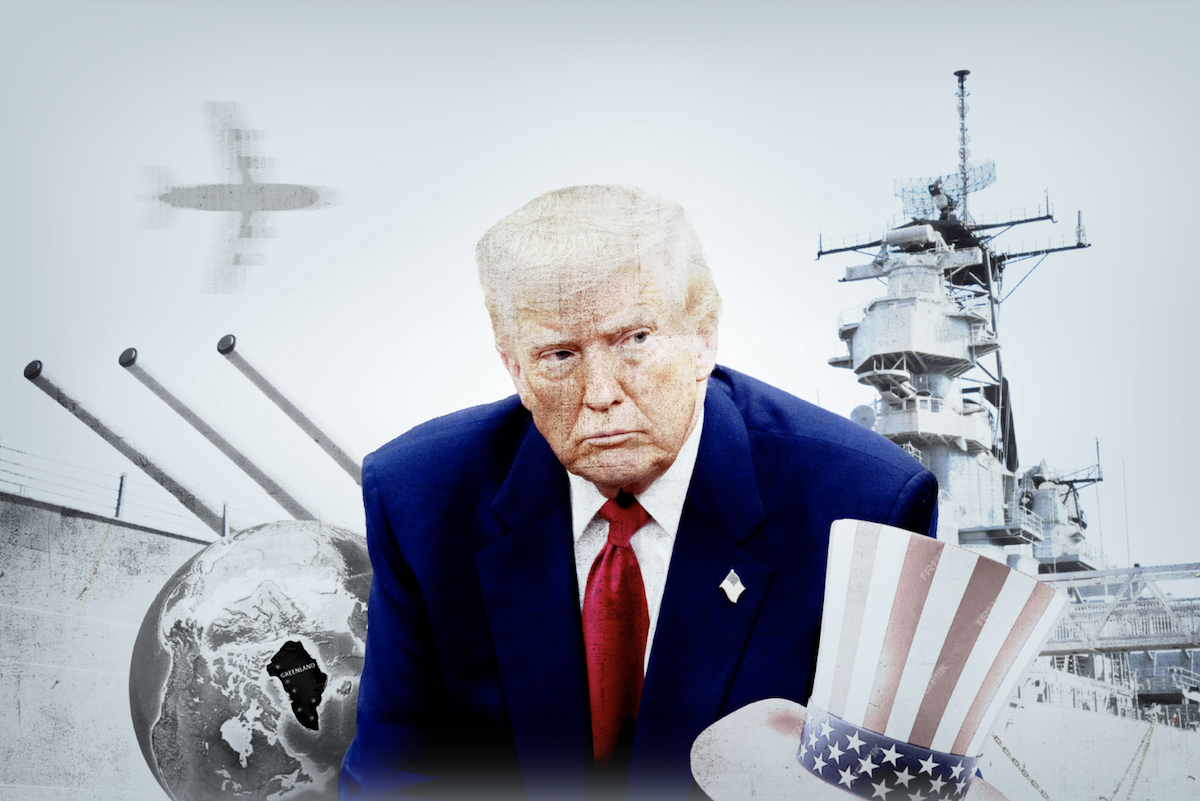
This coordinated U.S. diplomatic push in Panama and Bolivia cannot be separated from broader global geostrategic shifts. In the Persian Gulf, the U.S. military has enforced a blockade that blocks most crude oil exports from reaching key Asian markets. At the same time, the State Department has worked aggressively across the Caribbean and Latin America to oust Chinese-owned logistics assets through a mix of diplomatic pressure and politicized legal campaigns. This pattern of activity makes clear that the modern iteration of U.S. dominance in the Western Hemisphere, sometimes called the “Donroe Doctrine” (a updated take on the 19th century Monroe Doctrine), does not aim to benevolently integrate the U.S. and Latin American economies. Instead, its core goal is to redirect global commodity supply chains away from West Asia and back into the Western Hemisphere by establishing U.S.-controlled maritime trade routes.
While it remains too early to tell whether Washington’s gambit will succeed, the pattern is deliberate: the State Department has actively built a new U.S.-aligned maritime consensus with Latin American countries that produce critical energy, agricultural, logistics, and green mineral inputs, many of which have already rejected recent Chinese investment offers. Any framing of the U.S. as a neutral guardian of free global maritime trade ignores clear, on-the-ground reality: the U.S. military is seizing commercial ships in West Asia to enforce its blockade, while the State Department simultaneously demands that China adhere to Washington’s rules for trade in Central and South America. When the Trump administration abandoned the longstanding Carter Doctrine commitment to secure free trade through the Persian Gulf, the myth of a neutral, free global maritime commons died.
In the long term, this power play is likely to work to the advantage of China and other coastal emerging economies seeking a more multipolar global order. But in the short term, it has created unprecedented instability in the global maritime trading system — instability that the U.S. State Department is actively exploiting to advance American energy, agricultural, and mining interests across the Western Hemisphere.