A high-stakes legal battle over the UK government’s effort to reinstate a terror ban on direct action group Palestine Action has drawn public support from more than 1,000 academics, activists and public intellectuals, led by over 100 UK-based law professors who have openly defended their solidarity with the group. When the Court of Appeal opened hearings on the government’s appeal this week, activists delivered a concise seven-word open letter signed by the group to the court: “We oppose genocide, we support Palestine Action.” Lady Chief Justice Sue Carr confirmed receipt of the correspondence and read its text aloud in open court.
In a joint statement emailed to independent news outlet Middle East Eye, seven of the signing law professors laid out their reasoning for the unprecedented public show of support. Coming of age in the decades following the Second World War, the academics emphasized that the post-Holocaust promise of “never again” must carry tangible meaning. As legal scholars, they added, they are bound to defend core principles of the UK judicial tradition: specifically, the long-held right of juries to hear the full facts of a case and deliver acquittals based on independent judgment and conscience, a right they argue is threatened by the blanket ban on the group.
The professors stressed that their support is limited to nonviolent action, framing their backing of Palestine Action as rooted in opposition to what they describe as genocide in Gaza. They noted that the group targets UK-based weapons manufacturers that supply components used in Israeli military operations, and called on all people of conscience to join their stand against the ban.
Beyond the 100+ law academics, the letter counts high-profile public figures among its signatories, including veteran leftist commentator Tariq Ali, philosopher Judith Butler, Irish author Sally Rooney, and climate activist Greta Thunberg.
The legal clash dates back to July 2024, when the UK Labour government designated Palestine Action as a proscribed terrorist organization. The designation criminalizes membership in the group and public expressions of support, with penalties reaching up to 14 years of prison time. In February of this year, a lower court ruled the initial ban unlawful, prompting the government to file the current appeal to reverse that ruling.
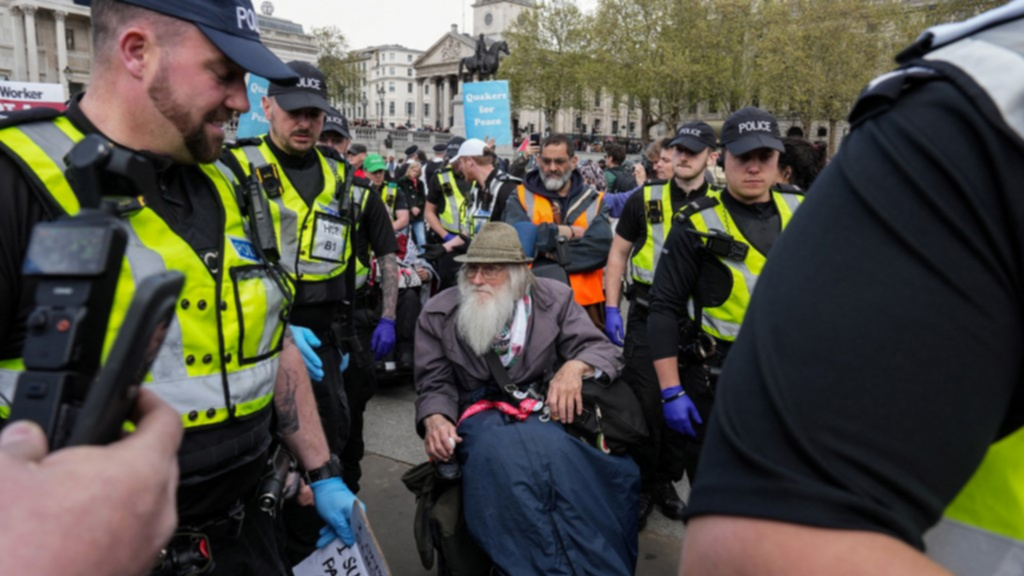
Since the ban first took effect, more than 3,000 people have been arrested for challenging the designation, with pensioners making up the overwhelming majority of those detained. Legal representatives for Palestine Action co-founder Huda Ammori argued this week that the ban has had a disproportionate discriminatory impact on British Palestinians who organize against Israeli military actions in Gaza. They also criticized the Home Office for failing to provide the group with advance notice of its proscription, a step required under the UK’s 2000 Terrorism Act.
James Eadie KC, the barrister representing the Home Office, pushed back against the criticism, arguing that prior notification was unnecessary in this case. He told the court that Palestine Action is a loose, decentralized grouping, creating practical barriers to identifying who should receive formal notice ahead of a ban, and that the court should accept these practical constraints as justification for skipping the requirement.
The proceedings include a controversial closed-door session held this Thursday, during which government lawyers will present classified evidence to judges that will not be made accessible to Palestine Action’s full legal team. While a security-cleared special advocate hired by the group will attend the session to argue on Palestine Action’s behalf, the advocate is barred from sharing any details of the classified evidence or discussion with the rest of the group’s legal team, even though they are employed by the organization.
The Court of Appeal is expected to deliver its final ruling on the government’s appeal in the coming weeks. The outcome of the case will carry major implications for the future of pro-Palestinian advocacy in the UK, as well as for the scope of government authority to designate activist groups as terrorist organizations under counter-terrorism law.