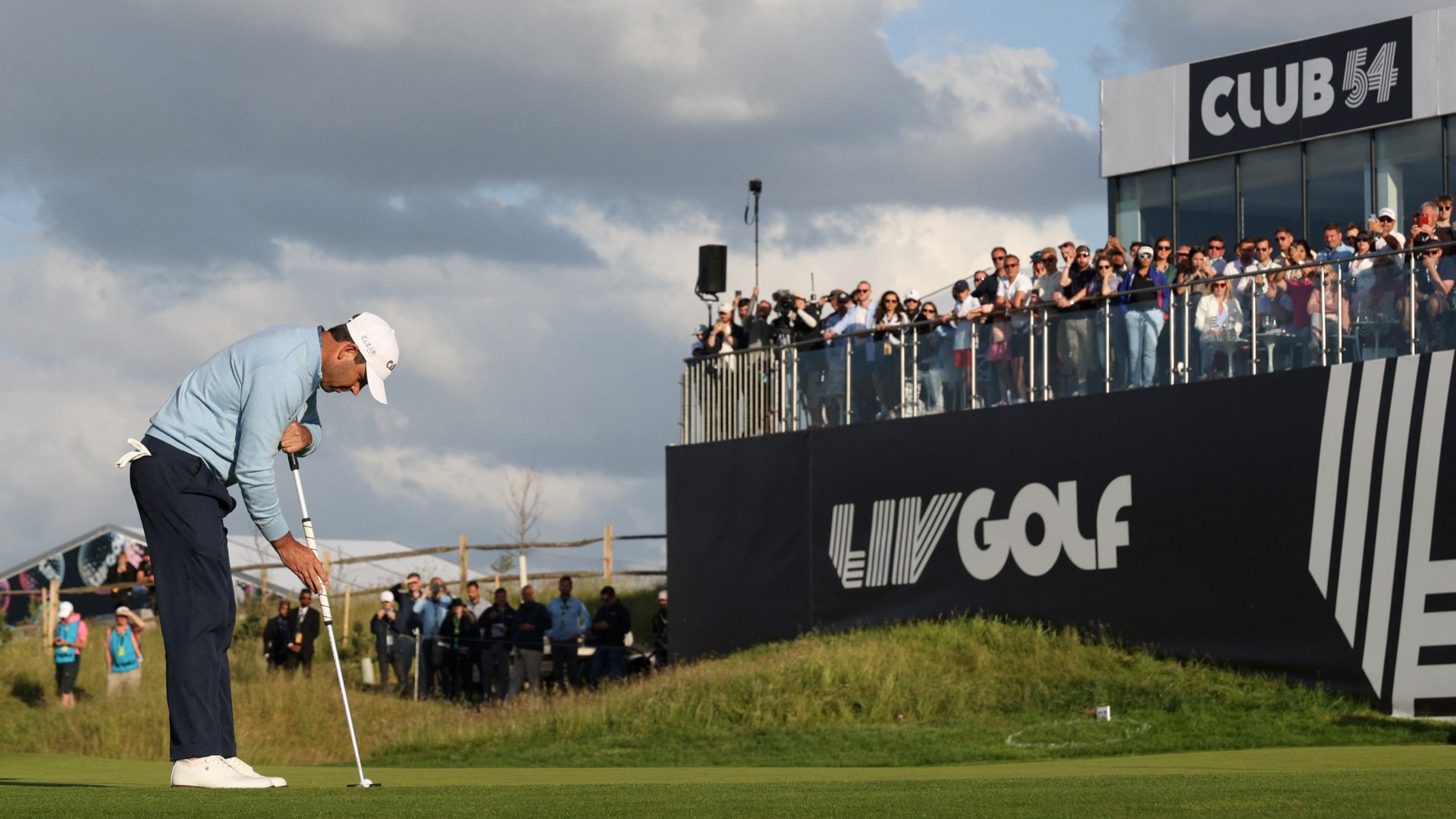
British media outlets have reported that Saudi Arabia plans to end its massive multibillion-dollar backing of the LIV Golf breakaway tour by the close of the 2025 season, a move that fits into a wider pattern of scaling back high-profile international and domestic ventures amid shifting economic pressures tied to regional conflict.
Anonymous sources familiar with the tour’s plans told the BBC that LIV Golf will publicly unveil a revised “new strategic framework” this Thursday, with leadership actively pursuing new outside private investors to take over Saudi Arabia’s stake. Multiple reports from Sky Sports News add that Yasir al-Rumayyan, the current chairman of LIV Golf and governor of Saudi Arabia’s $1 trillion Public Investment Fund (PIF), the sovereign wealth vehicle that has bankrolled the tour since its 2021 launch, is expected to step down from his role as part of the restructuring.
Since LIV Golf launched as a direct competitor to the long-established PGA Tour, PIF has injected more than $5 billion into the breakaway circuit, which lured top golf stars including Jon Rahm, Bryson DeChambeau, Phil Mickelson and Cameron Smith away from traditional tours with unprecedented eight-figure signing bonuses. The investment was part of a broader Saudi strategy to expand the kingdom’s global footprint in sports and entertainment, a core pillar of Crown Prince Mohammed bin Salman’s Vision 2030 initiative to diversify Saudi Arabia’s oil-dependent economy. However, the venture has proven far less financially viable than initial projections: official filings show LIV Golf has accumulated losses exceeding $1.1 billion outside the United States, with estimated losses in the hundreds of millions to billions more in the U.S. market.
The LIV Golf pullback is not an isolated adjustment. Long before the outbreak of the U.S.-Israeli military campaign against Iran, Saudi officials had already begun reassessing dozens of high-cost, high-ambition projects across sectors. In December 2024, Saudi Finance Minister Mohammed al-Jadaan publicly noted the kingdom had “no ego” standing in the way of deprioritizing non-essential ventures to reallocate capital. Earlier this year, construction was suspended on the Mukaab, a 400-meter-tall cube-shaped megaproject planned for central Riyadh. Officials also shelved plans for a luxury desert ski resort and a large-scale dam for an artificial recreational lake, all part of the kingdom’s urban development push.
The scaling back has extended to other international sports ventures as well. Earlier this week, the World Snooker Tour announced that the Saudi Arabia Snooker Masters, which had only run two editions after a 10-year hosting agreement was signed, would be permanently canceled. The joint statement from the Saudi Billiard and Snooker Federation and event promoter Matchroom confirmed the decision to scrap future editions of both the snooker masters and the hosted World Pool Championship was reached by mutual agreement.
Last week, The New York Times reported that Saudi Arabia had also pulled out of a $200 million sponsorship deal to support New York City’s Metropolitan Opera House. Met General Manager Peter Gelb told the outlet Saudi officials framed the decision as a direct response to economic damage stemming from the war in Iran and the disruption to oil transit through the Strait of Hormuz. “They are only doing the projects that are essential,” Gelb recounted of his conversation with Saudi representatives, noting the Met financing “falls outside what is essential.”
Speaking to Al Arabiya Business on Wednesday, Rumayyan acknowledged that the conflict around Iran has directly shifted PIF’s investment priorities, confirming that “the war would add more pressure to reposition some priorities.” He made history Wednesday by publicly confirming for the first time that The Line, the iconic 170-kilometer car-free linear city at the heart of the $500 billion Neom futuristic development project, is no longer a core near-term priority for the kingdom. “Everyone thinks The Line is Neom, but The Line is one project in Neom,” Rumayyan explained. “Is it necessary to have The Line by 2030? I think no. It’s good to have, but not a must-have.”
The decision to exit LIV Golf aligns with a broader strategic shift for PIF, which now aims to redirect a larger share of its capital to domestic projects rather than international high-profile investments. Rumayyan confirmed the fund’s new target allocation: 80 percent of investments will go to domestic initiatives, while just 20 percent will be deployed abroad, down from a recent peak of 30 percent allocated to international ventures.