A escalating maritime confrontation between the United States and Iran has sent shockwaves through global energy markets, pushing oil prices to their highest levels in four years and raising urgent fears of wider regional destabilization. The standoff, which began after the US imposed a naval blockade on Iranian ports in mid-April, has been amplified by Iran’s continued control over the strategic Strait of Hormuz — a chokepoint through which roughly one-fifth of the world’s daily oil supplies pass — a leverage Tehran has held since the outbreak of regional war in February.
In an official statement released Thursday, Iranian President Masoud Pezeshkian issued a blunt rebuke of the US blockade, calling the action a violation of international law and warning it would fail to achieve Washington’s goals. “Any attempt to impose a maritime blockade or restrictions is contrary to international law… and is doomed to fail,” Pezeshkian said, adding that the measure would only undermine long-term security across the Persian Gulf.
The tough rhetoric comes as former President Donald Trump, who has overseen the tightening of the blockade, signaled this week that the pressure campaign will remain in place for months to force Tehran to abandon its nuclear program. Speaking to news outlet Axios, Trump claimed Iranian officials were “choking like a stuffed pig” and that conditions would worsen for the country under the blockade. Two unnamed sources familiar with US planning also confirmed to Axios that Trump was set to receive a briefing Thursday from Admiral Brad Cooper, head of US Central Command (CENTCOM), on potential new military actions targeting Iran.
CENTCOM reinforced the blockade’s progress in a social media post Wednesday, announcing it had diverted the 42nd commercial vessel attempting to bypass the restrictions. The command estimates that 41 oil tankers carrying a total of 69 million barrels of Iranian crude — worth more than $6 billion — have been stranded and cannot be sold on global markets.
The standoff has already delivered a sharp shock to energy markets: Brent crude for June delivery jumped 7.1 percent this week to top $126 per barrel, reaching a four-year high that has raised costs for consumers worldwide.
Both sides face mounting domestic and international pressure to de-escalate. Trump is grappling with growing domestic discontent over the ongoing regional conflict, which has driven up energy costs for American households, is unpopular with large swathes of his own political base, and has strained relationships with key US allies. For Iran, the prolonged pressure has hammered the national economy, pushing the Iranian rial to record lows against the US dollar. Ordinary Iranians expressed widespread despair over the ongoing standoff and repeated cycles of confrontation in comments to AFP. “Every time in recent years that negotiations have taken place, the economic situation of the people has only gotten worse. Sanctions have either started or intensified,” a 52-year-old anonymous architect told AFP. “The issue is always nuclear. There’s no talk about people, the economy or freedom. People have the right to not even want to hear the word ‘negotiation,’” he added.
Diplomatic efforts to ease tensions have hit repeated snags in recent weeks. Top US officials including Vice President JD Vance have twice had planned trips to Pakistan for talks with Iranian representatives called off over the past week. US officials acknowledge they are struggling to identify a clear authoritative voice for Iran after Israeli strikes killed a series of top Iranian leaders, leaving power split between the increasingly powerful hardline Revolutionary Guards and civilian diplomatic bodies.
Tehran has offered to ease its chokehold on the Strait of Hormuz in exchange for the US lifting its blockade and opening broad negotiations, but the Trump administration has refused to compromise, demanding that any talks center on rolling back Iran’s nuclear program. Iranian Parliament Speaker Mohammad Bagher Ghalibaf, a key political figure since the war began, framed the US blockade as an intentional attempt to fracture Iranian society and trigger domestic collapse.
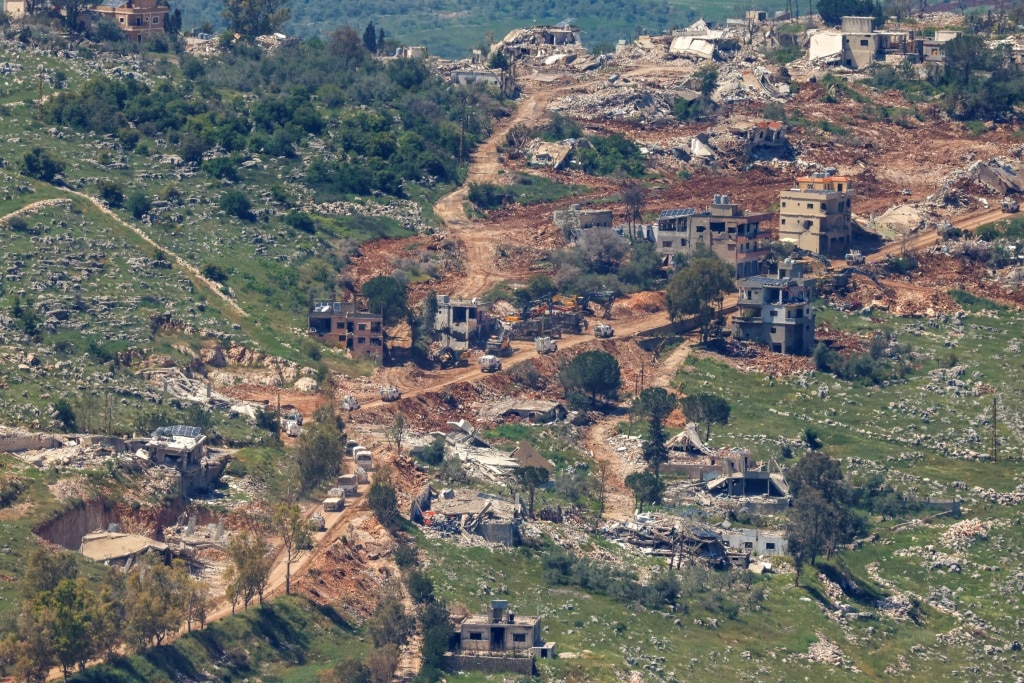
The confrontation has spilled over into neighboring Lebanon, where a shaky ceasefire between Israel and Iran-backed Hezbollah has been fraying in recent days. The Lebanese army confirmed that an Israeli strike wounded two of its soldiers on Tuesday, marking the first attack on Lebanese military personnel since the ceasefire extension, followed by a second strike Wednesday that killed one Lebanese soldier. Lebanese President Joseph Aoun called for full implementation of the ceasefire to open the door for diplomatic talks, noting that “Israel must finally realise that the only path to security is through negotiations.”
A new UN-backed report released Wednesday warned that the ongoing conflict has pushed more than 1.2 million people in Lebanon into acute food insecurity, highlighting the growing humanitarian toll of the regional crisis.