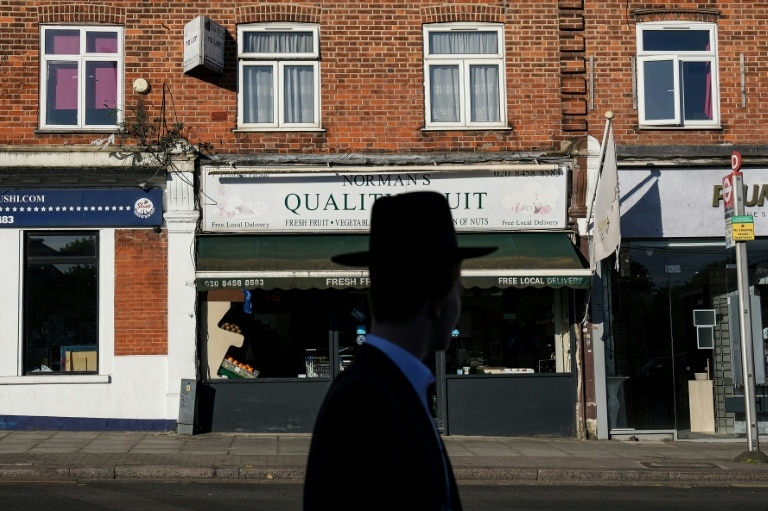
Facing mounting criticism over rising antisemitic violence across the country, the UK government has moved swiftly to ramp up protective measures for British Jewish communities, announcing an extra £25 million ($33 million) in funding for security at synagogues, schools, and other community sites. The policy announcement came just 24 hours after a daylight stabbing attack left two Jewish men injured in north London’s Golders Green, the latest in a string of violent incidents targeting the UK’s Jewish population.
The Wednesday attack unfolded in broad daylight on a public street in Golders Green, a neighborhood with a large longstanding Jewish community. The two victims, aged 34 and 76, were hospitalized and remain in stable condition as of Thursday. A 45-year-old British national, who was born in Somalia and moved to the UK as a child, is currently in police custody in connection with the stabbings.
This attack is only the most recent in a growing wave of violence targeting Jewish sites across the UK. Last year, a deadly assault on a Manchester synagogue left two people dead, and multiple arson attacks have targeted synagogues and other Jewish community spaces in the Golders Green area in recent months. Community leaders have repeatedly warned that persistent under-policing and growing antisemitic sentiment have left British Jewish communities feeling deeply vulnerable.
Speaking to Sky News, UK Home Secretary Shabana Mahmood acknowledged the pervasive sense of uncertainty among Jewish Britons, explaining the new funding was a direct response to this crisis. “People have a sense of deep insecurity… and that is why the government is bringing forward investment, an additional £25 million to invest in the security of our Jewish community,” Mahmood said. She confirmed the funding will go toward expanding protective security at Jewish places of worship, educational institutions, and community centers across the country.
The stabbing has already drawn renewed calls for broader action from community representatives. Rabbi Ben Kurzer, a leader at Golders Green Synagogue, told BBC Radio that regular visible police presence remains scarce in high-risk Jewish areas, with most current security provision falling to underfunded private providers. “There is definitely not a significant police presence on a regular basis in these areas. We have little bits here and there, but most of the security that we’re seeing is private,” Kurzer said. He urged the government to go beyond funding and implement more systemic protections for British Jews, including cracking down on what he described as hate-fueled pro-Palestine protests that have amplified antisemitic rhetoric.
“We all believe in free speech, but there’s obviously a limit to free speech when it’s leading to events such as we had yesterday,” Kurzer added, echoing longstanding concerns from Jewish community leaders that unregulated large-scale protests have created a permissive environment for antisemitic violence.
According to U.S.-based monitoring group SITE Intelligence Group, a little-known faction called Harakat Ashab al-Yamin al-Islamiya (HAYI), which is suspected of having links to Iran, has claimed responsibility for the stabbing in an online video, describing the attacker as one of its “lone wolves.” The claim remains uncorroborated by UK law enforcement as of Thursday.
In response to the alleged ties to a hostile foreign state, Mahmood announced the government would move forward with emergency legislation to close existing legal gaps that have hampered action against groups linked to foreign adversaries and their proxies. The new legislation will be fast-tracked through parliament in the coming weeks, she confirmed.
The push for tighter protest restrictions aligns with existing policy priorities set by Keir Starmer’s Labour government, which last year announced plans to grant UK police expanded powers to limit frequent demonstrations, in part to account for the “cumulative impact” of repeated protests on community safety.
Monitoring organizations across the UK have documented a dramatic spike in both antisemitic and Islamophobic incidents since the outbreak of the Israel-Hamas war in Gaza in October 2023, with antisemitic hate crimes rising by more than 100% in some regions of the country.