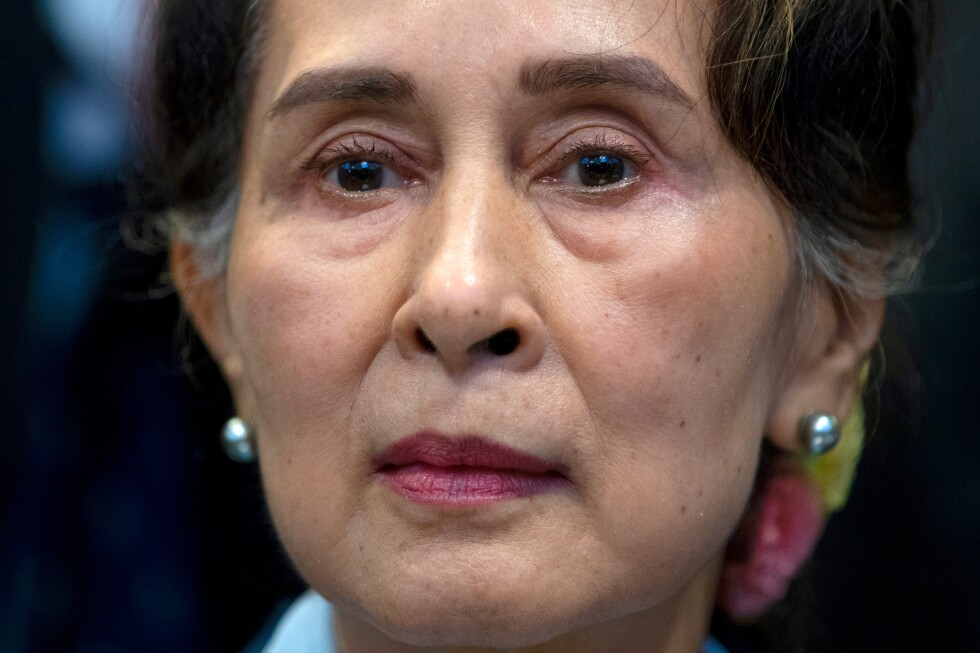
BANGKOK – In a move tied to a major Buddhist religious observance, Myanmar’s military-installed administration has slashed the prison term of ousted democratically elected leader Aung San Suu Kyi, marking the second mass prisoner pardon issued by the regime in just two weeks, according to anonymous legal sources and official state media reports.
The latest commutation, announced Thursday to mark the full moon day of Kason – the holiday that commemorates the birth, enlightenment, and passing of the Buddha – applies a one-sixth sentence reduction to all remaining convicted prisoners across the country, in addition to the full amnesty granted to 1,519 incarcerated people, 11 of whom hold foreign citizenship. It remains unclear how many of the thousands of people detained for opposing military rule are included in the most recent round of clemency.
Two legal officials, speaking on condition of anonymity out of fear of retaliation from state authorities, confirmed that the 80-year-old Nobel Peace Prize recipient would see her sentence reduced by an additional one-sixth under the new order. No official confirmation of her remaining term has been released, but calculations based on prior sentence cuts show she is still expected to serve more than 13 years behind bars.
This latest amnesty follows a broader pardon issued on April 17 that released more than 4,500 prisoners and cut sentences for inmates serving terms under 40 years, which already shaved more than four years off Suu Kyi’s sentence. The sequence of clemency measures comes three weeks after Senior General Min Aung Hlaing, the head of Myanmar’s military, was sworn in as the country’s president. His appointment followed a 2025 election widely dismissed by international observers and critics as neither free nor fair, widely seen as a carefully orchestrated move to cement the military’s authoritarian grip on national power. In his inauguration address, Min Aung Hlaing stated the amnesty program was designed to advance national reconciliation, social justice, and peace across the country.
Suu Kyi’s current detention stretches back to February 1, 2021, when the military seized power in a coup that ousted her democratically elected civilian government. By the end of 2022, she was convicted on a slate of politically charged charges and handed a 33-year prison sentence. Supporters and global human rights organizations have consistently characterized these convictions as a manufactured effort to discredit Suu Kyi, legitimize the 2021 coup, and permanently remove her from Myanmar’s political landscape. Her sentence was first reduced to 27 years in August 2023, before the additional cuts announced in April 2025.
Today, Suu Kyi is being held at an undisclosed location in Myanmar’s capital Naypyitaw. Unconfirmed reports circulated last week suggesting the regime planned to transfer her to house arrest as part of the latest clemency, but no official confirmation of this move has emerged. Information about her current health and well-being remains tightly controlled by state authorities. Unverified reports published in 2024 and early 2025 have documented declining health, including recurring low blood pressure, dizziness, and heart complications. Notably, Suu Kyi’s legal team has not been allowed to meet with her in person since December 2022.
The 2021 military coup sparked widespread popular resistance across Myanmar, which the regime responded to with brutal violent repression. The conflict has escalated into an ongoing bloody civil war that has killed thousands of civilians and displaced millions. As of the latest data from the Assistance Association for Political Prisoners, a Thailand-based human rights monitoring group, more than 22,000 people remain in detention for their opposition to military rule since the coup.
For decades, Suu Kyi has stood as the global face of Myanmar’s pro-democracy movement. The daughter of Aung San, Myanmar’s assassinated founding independence leader, she spent nearly 15 years under house arrest as a political prisoner between 1989 and 2010. Her unwavering nonviolent resistance to military authoritarianism earned her international acclaim and the 1991 Nobel Peace Prize, cementing her status as a global symbol of democratic struggle.