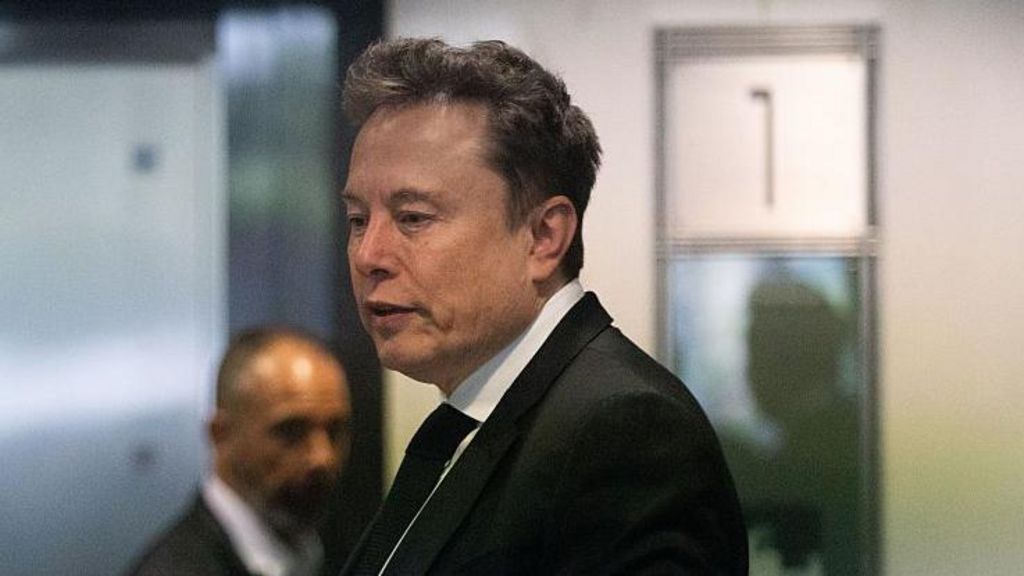
One of the most closely watched legal battles in the history of artificial intelligence entered a tense new phase this week, as Tesla and SpaceX CEO Elon Musk took the stand for a second day of testimony in his multi-billion-dollar lawsuit against OpenAI, co-founder Sam Altman, and OpenAI president Greg Brockman. The Oakland, California courtroom has become the center of a debate that will shape the future direction of the AI sector, pitting Musk against his former colleagues over the core founding mission of one of the world’s most valuable tech companies. On the stand, Musk repeatedly pushed back against aggressive questioning from OpenAI’s lead defense attorney William Savitt, at one point labeling the lawyer’s line of inquiry unnecessarily convoluted and intentionally designed to trip him up. “Your questions are not simple,” Musk told Savitt mid-examination. “They’re designed to trick me essentially.”
Musk, a founding investor of OpenAI, launched the lawsuit in 2024, alleging that Altman, Brockman, and major OpenAI backer Microsoft betrayed the organization’s original non-profit charter by shifting OpenAI to a for-profit operating model. He argues that the founders explicitly misled him and other early supporters about the long-term direction of the company, which was launched with the stated public mission of developing artificial general intelligence (AGI) — AI systems that outperform human-level intelligence across all domains — for public benefit, not private profit.
The tech billionaire laid out his core position clearly during his opening testimony, framing the case as a fundamental check on the integrity of charitable organizations. “It’s actually very simple,” he said. “It’s not okay to steal a charity… If it’s okay to loot a charity, the entire foundation of charitable giving will be destroyed.” Musk acknowledged that he contributed nearly $38 million to the non-profit OpenAI as an early backer, covering almost all of the organization’s initial operating costs because he wanted to ensure it stayed aligned with its public-focused mission. He admitted that he expected to cede control as more stakeholders joined the project, but said he never anticipated the entire mission would be flipped to prioritize commercial profit. “I could have done that with OpenAI, but I chose not to. I chose something that was for the public benefit,” he said. “I deliberately chose to create this as a non-profit for the public good.”
Through his legal team, Musk is seeking billions of dollars in damages for what he calls OpenAI’s “wrongful gains,” all of which he says should be redirected to fund OpenAI’s non-profit division. He is also calling for a full leadership shakeup, including the removal of Altman from his top executive role at the company.
OpenAI’s legal team has struck back with a sharply contrasting narrative, arguing that Musk’s lawsuit is nothing more than an attempt to sabotage a leading rival in the global AI race. The company says Musk left OpenAI in 2018 only after he failed to seize full control of the organization, and that his current legal action is driven by regret over walking away from the company years before its ChatGPT product revolutionized the AI industry and generated hundreds of billions of dollars in market value.
Savitt used his cross-examination to highlight what he frames as a contradiction in Musk’s position: while Musk insists OpenAI must remain non-profit to ensure AGI safety, his own competing AI startup, xAI — launched in 2023, a year after ChatGPT’s blockbuster debut — operates as a for-profit company. Savitt also argued that Musk has long sought to advance his own commercial interests through OpenAI, claiming Musk tried to force a merger between OpenAI and Tesla, and used his early investment as leverage to “bully” other co-founders. “We’re here because Mr Musk didn’t get his way at OpenAI,” Savitt told the court. “Because he’s a competitor, Mr Musk will do anything to attack OpenAI.”
As of the second day of testimony, Altman and Brockman sat in the front row of the courtroom observing the proceedings, and Altman is expected to take the stand later in the trial. The case, which is set to run for several weeks, has already drawn widespread public attention: crowds of demonstrators have gathered outside the Oakland courthouse, and tech industry observers across the globe are tracking the outcome closely, as a ruling for either side could set lasting precedents for how AI organizations are structured, governed, and held accountable to their original missions. Analysts note that Musk’s xAI has trailed OpenAI in market adoption and product development since its launch, a context OpenAI has leaned on to bolster its claim that the lawsuit is driven by competitive jealousy.
OpenAI has pushed back on all of Musk’s core claims, maintaining that Musk was fully aware of and supported the 2019 decision to launch a commercial arm to fund the massive costs of AI research years before ChatGPT launched. The company also says all of Musk’s original $38 million donation was spent exactly as intended, in service of the organization’s founding mission.
As the trial unfolds, the global tech industry waits for a verdict that could reshape the dynamics of the fast-growing AI sector, redefining the line between non-profit public mission and commercial innovation in one of the most important technological revolutions of the century.