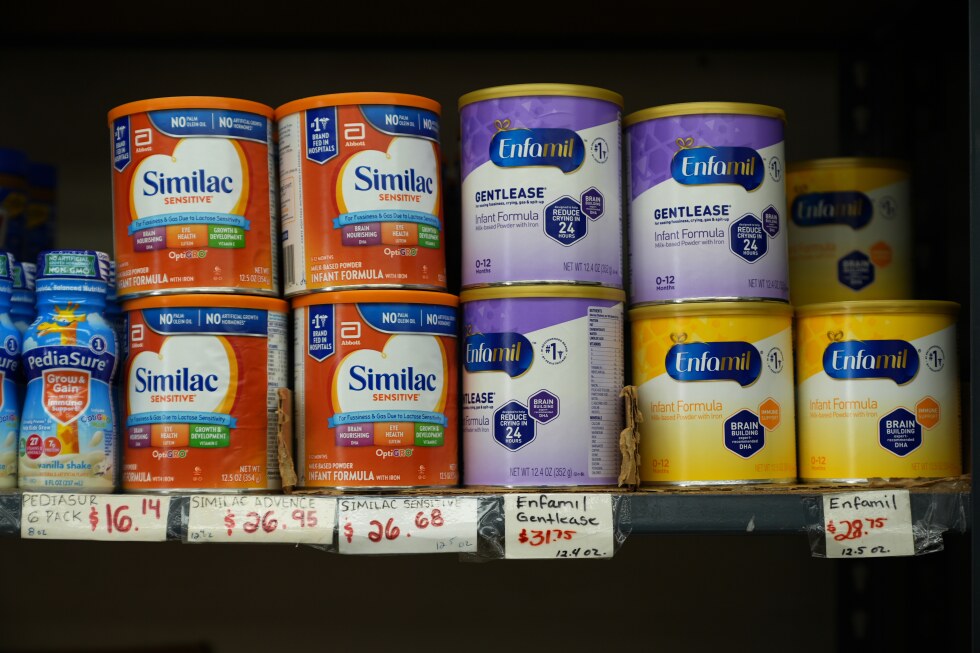
U.S. federal health officials announced Wednesday that a landmark safety analysis of commercial infant formula sold across the country has found mostly reassuringly low concentrations of heavy metals, pesticides, and other potentially harmful contaminants. The comprehensive testing was carried out as part of the U.S. Food and Drug Administration’s Operation Stork Speed, an initiative the agency describes as the most expansive and rigorous assessment of U.S. infant formula safety ever conducted. Both FDA leaders and independent public health experts have concluded that the current domestic infant formula supply remains safe for consumer use.
“There is no reason for American parents to avoid any available infant formula on the market right now,” stated Dr. Steven Abrams, a pediatrics professor at the University of Texas at Austin who served as an independent reviewer for the FDA’s findings.
Between 2023 and 2025, FDA scientists collected and tested more than 300 samples of commercially produced infant formula for a full panel of potential contaminants, including four common heavy metals: lead, arsenic, cadmium, and mercury. The testing also extended to pesticide residues, phthalates (industrial chemicals commonly used in plastic packaging and manufacturing), and per- and polyfluoroalkyl substances (PFAS), the persistent man-made compounds widely nicknamed “forever chemicals” for their ability to remain in the environment and human body for decades.
Per the FDA’s final report, all tested contaminants registered either undetectable levels or concentrations far lower than established safety thresholds. Any heavy metals that were detected fell well below the strict exposure limits set by the U.S. Environmental Protection Agency for drinking water. Ninety-nine percent of tested samples showed no trace of pesticide residues at all, and 25 out of the 30 specific PFAS compounds included in the testing panel were not detected in any samples.
Most independent experts who reviewed the data have backed the FDA’s conclusion that the current supply is safe, noting that trace amounts of some heavy metals can enter the food supply naturally through environmental contamination, rather than as a result of manufacturing flaws. But not all specialists share the full reassuring conclusion: synthetic compounds like phthalates and PFAS do not occur naturally, so even trace detections raise red flags for some clinicians and researchers.
“These are completely human-made chemicals,” explained Dr. Sheela Sathyanarayana, a pediatrics professor at UW Medicine and researcher with the Seattle Children’s Research Institute. “The fact that we can detect any of these compounds in infant formula at all is a cause for concern.” Sathyanarayana added that the findings underscore a critical need for expanded ongoing monitoring of contaminants not just in infant formula, but across the entire U.S. food supply.
Operation Stork Speed was launched by the Trump administration in March 2025, marking the first comprehensive update to U.S. infant formula safety and quality standards in decades. The initiative builds on earlier FDA work that examined heavy metal contamination in a range of infant foods, a public health priority because high early-life exposure to these toxins is linked to long-term impairments in children’s brain development, learning capacity, and behavioral development, Abrams explained.
Currently, unlike regulatory frameworks in the European Union, Canada, and Australia, the U.S. does not have legally enforceable maximum exposure limits for heavy metals in infant formula. For years, consumer advocacy organizations have pushed the FDA to implement these strict, science-based limits. In 2024, independent consumer organization Consumer Reports published its own analysis of 41 U.S. infant formulas, claiming that many products contained troublingly high levels of heavy metals and other contaminants. However, that study set its own safety threshold for concern far lower than the existing standards used by the European Union, and the high-profile report sparked widespread public anxiety that led many parents to avoid necessary commercial formula use unnecessarily, Abrams noted.
Abrams himself has called on the FDA to continue regular safety monitoring of infant formula and maintain transparent public reporting of test results. Abbott, one of the largest domestic infant formula manufacturers in the U.S., has also urged the FDA to formalize scientific, enforceable standards for contaminants in the sector.
“Producing infant formula at scale domestically is a matter of national security for the United States,” Abbott spokesman John Koval said in a prepared email statement. “These latest results confirm that our current domestic supply is safe for American families.”
This reporting was produced by The Associated Press Health and Science Department, which receives grant support from the Howard Hughes Medical Institute’s Department of Science Education and the Robert Wood Johnson Foundation. The AP maintains full editorial control over all of its independent content.