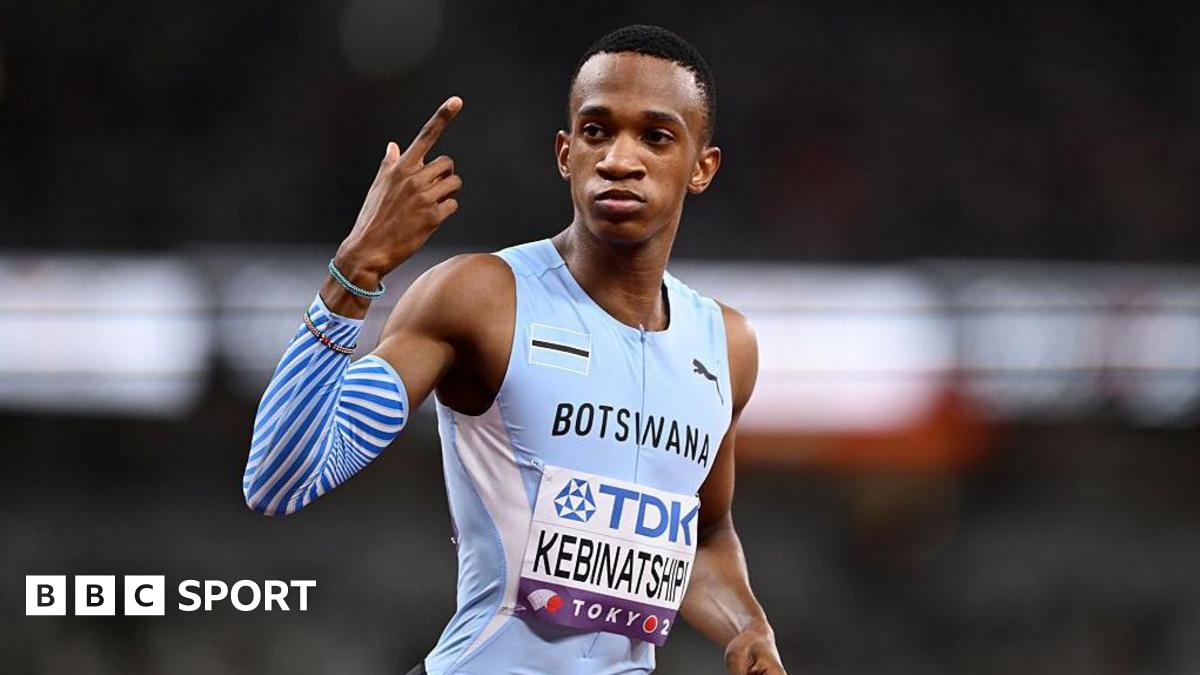
Reigning men’s 400m world champion Collen Kebinatshipi, the first man from Botswana to claim global gold at the World Athletics Championships, is sounding the alarm over growing talent drain from African athletics, urging continental governing bodies to step up and support homegrown athletes to stop them from seeking citizenship transfers abroad.
The conversation around athlete nationality switches has intensified this month after global governing body World Athletics blocked six African runners from moving their athletic allegiance to Turkey, following reports of what the organization described as “lucrative” unauthorized contract offers. Among the athletes affected are five Kenyan runners, including former women’s marathon world record holder Brigid Kosgei, and top Nigerian sprinter Favour Ofili. Ofili’s case drew particular public scrutiny after the 23-year-old was incorrectly omitted from the 2024 Paris Olympic 100m entry list due to an administrative mistake by Nigeria’s athletics federation, a misstep that many observers link to the athlete’s subsequent interest in moving abroad.
Kebinatshipi, 22, says he understands why so many African athletes opt to switch nationalities. In an interview with BBC Sport Africa, the champion noted that many elite athletes on the continent face crippling financial and logistical barriers when preparing for major international competitions. “Spending sometimes can be a bit challenging,” he explained. “I think they are doing that because they want to go where they can cut costs and be properly supported.” His solution? Kebinatshipi says African federations must invest in better support structures that match international standards, arguing that consistent, high-quality backing is the most effective way to retain top talent at home.
Unlike some other African nations, Botswana has so far avoided widespread talent outflow, in large part due to a historic run of global success that has built confidence among the country’s next generation of runners. Last year, Kebinatshipi claimed individual 400m gold at the World Athletics Championships in Tokyo, and alongside star sprinter Letsile Tebogo, Lee Bhekimpilo Eppie and Bayapo Ndori, also won 4x400m relay gold at the same event – making Botswana the first African nation ever to claim that world title. Tebogo followed that achievement with a stunning 200m gold at the 2024 Paris Olympics, cementing the country’s status as a new global sprint powerhouse.
This weekend, Botswana will make more history as the first African country ever to host a senior World Athletics track event, the World Relays, on home soil. For Kebinatshipi, Botswana’s rapid ascent in sprinting didn’t happen by accident: he credits much of the sport’s transformation in the country to the legacy of compatriot Isaac Makwala, a decorated Commonwealth and Olympic medallist who has mentored a generation of young Botswana runners. “My role model from a young age has been Isaac,” Kebinatshipi said. “He has also been close to me and guiding me. That’s why I had that motivation and belief that I can also do this and be like him. He has always been assisting me with training, nutrition. I really appreciate the role he played on my career up until now.”
Raised in a small village in southwestern Botswana, Kebinatshipi first discovered his love for running during his school years. After graduating high school, he made the tough decision to pause his academic studies to focus fully on training – a gamble that paid off when he crossed the finish line in 43.53 seconds to claim world gold in Tokyo seven months ago. The historic win earned Botswana a national public holiday declared by President Duma Boko, and turned the young champion into a national icon. “I don’t really like to over-celebrate my achievements,” he said modestly. “My life has changed a lot when it comes to me going shopping. Everyone will come to me taking pictures. For me to get in the shop and spend 10 minutes I have to allow an extra 30 minutes for pictures.”
Kebinatshipi concedes that his world title came earlier than he ever planned: he narrowly missed out on the 400m Olympic final in Paris just months before his Tokyo win, and had originally targeted breaking national records and claiming global gold by the 2028 Los Angeles Olympics. “When it comes to the national record and winning gold on global stages, those were chats that were planned for the 2028 Olympics,” he explained. “We knew that it winning in Tokyo was just a bonus and we should go back to the drawing board and work for what we are aiming for, which is the 2028 Olympics.”
He has already made a strong start to the 2026 season, clocking 44.55s in his opening 400m race and turning in an impressive performance over 100m at the Botswana national championships. Right now, all his focus is on delivering a strong result at the World Relays in front of a home crowd. “We want to make our people here proud. We are aiming to deliver our best,” he said. “We can’t get much into aiming for world records or producing fastest times early this season because we have a long season ahead. We want to come and produce, and that’s the only thing that we are aiming for now.”
Beyond Botswana’s success, Kebinatshipi is celebrating a broader shift across African athletics: for decades, the continent has been synonymous with middle and long-distance dominance, but a new wave of sprinters from across the continent is changing global perceptions. Names like Tebogo, South Africa’s Akani Simbine, Kenya’s Ferdinand Omanyala and Ivory Coast’s Marie-Josee Ta Lou-Smith are leading the charge, and Kebinatshipi says this evolution is a huge win for African sport. “Africans have been known for long distance events, but now we challenge ourselves in everything,” he said. “That’s why we have a big pool of sprinters in Africa.”