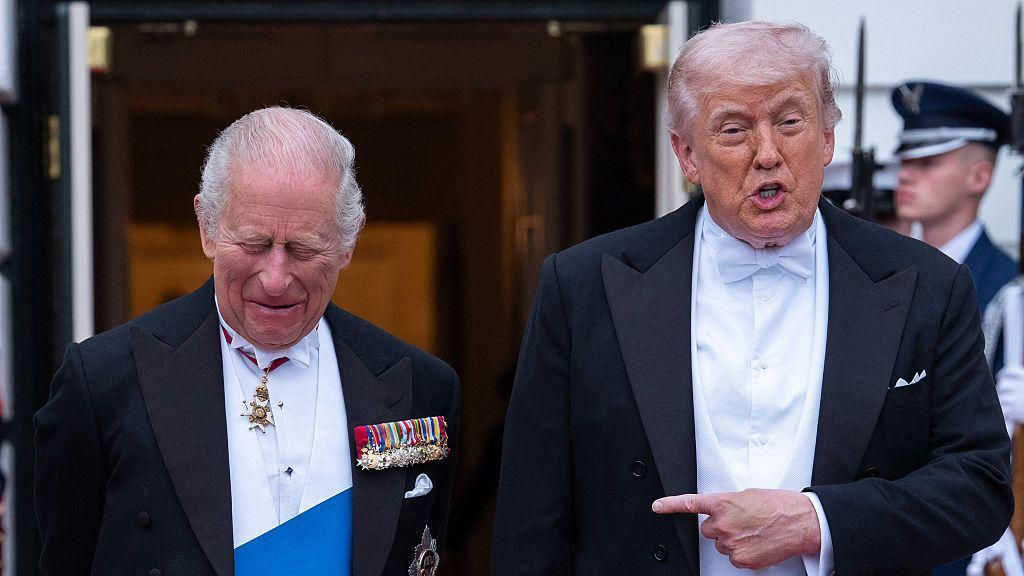
The applause has faded, the state banquet tables have been cleared, and the pageantry that dominated evening news cycles has wrapped up. But as King Charles III and Queen Camilla close out their four-day state visit to the United States, one critical question lingers: what lasting impact will this historic royal trip have on the tense UK-US relationship, and how much of the ceremonial spectacle will translate to tangible political progress?
Long before the King set foot on US soil, British diplomatic officials took a pragmatic stance on what the visit could realistically achieve. They openly acknowledged that a single royal tour could not fully reset the bilateral relationship, which has been strained by deep, unresolved divides over Iran’s nuclear program, NATO burden-sharing, support for Ukraine, trade policy, and repeated harsh public criticism from US President Donald Trump targeting UK opposition leader Keir Starmer. Instead of sweeping breakthroughs, diplomats set a more modest, immediate goal: to soften the sharp rhetorical tone and lower tensions between London and Washington.
Sir David Manning, a former British ambassador to the US, framed the King’s role ahead of the visit in an interview with the BBC, describing him as a “stabiliser and a shock absorber” capable of fostering a more constructive environment for the UK government to re-engage the Trump administration on thorny bilateral issues. By that standard, the King appears to have delivered on his core mission.
With a combination of natural charm and self-deprecating humour that many sitting British politicians would envy, King Charles used two high-profile addresses to praise the United States, its people, and its political leadership in a way that few domestic figures could pull off without drawing criticism. A standout diplomatic gesture was his thoughtful gift to President Trump: a historic ship’s bell from the HMS Trump, a move widely praised as a masterclass in soft-state diplomacy. Before a deeply politically polarised US audience, the King also offered a gentle, unifying reminder of the shared national identity that binds Americans together, describing the US as a “living mosaic” and celebrating both the UK and US as “vibrant, diverse and free societies.”
That message of unity landed with even prominent Trump allies. Republican Senator Lindsey Graham, a long-time supporter of the president, called the King’s address a “much needed morale boost” for US lawmakers, writing on social media: “Most members of Congress feel better after the speech than they did before. I will admit it was a bit odd that the unifying feeling had to come from the King of England… but so be it!”
Beyond building warmth and improving tone, the King’s second core objective was to calm roiling diplomatic waters across the Atlantic by reframing long-standing disagreements in a broader historical context. He leaned into the idea that the strength of the UK-US partnership has always been proven by its ability to overcome difference, telling a joint meeting of Congress: “Ours is a partnership born out of dispute, but no less strong for it. We can perhaps agree that we do not always agree.” British diplomats hope this framing will help de-escalate current tensions over time.
Beneath the warm anecdotes and playful humour, the King also made clear, firm arguments on core policy priorities that cut directly to key ideological divides with the Trump administration. He defended the value of the NATO alliance, noting it has stood with the US shoulder-to-shoulder since the 9/11 attacks and remains critical to addressing an increasingly unstable global order. He called for “unyielding resolve” in defending Ukraine and its courageous people, and made a point of praising the post-WWII international rules-based order – a framework that Trump and his top officials have repeatedly criticised and sought to undermine.
The King cut to the core of his argument in a single, memorable line that challenged the foundation of Trump’s “America First” ideology: “The challenges we face are too great for any one nation to bear alone.” He repeated this core message throughout his visit, emphasising that the transatlantic partnership “based on twin pillars: Europe and America” is “more important today than it has ever been.” He urged both nations to resist calls for growing isolationism, framing his message as “Alliance First” rather than prioritising narrow national interest.
The true test of this state visit will not be how smoothly the ceremonies, speeches, and public walkabouts went – and there have been small, expected hiccups along the way. Leaked private comments from UK Ambassador Sir Christian Turner questioning the long-touted “special relationship” made headlines, and Trump sparked a minor stir when he claimed the King agreed with his hardline position on Iran’s nuclear program. But these have amounted to little more than small bumps on the diplomatic road. It is also unlikely that the visit will put a permanent end to Trump’s public criticism of Keir Starmer; after all, the president has never shied away from picking public fights even with religious leaders like the Pope.
The real legacy of the visit will hinge on whether the genuine personal warmth built between King Charles and President Trump can be translated into a more stable, productive working relationship between the two governments. Part of that depends on decisions from the UK side: whether British leaders will avoid politically popular cheap shots at Trump that erode trust, and whether the UK will follow through on commitments to increase defence spending to once again act as the capable independent security player it has been historically. As former White House Middle East adviser Brett McGurk, who served four US presidents, told CNN, no amount of royal soft power can ease US military leaders’ concerns about the UK’s declining hard defence capabilities. “If the King’s speech could actually translate into some shared interests and burden sharing, there is an opportunity. If you look at what’s happening with Ukraine, we really need the Brits – and their Navy with us in the Strait of Hormuz,” McGurk noted.
Much of the outcome also rests with Trump and his administration: will the president and his team be swayed more by the King’s policy arguments than by his personal charm? Will they rediscover the strategic value of long-standing alliances, or will they continue to pursue an isolationist, go-it-alone foreign policy? For now, only time will tell whether the visit delivers tangible results. King Charles has already demonstrated his skill as a diplomat in his first major state visit to the US. Now it is up to elected politicians on both sides of the Atlantic to turn that diplomatic groundwork into meaningful progress.