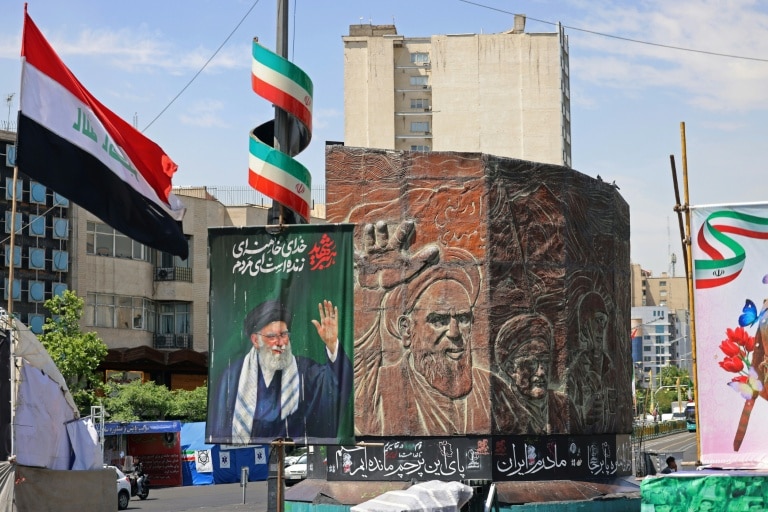
Just 13 minutes ago, Agence France-Presse released a comprehensive update on the rapidly unfolding conflict across the Middle East, capturing multiple interconnected developments that ripple across global politics, energy markets and human rights. The update comes as the war, sparked by US-Israeli strikes in late February, continues to reshape regional dynamics and send shockwaves through the global economy.
At the heart of US strategy toward Iran, former President Donald Trump has directed American national security officials to draw up plans for a sustained naval blockade of Iranian ports, according to reporting from the Wall Street Journal. The push for a long-term blockade stems from Trump’s deep skepticism that Tehran is negotiating in good faith on its nuclear program. The US administration’s core demands include a 20-year full suspension of uranium enrichment, followed by permanent stringent oversight and restrictions on Iran’s nuclear activities. Trump doubled down on this hardline stance in a post to his Truth Social platform, writing: “Iran can’t get their act together. They don’t know how to sign a nonnuclear deal. They better get smart soon!” The post included a graphic of Trump holding an assault rifle emblazoned with the phrase “NO MORE MR. NICE GUY!”.
Trump made his first public remarks on the conflict’s trajectory during a White House state dinner honoring Britain’s King Charles III on Tuesday, claiming that Iran had been “militarily defeated”. “We have militarily defeated that particular opponent,” Trump told attendees, adding, “Charles agrees with me even more than I do — we’re never going to let that opponent have a nuclear weapon.”
On the human rights front, the United Nations has issued sharp criticism of Iran, confirming that at least 21 people have been executed and more than 4,000 arrested across the country since the outbreak of the wider Middle East war. The UN Office of the High Commissioner for Human Rights detailed that nine of those executed were connected to anti-government protests held in January 2026, 10 were accused of membership in opposition groups, and two were executed on charges of espionage. The UN described the Iranian government’s crackdown as “harsh and brutal” against its own population.
In Congress, US Defense Secretary Pete Hegseth is set to face intense bipartisan scrutiny Wednesday during his first congressional testimony since the war began. Appearing before the House Armed Services Committee to discuss Trump’s $1.5 trillion defense budget request, Hegseth will face tough questions over the administration’s handling of the conflict with Iran. Top US military officer General Dan Caine will also testify, and the hearing is widely expected to be fiery, as lawmakers from both major parties have already voiced deep frustration over the lack of transparency in classified briefings on the war’s progress.
Violence continues to flare in southern Lebanon despite a fragile ceasefire implemented on April 17. Lebanon’s health ministry confirmed Tuesday that new Israeli strikes killed eight people, including several civilian civil defense rescuers, and wounded two Lebanese soldiers. Israel has been engaged in active ground combat with the Iran-backed Hezbollah militant group since early March, and low-intensity clashes have persisted despite the formal ceasefire agreement.
For global energy markets, the conflict has already delivered significant financial windfalls for major fossil fuel producers. French energy giant TotalEnergies announced that its first-quarter net profit surged 51% year-over-year to hit $5.8 billion, a new record, driven largely by the sharp rise in crude oil prices tied to Middle East supply chain disruptions. The company noted that expanded oil and gas production in Brazil and Libya fully offset lost output from the Gulf region, which normally accounts for 15% of TotalEnergies’ total hydrocarbon production. The company highlighted its resilience, noting it has been able to capitalize on elevated global prices to boost its bottom line.
In a separate operational update, TotalEnergies confirmed it has restarted operations at the Satorp refinery in Saudi Arabia, a joint venture with Saudi Aramco. The facility was shut down as a safety precaution after airstrikes in early April damaged three of its processing units. As of April 14, the refinery has returned to full operational capacity, processing 230,000 barrels of crude per day, with undamaged units brought back online to restart production.
Global oil prices jumped sharply this week following two key developments: reports that Trump is unlikely to accept an Iranian proposal to reopen the Strait of Hormuz to commercial shipping traffic, and a warning from Qatar that the conflict could devolve into a protracted “frozen conflict”. By Tuesday, West Texas Intermediate crude breached the $100 per barrel mark for the first time in two weeks, while Brent crude climbed above the price point it reached before a temporary ceasefire was announced in early April. On Wednesday, both contracts continued their upward climb, with Brent holding above $113 per barrel and WTI trading above $101 per barrel.