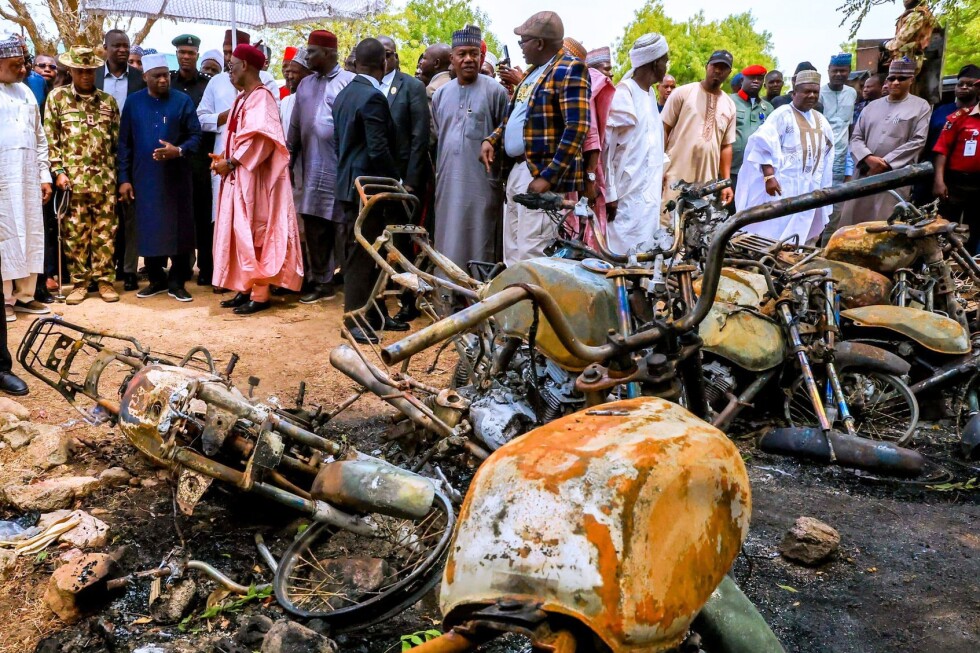
Nigeria is reeling from two back-to-back violent incidents that have underscored the long-running, deep-seated security crisis plaguing the West African nation, with at least 29 villagers confirmed dead following an overnight Islamic State militant attack in the country’s northeast, and eight young pupils still missing after armed gunmen abducted 23 children from a north-central orphanage.
The first assault unfolded late Sunday in Guyaku, a small rural settlement located within Gombi Local Government Area of Adamawa State, senior state authorities confirmed on Monday. Shortly after the attack, the Islamic State group issued a claim of responsibility via a statement posted to the encrypted messaging platform Telegram.
During an on-site visit to the impacted village Monday, Adamawa State Governor Ahmadu Umaru Fintiri publicly condemned the violence, labeling the attack a tragic event that has no place in civilized society. Two main militant factions aligned with the Islamic State currently operate across Nigerian territory, but officials have not yet confirmed which cell carried out the Guyaku assault. The Islamic State West Africa Province, better known by its acronym ISWAP, maintains an active presence across northeastern states including Adamawa, while a second IS-linked faction, referred to locally as Lakurawa, typically stages attacks further west in the north-central states of Sokoto and Kebbi.
The Guyaku attack coincided with a separate mass abduction in north-central Nigeria, where armed assailants stormed an orphanage operated by an unregistered school on the same Sunday. The raiders abducted 23 young pupils from the facility, located in an isolated district of Lokoja, the capital of Kogi State. Kogi State government spokesperson Kingsley Femi Fanwo confirmed in an official statement that the Dahallukitab Group of Schools, which ran the orphanage, was operating without legal authorization.
Security forces have since launched intensive search and rescue operations, and have successfully rescued 15 of the 23 abducted children. Authorities said operations are ongoing to recover the remaining eight captives and apprehend the perpetrators behind the raid. While no militant or criminal group has stepped forward to claim responsibility for the abduction, the region has seen a sharp surge in kidnapping-for-ransom attacks in recent months. In Nigeria, the term “pupil” generally refers to children enrolled in kindergarten or primary school, meaning the captives are likely aged 12 or younger.
Kidnappings targeting students and educational institutions have become one of the most visible markers of Nigeria’s ongoing insecurity. Regional security analysts note that armed gangs and militant networks deliberately target schools and children as strategic, high-impact targets, as such attacks draw widespread media and government attention and often yield large ransom payments.
Nigeria, Africa’s most populous nation, has grappled with a persistent, multifaceted insurgency in its northern regions for more than 20 years, with overlapping conflicts involving IS-aligned insurgents, bandit gangs, and separatist militias that have killed tens of thousands of people and displaced millions. Earlier this year, the United States deployed a contingent of troops to Nigeria to provide advisory support to Nigerian military forces leading counter-insurgency and counter-terrorism operations across the country.
This report was compiled with additional on-the-ground reporting from Sophie Banchereau, based in Dakar, Senegal.