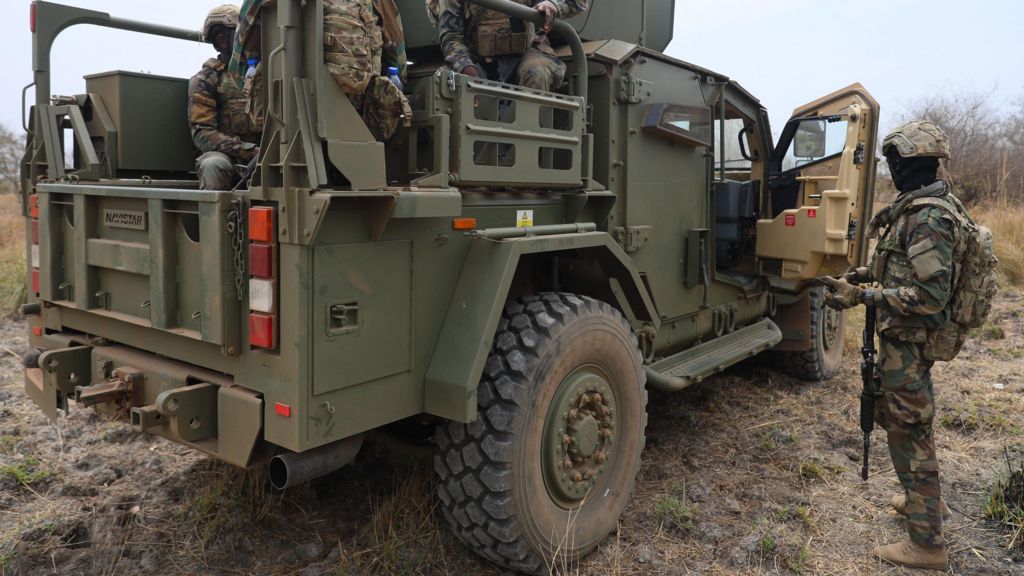
A brazen assault on a military convoy carrying civilian travelers in northeastern Ghana has left multiple people dead, and launched a full official investigation into the attack by the country’s armed forces. The deadly confrontation unfolded on a high-risk highway near Binduri, as the military escort moved between the urban centers of Bawku and Bolga with 140 civilians in its charge. When gunmen launched their attack, a fierce exchange of fire left seven of the assailants and three innocent civilian bystanders dead. Authorities have already taken 10 suspected attackers into custody, as search operations continue for other individuals linked to the assault. Security forces have also recovered a G3 automatic rifle, two fully loaded magazines and an assortment of extra ammunition from one attacker who attempted to hide in a local mosque after the clash.
The violence erupts from a decades-old chieftaincy dispute that has kept the region roiled in intermittent, unpredictable bloodshed. The conflict centers on competing claims to the traditional, influential regional leadership position from two local ethnic groups: the Kusasi and the Mamprusi. For years, the chieftaincy rotated between representatives of the two groups, but tensions flared into deeper division several years ago when Ghana’s Supreme Court ruled to uphold the Kusasi’s claim to the position. The ruling did not resolve the standoff, and instead fueled ongoing resentment that has repeatedly erupted into violent clashes.
To curb the persistent unrest, the Ghanaian government already reinforced the region with additional military deployments last year, a move that came after a wave of attacks on local schools put civilian communities at heightened risk. Beyond deploying additional troops, the government has implemented nighttime curfews across the affected area and launched coordinated joint patrols combining military and police forces to deter violence and respond quickly to flare-ups. In recent months, the influential Asante King has also stepped in to lead high-level mediation efforts aimed at brokering a lasting peace between the two rival groups.
The deployed troops have a second critical mission beyond quelling domestic intercommunal violence: securing Ghana’s long northern border with Burkina Faso. Neighboring Burkina Faso has struggled with a growing insurgency by armed Islamist militant groups for years, and security officials have documented repeated instances of these fighters crossing into Ghanaian territory to carry out attacks or evade counterinsurgency operations. The combination of long-running ethnic tensions and the threat of cross-border militant incursion has made the northeastern region one of Ghana’s most complex security challenges, and the latest deadly attack is expected to prompt renewed calls for both accelerated mediation and sustained security pressure to prevent further bloodshed.