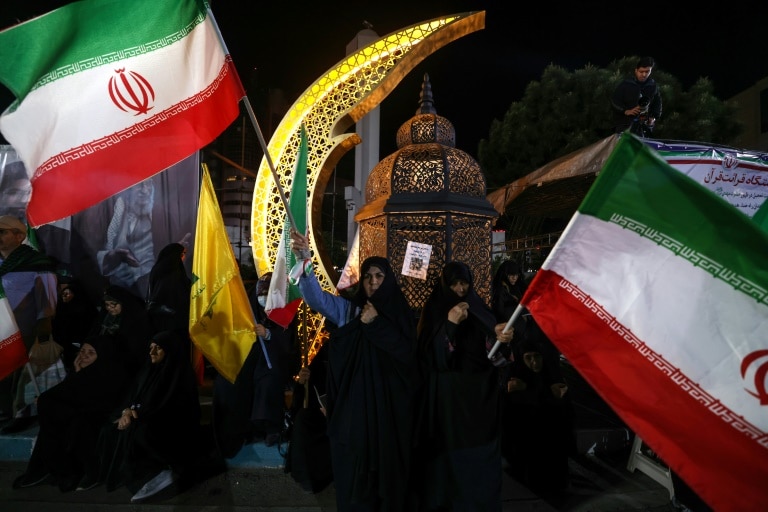
Two months after a joint U.S.-Israeli military offensive sent shockwaves rippling through global energy markets and upended regional security, the Middle East remains locked in a state of elevated tension, with new diplomatic moves, ongoing military clashes and economic volatility defining the latest chapter of the crisis. On Monday, the White House confirmed it is reviewing a new proposal from Iran aimed at de-escalating tensions and unblocking the critical Strait of Hormuz, a chokepoint through which roughly 20% of global oil supplies transit daily. According to Iran’s Fars News Agency, Tehran transmitted the written proposal, which outlines Iran’s non-negotiable red lines covering both its nuclear program and activity around the strait, to Washington via diplomatic channels in Pakistan. U.S. President Donald Trump convened a meeting of his top national security advisors to assess the offer, with White House press secretary Karoline Leavitt telling reporters during a daily briefing that the proposal is “being discussed” among senior administration officials. As diplomatic talks remain in their earliest stages, the ongoing impasse between Washington and Tehran has already triggered fresh volatility across global markets. On Tuesday, international oil prices jumped sharply, while global equity markets sank, as shipping traffic through the Strait of Hormuz remains severely choked, disrupting global energy supply chains. Beyond the diplomatic standoff, Iran has laid out clear conditions for restoring security across the oil-rich Persian Gulf: Tehran demands ironclad security guarantees that the U.S. and Israel will not launch another offensive against its territory. “A durable and permanent cessation of aggression against Iran supplemented by credible guarantees of non-recurrence and full respect for the legitimate sovereign rights and interests of Iran” are non-negotiable preconditions for any de-escalation, Amir Saeid Iravani, Iran’s permanent representative to the United Nations, told a session of the UN Security Council Monday. Meanwhile, military clashes continue to claim lives across the region despite the existing ceasefire agreement between Israel and the Iran-backed militant group Hezbollah. Lebanon’s Ministry of Public Health confirmed Monday that recent Israeli airstrikes on southern Lebanon killed four people, including one civilian woman, and wounded 51 more, three of whom are children. Israeli military leadership has warned that the country faces an extended period of conflict across multiple fronts in the coming year. Israel Defense Forces Chief of Staff Lieutenant General Eyal Zamir noted that the IDF has maintained continuous, multi-front combat operations since the October 7, 2023 Hamas attack that sparked the ongoing Gaza war, and projected that 2026 will bring another full year of fighting across all active fronts. Israeli Prime Minister Benjamin Netanyahu echoed that assessment, emphasizing that Hezbollah remains a critical national security threat that requires continued Israeli military action in Lebanon. “There are still two central threats from Hezbollah: the 122mm rockets and the drones. This demands a combination of operational and technological activity,” Netanyahu said in a formal statement. While Netanyahu acknowledged that Hezbollah now retains only roughly 10 percent of the missile arsenal it held at the start of the current conflict, he added that the remaining weapons still pose a constant threat to Israeli civilians living in the country’s northern border regions. As tensions simmer on all fronts, the international community continues to monitor developments closely, with growing concern over the risk of the conflict expanding into a wider regional war that could have devastating consequences for the global economy and civilian populations across the Middle East.