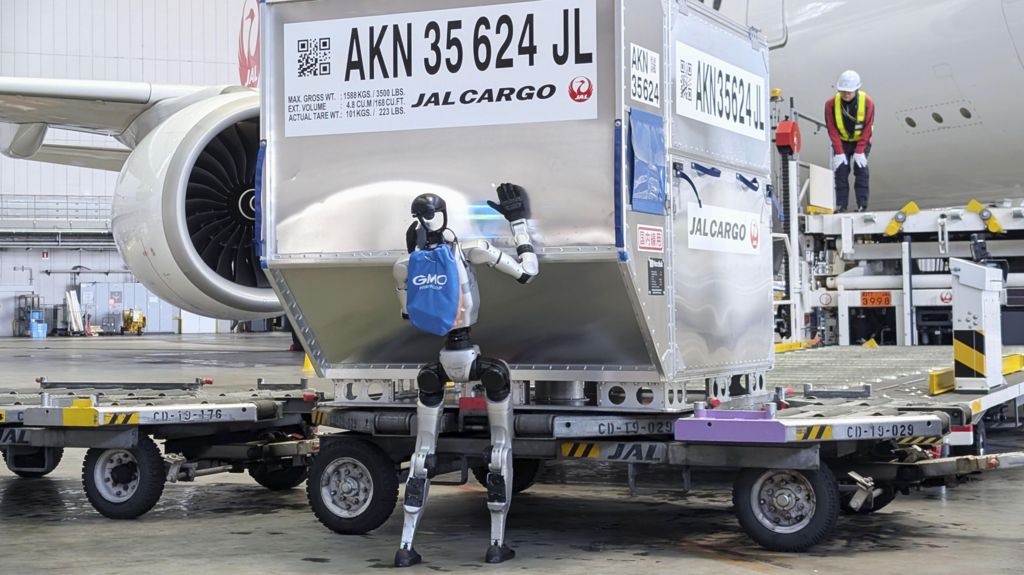
Japan’s aviation sector is turning to robotic automation to address a growing labor shortage, with Japan Airlines (JAL) set to launch a two-year pilot program deploying humanoid robots for ground operations at Tokyo’s Haneda Airport starting in May. The initiative, a collaboration between JAL and Japanese tech firm GMO AI & Robotics, was unveiled to reporters during a public demonstration on Monday.
In the initial phase of the trial, the Chinese-manufactured humanoid robots will be tasked with loading and unloading cargo containers for aircraft. JAL, which currently employs approximately 4,000 ground handling staff across its operations, outlined that the core goal of the experiment is to reduce the physical workload placed on human employees. The company also revealed long-term plans to expand the robots’ scope of work, noting that the machines could eventually take over cabin cleaning duties and the operation of ground support equipment if the initial trial proves successful.
Japan’s aviation industry has been facing mounting pressure on its workforce in recent months, driven by two key factors: a sharp rebound in inbound international tourism following the end of global COVID-19 travel restrictions, and the country’s long-running demographic challenge of a shrinking working-age population. Data from JTB Group, Japan’s largest travel services provider, shows that the country recorded more than 7 million foreign visitor arrivals in just the first two months of this year, a surge that has stretched existing airport ground staff thin.
Tomohiro Uchida, president of GMO AI & Robotics, emphasized during the press event that despite the perception of airports as highly automated facilities, behind-the-scenes ground operations still depend heavily on manual labor and are grappling with severe staffing gaps. Yoshiteru Suzuki, head of JAL’s Ground Service division, echoed that sentiment in comments carried by Kyodo News, stating that shifting physically demanding tasks to robotic systems will deliver meaningful improvements to working conditions for human employees. Suzuki also clarified that humans will remain indispensable for core responsibilities that require critical judgment, including all aspects of safety management, which will not be transferred to robots.
This pilot program is not the first adoption of robotic technology in Japanese airports. Across the country, automated robotic systems are already in use for a range of roles, from security patrols to retail service operations, marking a gradual but steady shift toward greater automation in the country’s aviation infrastructure.