Global financial markets traded with heightened volatility on Tuesday, as crude oil prices extended upward momentum while equity indexes struggled for direction, driven by ongoing geopolitical negotiations between the United States and Iran that could reshape Middle Eastern energy security and end an eight-week-old regional conflict.
Tehran has submitted a written peace proposal to Washington via diplomatic channels through Pakistan, outlining its core negotiating red lines that cover both its nuclear program and the future status of the Strait of Hormuz, the world’s most critical energy chokepoint. Under the reported interim framework, Iran has offered to immediately reopen the Strait of Hormuz — through which roughly 20 percent of global oil and liquified natural gas supplies transit daily — in exchange for the United States lifting its ongoing blockade of Iranian ports. More contentious negotiations over Iran’s nuclear activities, a long-standing sticking point for the Trump administration, would be deferred to a later date under the plan.
The White House confirmed that President Donald Trump convened a meeting with senior advisors on Monday to review the Iranian proposal, but press secretary Karoline Leavitt declined to comment on whether Trump would accept the terms. The news comes just days after Trump abruptly scrapped a planned trip to Islamabad by top envoys Steve Witkoff and Jared Kushner, dashing earlier market hopes for a quick breakthrough. Top U.S. diplomat Secretary of State Marco Rubio already poured cold water on the proposal during an interview with Fox News, arguing that Iran’s offer does not meet Washington’s requirements. “If what they mean by opening the straits is, ‘yes, the straits are open as long as you coordinate with Iran, get our permission or we’ll blow you up and you pay us,’ that’s not opening the straits,” Rubio said.
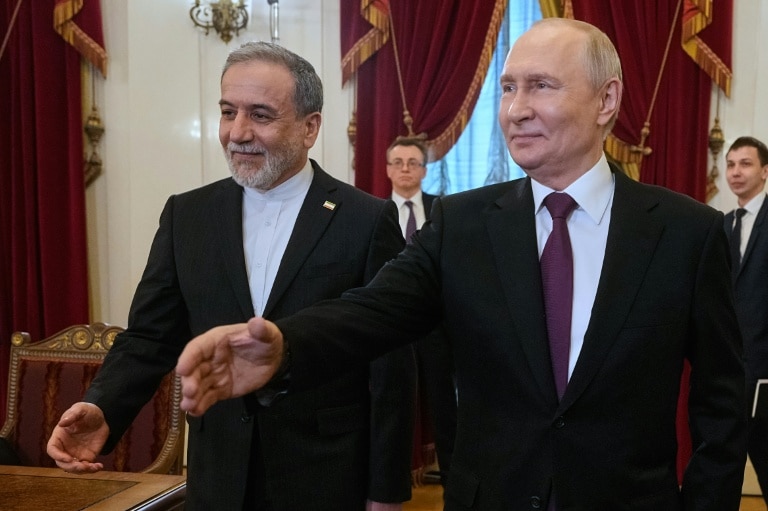
Separately, during a meeting with Iranian Foreign Minister Abbas Araghchi in Saint Petersburg on Tuesday, Russian President Vladimir Putin pledged that Moscow would deploy all possible efforts to bring an end to the ongoing Middle East conflict. Iran’s UN envoy Amir Saeid Iravani also told a UN Security Council session that Tehran requires binding guarantees that both the U.S. and Israel will halt future military strikes before it can offer full security assurances for Gulf waterways.
Energy markets responded directly to the diplomatic developments, with both major global crude benchmarks extending gains. By 0230 GMT, West Texas Intermediate crude climbed 1.0 percent to settle at $97.32 per barrel, while Brent North Sea crude rose 1.0 percent to $109.27 a barrel, approaching the key $110 threshold that has stoked global inflation concerns. Equity markets were far more mixed, with most major Asian indexes ending the session in negative territory: Tokyo’s Nikkei 225 fell 0.5 percent to 60,238.21, Hong Kong’s Hang Seng Index dropped 0.3 percent to 25,851.82, and Shanghai’s Composite Index slipped 0.2 percent to 4,079.78. Gains were limited to a handful of regional exchanges including Seoul, Singapore, Taipei and Jakarta. In prior New York trading, the S&P 500 and Nasdaq notched new all-time record closes, while the Dow Jones Industrial Average edged 0.1 percent lower to 49,167.79 at close. London’s FTSE 100 also fell 0.6 percent to 10,321.09 on Tuesday.
Tony Sycamore, a market analyst at IG, noted that mounting domestic pressures may push Iran toward a faster agreement. The country’s aging crude storage facilities are projected to hit full capacity this week, and if storage is exhausted, Iran will be forced to shut in production. “If forced shut‑ins follow, Tehran risks irreversible long‑term damage to its reservoirs and a serious hit to future production and revenue streams,” Sycamore explained. While he called the latest Iranian proposal a step in the right direction, Sycamore added that “it is hard to see the US accepting anything less than a comprehensive deal that both opens the Strait of Hormuz and addresses Iran’s nuclear weapons programme.”
Beyond Middle Eastern geopolitics, global investors are also bracing for a packed week of high-stakes economic and corporate events. The Bank of Japan is set to announce its latest interest rate decision later Tuesday, with most market analysts expecting the central bank to hold policy steady. The U.S. Federal Reserve, European Central Bank and Bank of England are all scheduled to announce their own rate decisions this week, and most are expected to keep borrowing costs unchanged as the recent surge in energy prices stokes fresh fears of a renewed inflation spike. On the corporate side, earnings reports are due this week from three of the world’s largest technology companies — Apple, Meta Platforms and Microsoft — as well as major industrial and energy firms including Ford and ExxonMobil, which will give investors greater insight into the health of the U.S. and global economy.