Against a backdrop of persistent global economic uncertainty and ongoing volatility from cross-border shocks, international economic and policy experts are praising China’s targeted strategy to expand domestic demand and advance industrial upgrading outlined in the 15th Five-Year Plan (2026–2030), noting the agenda not only strengthens China’s own economic stability and rebalancing but also delivers measurable, long-term advantages to economies across the world, particularly developing nations in the Global South.
Sourabh Gupta, a senior fellow at the Washington-based Institute for China-America Studies, outlined that the plan combines actionable measures to stimulate both household consumption and fixed investment while pursuing systematic industrial upgrading. On the industrial side, China has already made notable progress rationalizing sectors plagued by overcapacity, streamlining operations to boost overall global competitiveness for affected industries. In national accounting frameworks, industrial upgrading investments also count toward domestic consumption as final private purchases, amplifying the plan’s impact on internal growth.
Gupta highlighted that the plan includes a slate of consumer-focused initiatives: expanding national networks of electric vehicle charging infrastructure, promoting growth in leisure segments including ice and snow tourism, developing nationwide circular economy recycling systems, and incentivizing spending from international inbound tourists. One of the most impactful long-term structural reforms outlined in the plan, he added, is the proposed shift of value-added and consumption tax collection points from the production (upstream) end of supply chains to the retail (downstream) end. This reform would align local government tax revenues directly with local retail consumption growth, giving regional authorities far stronger incentives to prioritize policies that boost household spending.
Gupta also pointed to foundational policy changes rolled out in 2024 that laid groundwork for the 15th Five-Year Plan’s consumption-focused agenda, including accelerated reforms to China’s household registration system, expansions to national old-age insurance coverage, and improved workers’ compensation protections. These social safety net upgrades address key drivers of precautionary household savings, creating conditions for a sustained shift toward greater household consumption as a core driver of China’s economic growth.
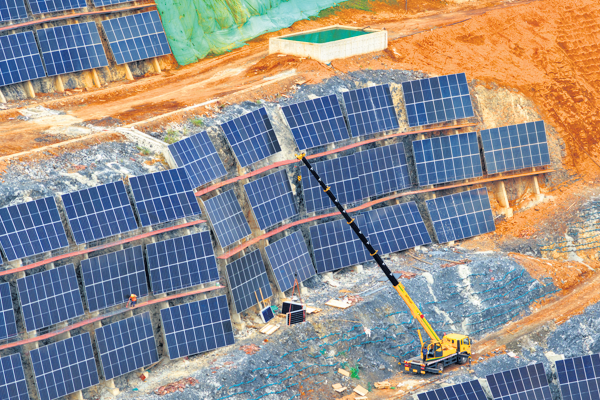
Looking at the global ripple effects of China’s domestic policy agenda, Gupta explained that expanded Chinese demand and industrial upgrading create two clear channels of benefit for Global South economies. First, rising domestic consumption in China drives increased import demand, directly supporting export-focused developing economies. Second, China’s global leadership in high-efficiency green technologies — including solar panels, energy storage batteries, and electric vehicles — creates accessible development opportunities for low- and middle-income nations. Developing countries can import affordable, high-performance green technology from China, attract Chinese investment to build local clean energy manufacturing capacity, or access low-cost financing through the Belt and Road Initiative to expand national infrastructure and grid electrification.
“As China moves up the global value chain, it opens up new space for lower-income economies to grow,” Gupta noted. “It can relocate lower-value, labor-intensive production such as textiles, apparel, and footwear to Southeast Asia, African nations, and other emerging markets, then import those finished goods back to China. That directly powers export-led growth in those developing countries.”
Chris Pereira, founder and CEO of New York-based global business and communications consulting firm iMpact, expanded on these cross-border spillover effects, emphasizing that China’s domestic growth strategy creates mutually beneficial, symbiotic partnerships rather than one-sided aid. “China’s push for domestic growth is creating a massive ‘spillover effect’ for the Global South,” Pereira said. “As China moves up the value chain, it’s not just exporting goods, but also affordable, high-efficiency technology. By aligning with China’s technological pace, developing nations can leapfrog traditional development hurdles that held back past generations of industrialization. This isn’t charity; it’s a symbiotic partnership.”
Pereira added that the plan leverages China’s 1.4 billion-person consumer market to accelerate global industrial innovation, turning the country into a premier testing ground for cutting-edge technologies from multinational firms. “The 15th Five-Year Plan’s focus on boosting domestic demand isn’t just about encouraging people to buy more; it’s a strategic move to accelerate China’s industrial upgrading,” he explained. “For global firms, this has become a premier ‘testing ground’ where they can refine their most advanced technologies at ‘Shenzhen speed’ before scaling them globally.”
Against a backdrop of repeated external shocks that have tested global economic resilience, China’s stable and expanding domestic market has emerged as a key anchor for global confidence. Ahead of the 2026 International Monetary Fund and World Bank Spring Meetings, IMF Managing Director Kristalina Georgieva emphasized in an April 9 speech that “a resilient world economy is being tested again” by ongoing external shocks, noting “the strength and agility of your fundamentals is your best defense when shocks come” and that well-designed policy makes a tangible difference for sustained growth.
At an IMF panel focused on global imbalances held during the Spring Meetings, Helene Rey, a London Business School economics professor and incoming head of the Bank for International Settlements’ Monetary and Economic Department, noted that the 15th Five-Year Plan prioritizes pro-growth investments in human capital, including expanded investment in public healthcare, to support long-term structural rebalancing.
Speaking on the same panel, Georgieva highlighted that China has demonstrated clear commitment to rebalancing toward stronger domestic consumption, a shift that delivers benefits both for China’s own long-term development and for global economic stability.
Gupta echoed this assessment, noting that China’s steady growth and rebalancing act as a stabilizing force for the entire global economy. “Just China being stable and growing is already a huge positive for the world,” he said.
At an April 9 seminar hosted by the Peterson Institute for International Economics (PIIE), PIIE senior fellow Tianlei Huang noted that China still retains significant fiscal space to implement more forceful countercyclical policies to support continued domestic demand expansion. Harvard economics professor and PIIE nonresident senior fellow Karen Dynan added at the same event that persistent disruptions from geopolitical conflict, elevated energy prices, and ongoing supply chain volatility have dragged down global growth projections, making strong domestic demand in large economies like China more critical than ever for sustaining global stability.
The broad assessment that China’s 15th Five-Year Plan agenda supports both Chinese and global growth is shared by leading international organizations. Speaking at the China Development Forum earlier in April, IMF First Deputy Managing Director Dan Katz noted that “Their 15th Five-Year Plan prioritizes increasing consumption as a driver of economic growth, which would also help reduce China’s external imbalances. These are helpful measures, but China can do more to increase consumption and domestic demand — especially for services — by boosting household incomes and reducing incentives for precautionary savings.”
In closing, Pereira emphasized that China’s 15th Five-Year Plan focus on expanding domestic demand creates inclusive shared opportunities, allowing businesses and economies across the world to gain from China’s continued growth. “As China doubles down on its own growth through domestic consumption and industrial upgrading, there’s plenty of room at the table for those ready to engage,” he said. “China remains the engine of global growth, and pragmatic companies see the opportunities as more tangible than ever.”