As artificial intelligence tools become increasingly accessible and capable of replicating distinct human characteristics, high-profile public figures are moving quickly to secure legal protections against unauthorized deepfakes and AI impersonation. Global pop icon Taylor Swift is the latest celebrity to take decisive action, submitting three new trademark applications with United States regulators to shield her name, iconic appearance and recognizable voice from exploitative AI misuse.
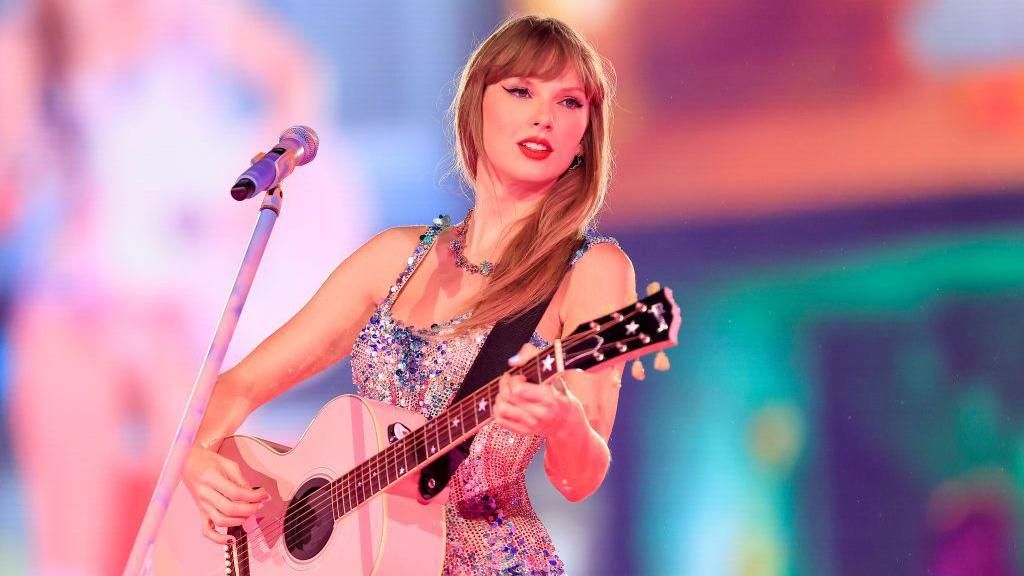
The filings, first uncovered and published by trademark attorney Josh Gerben on his professional blog, mark one of the most high-profile recent attempts by a public figure to leverage existing intellectual property law against the fast-growing problem of AI-generated impersonations. Two of the applications center on short audio clips that Swift recorded last autumn to promote her latest album *The Life of a Showgirl* for streaming platforms Spotify and Amazon Music. The clips feature Swift’s iconic opening lines: “Hey, it’s Taylor” and “Hey, it’s Taylor Swift”. The third application is tied to a widely used promotional photograph of Swift captured during her record-breaking Eras Tour, showing the singer on stage holding a pink acoustic guitar with a black strap, clad in a multi-colored iridescent bodysuit and silver boots. This same image was previously used for official marketing of the Disney+ Eras Tour concert film.
The push for legal protection comes amid a rising tide of problematic AI-generated content targeting Swift and other A-list celebrities. In recent years, deepfake versions of the pop star have spread across the internet in a range of unauthorized forms, from non-consensual explicit imagery to manipulated political content – including a fake election advertisement that purported to show Swift urging voters to support former president Donald Trump. These high-profile incidents have underscored the urgent need for clear legal protections for public figures against AI exploitation.
Swift’s action follows a similar move from Hollywood actor Matthew McConaughey, who became the first major celebrity to use trademark law to protect his voice and image from AI misuse earlier this 2025. Prior to this, most celebrities relied on personality rights laws to address unauthorized use of their likeness, but trademark registration offers an additional layer of legal protection that can cover more types of AI-generated reproductions.
According to legal expert Gerben, these trademark filings offer Swift broader protection than just preventing direct copying of the exact photo and audio clips. Under U.S. trademark law, holders can challenge any use that is considered “confusingly similar” to the registered trademark. This means that even AI-generated imitations that do not directly reproduce the registered files could still be challenged legally.
“By registering specific phrases tied to her voice, Swift could potentially challenge not only identical reproductions, but also imitations that are ‘confusingly similar,’ a key standard in trademark law,” Gerben explained. “Theoretically, if a lawsuit were to be filed over an AI using Swift’s voice, she could claim that any use of her voice that sounds like the registered trademark violates her trademark rights. Same with the image filing. If someone creates an AI-generated version of Taylor in a jumpsuit with a guitar, or something close to it, now Swift has a federal trademark claim.”
As generative AI technology continues to advance and spread, intellectual property and entertainment legal experts expect more high-profile celebrities to follow this trend, turning to trademark law as a new tool to combat the growing threat of unauthorized AI deepfakes and impersonations.