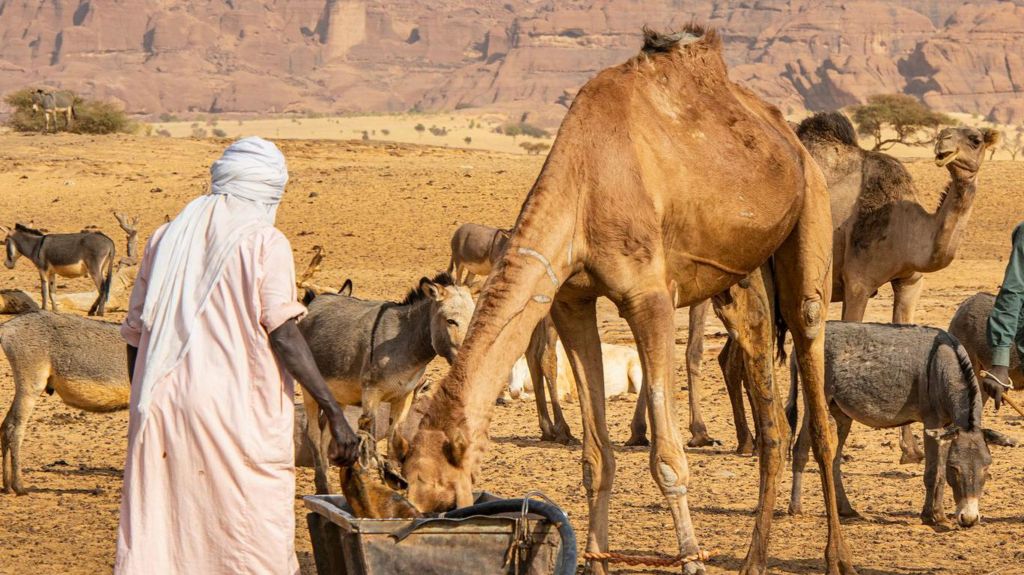
A simmering local dispute over access to a water well has exploded into deadly inter-ethnic violence in eastern Chad, leaving at least 42 people dead and 10 others wounded, senior Chadian officials have confirmed. What began as a confrontation between two families in Wadi Fira province quickly escalated into a sustained cycle of retaliatory attacks that spread across multiple communities, leaving multiple villages burned to the ground in its wake.
Chadian government announced on Sunday that a high-level delegation led by Deputy Prime Minister Limane Mahamat has been dispatched to the conflict zone to oversee security operations and mediate local tensions. Officials confirmed that the violence has now been contained, and stability is gradually being restored to the area.
Deadly inter-communal clashes are a persistent crisis across this central African nation, where long-standing frictions between farming and pastoral communities, compounded by deep-seated ethnic tensions, have created a repeating pattern of violence. Competition over increasingly scarce water resources and grazing land is the most common trigger for these outbreaks of conflict.
In recent months, the already fragile security situation along Chad’s eastern border has been further exacerbated by the arrival of tens of thousands of refugees fleeing the ongoing civil war in neighboring Sudan. The influx of new residents has placed enormous additional strain on limited natural resources, driving up resource competition and stoking broader security tensions. On Sunday, Deputy Prime Minister Mahamat reaffirmed the Chadian government’s commitment to deploying all necessary measures to stop Sudan’s conflict from spilling over and destabilizing the country’s border regions.
This latest deadly incident is part of a years-long trend of escalating communal violence across Chad. Over the past several years, hundreds of people have been killed in these clashes; in November last year alone, 33 people died in a similar conflict over a contested water well in the southwestern town of Dibebe. Data from the International Crisis Group, a leading international think-tank, shows that between 2021 and 2024, roughly 100 separate communal clashes across the country left more than 1,000 people dead and another 2,000 injured. Global human rights organization Amnesty International has also documented seven major outbreaks of herder-farmer violence between 2022 and 2024, which collectively claimed 98 lives.
In a report released last year, Amnesty International linked the rising frequency and severity of these clashes to the accelerating impacts of climate change, which has worsened drought conditions and scarcity of critical resources across the Sahel region. The organization also criticized Chadian authorities for failing to effectively protect civilian populations, noting that security force responses to emerging violence are often delayed, and few perpetrators are ever held legally accountable for their actions. “This pattern of inaction fuels a widespread sense of impunity and deepens feelings of marginalization within affected communities,” the report stated.