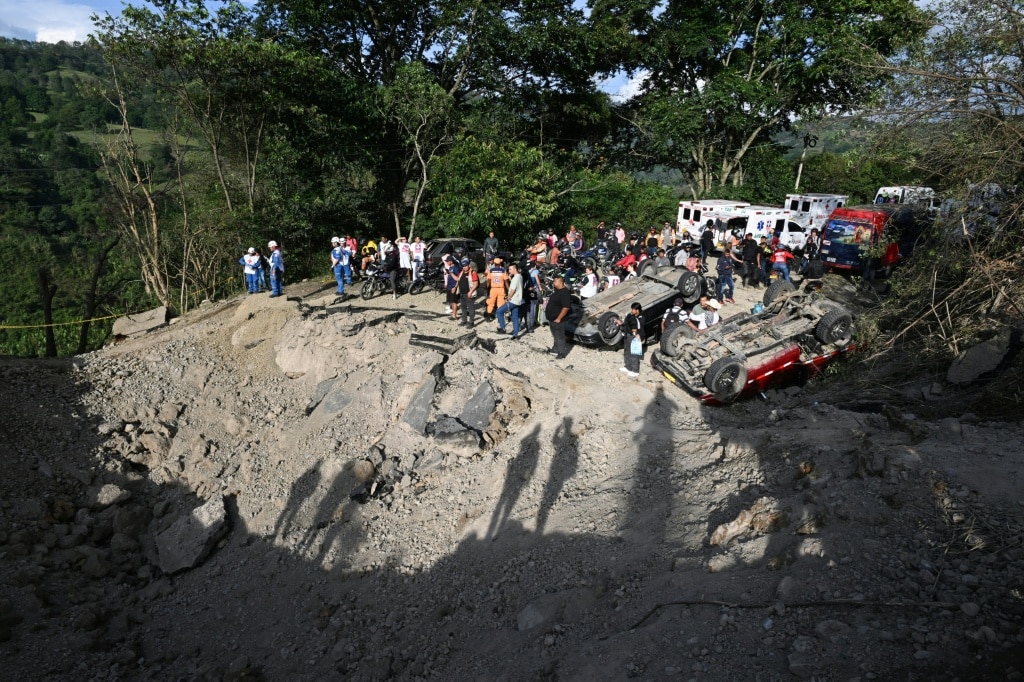
A devastating bombing on Colombia’s Pan-American Highway has pushed the confirmed death toll to 20, with 36 additional people injured, according to an update shared Sunday on social media platform X by Octavio Guzman, governor of the restive southwestern Cauca Department where the attack took place.
Local and national authorities have pinned the blame for the weekend attack on non-state armed groups operating in the region, with the violence hitting just over a month before Colombia is set to hold its presidential election on May 29. Guzman called the incident “the most brutal and ruthless attack against the civilian population in decades” for the region, noting that the explosion carved out a 200-cubic-meter crater at the site. All 20 killed were adults, comprising 15 women and five men. Three of those injured remain in intensive care as of Sunday, while five children who were hurt in the blast have been stabilized and are out of danger, Guzman added.
The force of the explosion left passenger buses and vans crumpled and destroyed along the major highway, with multiple civilian vehicles flipped onto their roofs or sides by the blast’s shockwave. Colombian military chief Hugo Lopez told reporters Saturday that the attack was coordinated: assailants first blocked the highway with a hijacked bus and a second vehicle to stop all traffic, then detonated the hidden explosive once a crowd of stranded travelers had gathered.
“This is a terrorist attack against the civilian population,” Lopez emphasized. Incumbent leftist President Gustavo Petro issued a forceful condemnation via X, calling the perpetrators “terrorists, fascists and drug traffickers” and ordering the country’s top military personnel to hunt down those responsible. Petro directly attributed the attack to Ivan Mordisco, Colombia’s most-wanted fugitive criminal, whom he has previously compared to Pablo Escobar, the infamous late cocaine kingpin who dominated Colombia’s illegal drug trade in the 1980s and 1990s.
This latest mass casualty attack follows a separate bombing that hit a military base in Cali, Colombia’s third-largest city, on Friday. That attack injured two service members, and kicked off a sustained wave of violence across the neighboring Valle del Cauca and Cauca departments. Lopez confirmed that authorities have recorded at least 26 separate attacks across the two regions in just 48 hours as of Sunday. Defense Minister Pedro Sanchez announced Saturday that federal authorities have deployed additional military and police personnel to the affected areas to bolster security and respond to the surge in violence.
Colombia has a long history of armed groups—funded largely through illegal activities including drug trafficking, unregulated mining, and extortion—using targeted violence to disrupt and influence national elections. Remnant factions of the former FARC rebel movement that rejected a 2016 national peace deal with the Colombian government have stepped up disruptive attacks in recent months, as peace talks between the groups and Petro’s administration have stalled.
Security policy has emerged as one of the most contentious central issues in the 2025 presidential campaign, after high-profile political violence put the issue in the national spotlight last year. In June 2024, rising young conservative presidential candidate Miguel Uribe Turbay was shot in broad daylight while campaigning in Bogota, the nation’s capital, and died from his injuries two months later.
As of the latest polling, leftist Senator Ivan Cepeda, the main architect of Petro’s controversial policy of pursuing negotiated peace deals with armed groups, holds a lead in the race. He is followed closely by right-wing candidates Abelardo de la Espriella and Paloma Valencia, both of whom have campaigned on promises of a hardline military crackdown on rebel and criminal factions. All three leading presidential candidates have confirmed they have received credible death threats during the campaign, and all are conducting campaign events under heavy armed security protection.