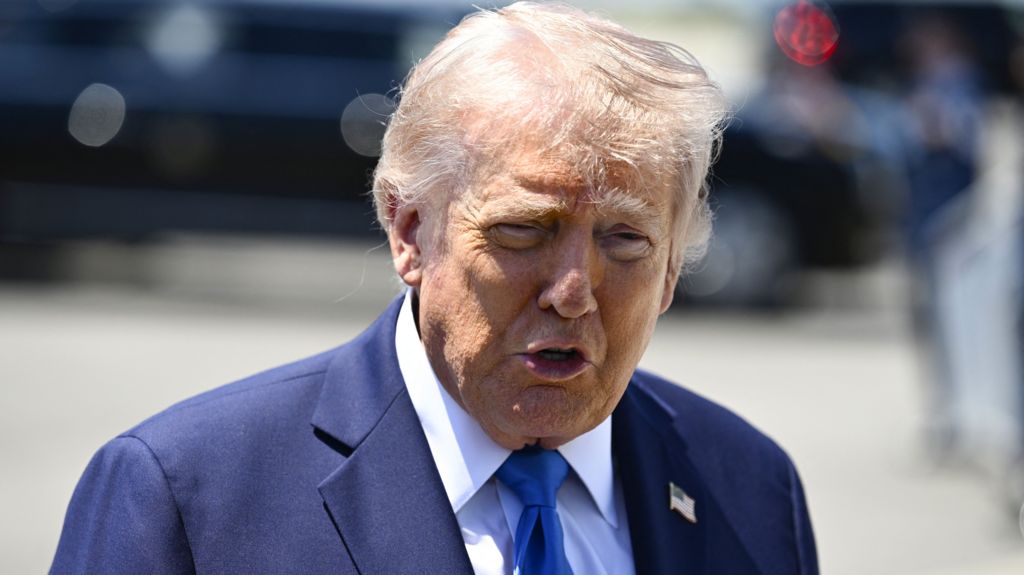
On Saturday, in a sudden reversal of planned diplomatic negotiations, former President Donald Trump called off a scheduled trip by senior U.S. officials to Pakistan aimed at de-escalating ongoing conflict with Iran — a move that came just hours after an Iranian diplomatic delegation wrapped up its visit to the mediation hub of Islamabad.
Trump justified the last-minute cancellation by arguing that special envoy Steve Witkoff and his son-in-law and senior advisor Jared Kushner would be wasting valuable time on the mission. “If Iran wants to talk, all they have to do is call,” Trump stated publicly.
Hours before the cancellation, Iranian Foreign Minister Abbas Araqchi concluded talks with Pakistani mediators, confirming that he had laid out Tehran’s formal position on ending the conflict, but noting that Iran had not yet received clear evidence that Washington was genuinely committed to diplomatic resolution. The diplomatic impasse has persisted even after Trump extended a ceasefire that was originally set to expire on April 22, a move designed to create space for negotiations to move forward.
The current standoff between the U.S. and Iran stems from two core flashpoints: control of the Strait of Hormuz, the world’s most critical chokepoint for global oil trade, and long-running international disputes over Iran’s nuclear program. After the U.S. and Israel launched joint strikes against Iranian targets in February, Iran restricted commercial passage through the strait, through which approximately 20% of the world’s total oil supply transits daily. In response, Washington has bolstered its naval presence in the region and implemented strict measures to block Iranian oil exports.
When the U.S. trip was first announced on Friday, White House officials claimed that Iran was eager to engage in talks — a characterization Tehran immediately rejected, stating it had no plans for a direct meeting with U.S. negotiators. Despite the collapse of plans for a new round of face-to-face talks, Trump confirmed that the existing ceasefire would remain in place on Saturday. When asked by Axios whether the cancellation meant active combat would resume, Trump replied, “No, it doesn’t mean that. We haven’t thought about it yet.”
In a series of posts on his Truth Social platform Saturday, Trump doubled down on his criticism of the Iranian leadership, claiming there was “tremendous infighting and confusion” within Tehran’s ruling circles and that “nobody knows who is in charge, including them.” He added, “Also, we have all the cards, they have none! If they want to talk, all they have to do is call!!!”
Prior to the cancellation, the White House had noted that U.S. Vice President JD Vance, who led the American delegation during the first round of talks in Islamabad earlier this month, was on standby to join the negotiations if a breakthrough appeared likely. His exclusion from the original planned delegation had already signaled that Washington did not expect major progress from the meeting.
Iranian President Masoud Pezeshkian has repeatedly stated that Tehran remains open to good-faith negotiations, but has pointed to U.S. breaches of prior commitments, economic blockades, and military threats as core obstacles to genuine diplomatic progress.
Pakistan has served as the primary neutral mediator between Washington and Tehran in recent weeks, hosting the first round of U.S.-Iran talks on April 11 that ended without any formal agreement. Araqchi, who is also scheduled to visit Oman and Russia as part of his regional diplomatic tour, described his talks in Islamabad as “fruitful” in a post on X. He reiterated that he had shared Iran’s proposed framework for a permanent end to the conflict, but still awaited proof of U.S. commitment to diplomacy. Pakistani Prime Minister Shehbaz Sharif confirmed that the meeting featured a “most warm, cordial exchange of views on the current regional situation,” and Iranian state media reports indicate Araqchi will return to Islamabad after completing his visit to Oman.
The broader regional conflict remains volatile, with new clashes erupting over the weekend between Israel and Hezbollah, the Iran-backed militant group based in Lebanon. On Saturday, at least four civilians were killed in Israeli air strikes on southern Lebanon, according to Lebanon’s state news agency. The Israeli military said the strikes came in response to rocket fire from Hezbollah into northern Israel. Despite a nominal ceasefire between Israel and Hezbollah, both sides have continued exchanging fire on a near-daily basis in recent weeks, with each side accusing the other of violating the truce. On Saturday, Israeli Prime Minister Benjamin Netanyahu’s office confirmed that the Israel Defense Forces had been ordered to “vigorously attack Hezbollah targets in Lebanon.”
The core dispute over Iran’s nuclear program, which underpins the current U.S.-Iran conflict, remains unresolved: Washington and its allies suspect Iran is actively pursuing a nuclear weapons capability, while Tehran has consistently denied this claim, arguing its program is solely for civilian energy production and medical research, even though it has enriched uranium to near weapons-grade purity.