A global spike in fuel prices driven by the ongoing conflict in Iran has created unprecedented momentum for the electric vehicle (EV) market worldwide, and Chinese automakers have moved quickly to capitalize on this shifting demand landscape. As the world’s largest producer of electric vehicles, China’s auto industry has carved out growing market share across emerging and established markets beyond the United States, where steep regulatory barriers have largely blocked access for most domestic manufacturers. Rising consumer interest and surging order volumes across Asian, European, and Latin American dealerships have turned this moment into a breakout opportunity for Chinese EV brands.
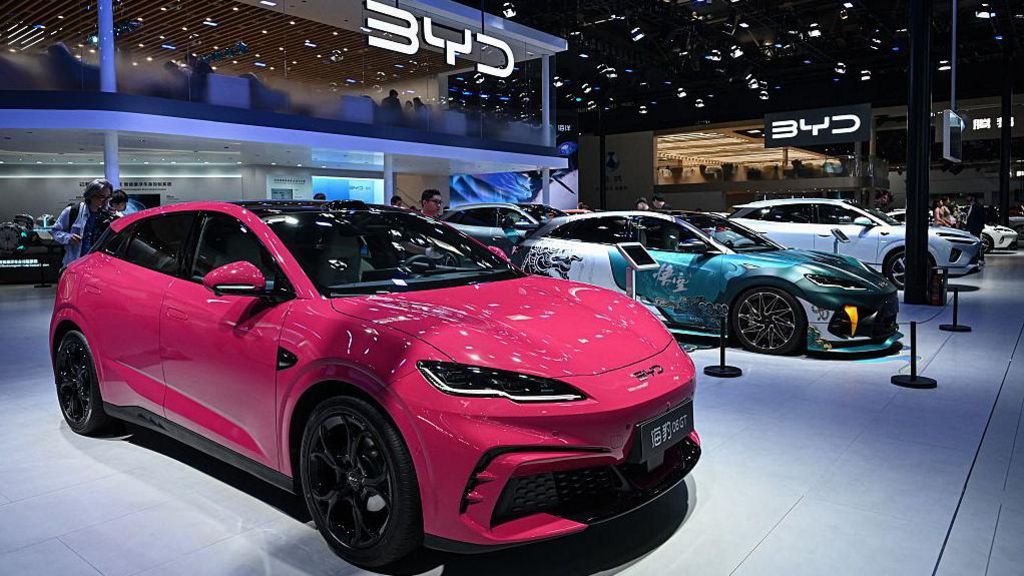
At the forefront of this global expansion push is BYD, the Shenzhen-based automaker that officially dubs itself “Build Your Dreams”. The firm overtook Tesla to claim the title of the world’s top-selling EV manufacturer last year, and has since ramped up its aggressive overseas expansion strategy. In an interview with the BBC at this year’s Beijing Auto Show — now the world’s largest gathering of the global auto industry — BYD Executive Vice President Stella Li made clear the company’s current positioning: “We survive and are successful without the US market today.”
Rather than expending resources on breaking into the closed US market, BYD is currently grappling with a far more positive challenge: meeting unanticipated high demand across priority markets including Brazil, the United Kingdom, and the broader European continent. Li notes that volatile, rising oil prices have created immediate, tangible incentives for consumers to make the switch to electric. “Consumers feel the daily savings when oil prices increase. EVs help them save money every day,” she explained. The demand has been so strong that the company is currently strained by production limits: “Actually, we are now suffering insufficient capacity. Our demand is much higher than what we can supply.”
To extend its competitive edge and address one of the most common consumer concerns around EV adoption — slow charging times — BYD is rolling out its proprietary new flash charging technology, which Li calls an industry “game-changer”. The innovation allows drivers to add hundreds of kilometers of driving range in just minutes, a upgrade that Li says will win over skeptical consumers who have long held out on switching from gas-powered vehicles and open up new market opportunities for the brand.
This year’s Beijing Auto Show, which brought more than 1,400 vehicles from hundreds of global and domestic automakers to display, put Chinese EV innovation front and center for the global industry. Beyond BYD’s breakthroughs, other Chinese manufacturers showcased the breadth of the country’s EV ecosystem innovation. Xpeng, another leading domestic EV brand, unveiled a new six-seater electric SUV at the event, and CEO He Xiaopeng announced the company would launch its own line of humanoid robots before the end of the year, with plans to begin commercial production of flying cars by 2027.
BYD’s global growth push plays out against a complex geopolitical backdrop, with Chinese EV manufacturers facing steep tariffs and heightened regulatory scrutiny in multiple major markets, most notably the United States. Washington has repeatedly raised objections to Chinese government support for domestic automakers, alongside unsubstantiated concerns over data security and national security risks. But Li says BYD has already built strong brand recognition and consumer trust in other key markets, including the UK. Unlike the early perception of Chinese automakers as low-cost competitors that undercut rivals on price, today’s leading Chinese brands increasingly compete on cutting-edge technology, particularly in battery development, fast-charging infrastructure, and in-vehicle software integration. Li emphasizes that BYD is far more than a traditional automaker: “We produce one-third of global smartphone components, we are a leading player in battery storage, solar panels, buses, and trucks. So BYD is an ecosystem.”
For foreign automakers that once dominated China’s massive domestic auto market, the rapid rise of Chinese EV innovation has forced a strategic reckoning. Many legacy brands including Volkswagen, Toyota, and Ford have struggled to keep pace with the fast product cycles and technological advancements of domestic competitors, leading a growing number to pursue partnership agreements with local Chinese firms. BMW has teamed up with leading Chinese battery manufacturer CATL, Audi integrates Huawei’s advanced driver assistance systems into its new models, and Volkswagen is currently co-developing new EV platforms with Xpeng.
Even as Chinese automakers expand rapidly overseas, the domestic market remains intensely competitive, with dozens of manufacturers locked in aggressive price wars that have squeezed profit margins across the industry. For market leaders like BYD, domestic headwinds are already visible: the company has recorded seven straight months of declining domestic sales, even as international growth surges — BYD’s European sales jumped 156% in the first three months of this year alone. Li says the intense competitive pressure will inevitably lead to industry consolidation, pointing to historical precedent from the rise of Japanese automakers in the 1990s and South Korean brands in subsequent decades. “History suggests not all will survive,” she noted.