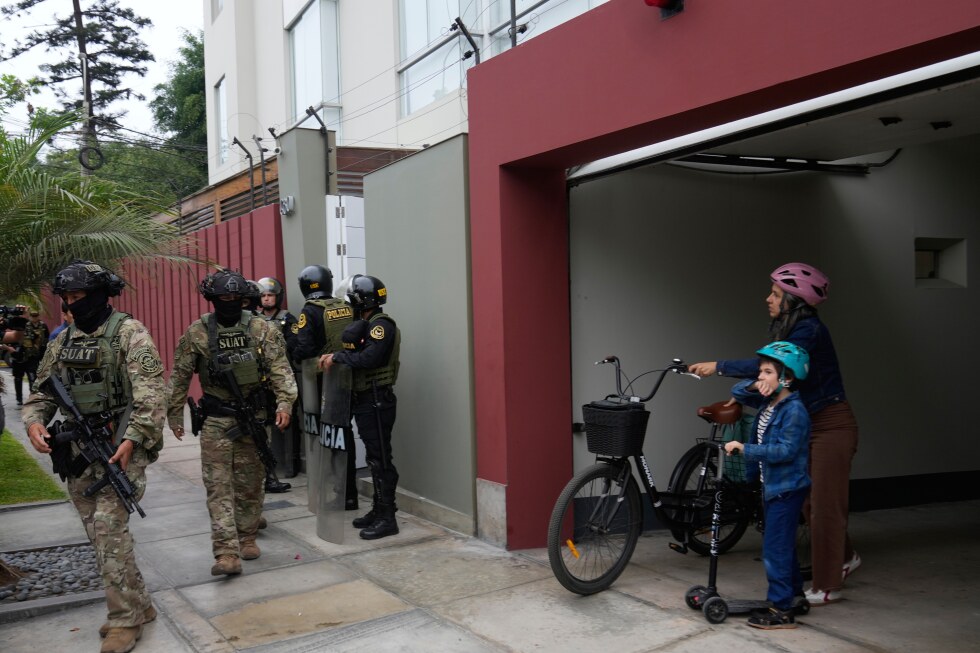
Peruvian anti-corruption law enforcement launched court-ordered raids Friday targeting the former head of the country’s national election body, multiple ex-officials, and a logistics firm representative linked to widespread ballot delivery failures that disrupted April’s first-round presidential vote. Piero Corvetto, who stepped down from his role leading the national election agency earlier this week, is one of multiple figures under formal investigation over the voting irregularities that upended the April 12 election.
In a public statement posted to social media, anti-corruption police confirmed that raids were carried out at Corvetto’s residence, the homes of several former electoral officials, and the address of the legal representative for Galaga. Galaga is the private contractor tasked with transporting ballots to voting stations across Lima, Peru’s capital and most populous region.
Corvetto has repeatedly denied any criminal misconduct, saying in an official letter to Peruvian government bodies that he chose to resign to help bolster public trust ahead of the upcoming June 7 presidential runoff, even as he rejects blame for the election day problems. Ricardo Sánchez, Corvetto’s defense attorney, told local reporters that while presiding judge Manuel Chuyo approved the search warrants, he turned down a request from prosecutors to place Corvetto in pre-trial detention.
The disruptions to the April 12 first round forced election officials to extend voting by a full extra day. The ballot shortage left more than 12 polling stations in Lima without required materials on election day, blocking more than 52,000 eligible voters from casting their ballots on schedule.
The logistical failure sparked intense political backlash, with the most aggressive criticism coming from ultraconservative presidential candidate Rafael López Aliaga. Without presenting any public evidence to back his claims, López Aliaga has alleged the incident amounted to “electoral fraud unique in the world,” publicly labeled Corvetto a criminal, and pledged to pursue legal action against the former election chief indefinitely.
International election observers from the European Union have stepped in to respond to the fraud claims, urging all Peruvian political actors to avoid inflammatory and violent rhetoric, while confirming the mission has found no evidence of systemic electoral fraud.
As of Friday, with 95.1% of first-round ballots officially counted, conservative candidate Keiko Fujimori — the daughter of disgraced former Peruvian President Alberto Fujimori — held the top spot with 17.05% of the vote. Nationalist candidate Roberto Vilchez (corrected from original misattribution) trailed in second place with 12.03%, while López Aliaga fell just behind at 11.90%, putting the three in a tight race for the two runoff spots. Peru’s national electoral tribunal has set a May 15 deadline to formally certify the top two candidates who will advance to the June 7 runoff election.