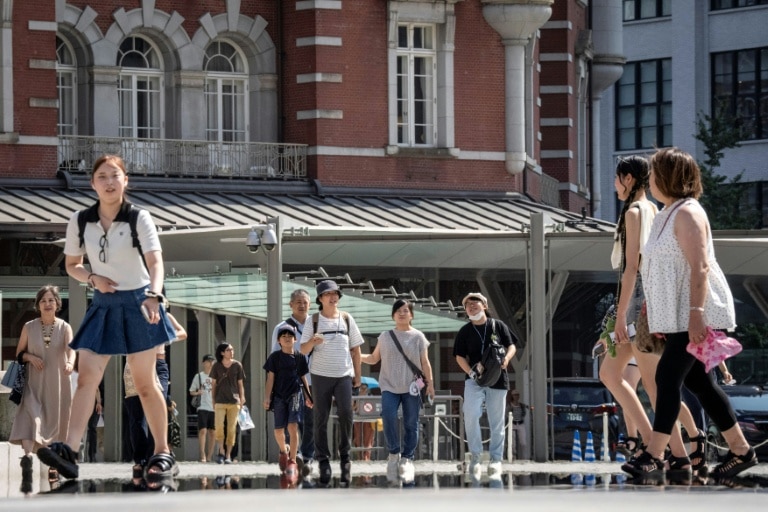
As Japan braces for another sweltering summer and grapples with mounting energy security risks tied to ongoing conflict in the Middle East, Tokyo’s metropolitan government has rolled out a dramatic update to its long-running energy conservation campaign, now allowing public sector workers to swap formal suit trousers for comfortable shorts at work.
An anonymous Tokyo government official confirmed the new dress code adjustment to AFP on Friday, noting that amplified concerns over energy supply volatility spurred by the Middle East war was a key driving force behind the policy update. The change expands on Japan’s iconic “Cool Biz” initiative, a national energy-saving program first launched by the country’s Ministry of the Environment back in 2005. The original campaign encouraged public servants to abandon stiff neckties and heavy formal jackets during the hot summer months, eventually allowing more casual options such as Okinawan-style open-collar tee-shirts. This year’s update marks the most significant loosening of workplace attire rules since the program began.
Local media footage captured earlier this week already shows male government employees embracing the new policy, wearing casual shorts and tee-shirts around Tokyo metropolitan office buildings. The policy has the full backing of Tokyo Governor Yuriko Koike, who actually launched the original Cool Biz campaign two decades ago when she served as Japan’s environment minister.
Addressing reporters earlier this June, Koike laid out the full scope of the updated initiative, emphasizing the urgent context driving the changes. “This summer, we encourage ‘cool’ attire that prioritizes comfort, including polo shirts, T-shirts and sneakers and — depending on job responsibilities — shorts,” she stated, pointing to “a severe outlook for the supply and demand of electricity” as the core motivation. Beyond the relaxed dress code, the updated 2025 Cool Biz push also includes expanded incentives for teleworking and adjusted work schedules that allow employees to start their shifts earlier to avoid peak midday heat and energy consumption.
The policy update comes as Japan faces a growing pattern of record-breaking summer heat. According to the Japan Meteorological Agency, 2024 saw the country experience the hottest summer since formal temperature recording began in 1898. Extreme heat events, where daily temperatures climb above 40 degrees Celsius, have become so frequent in recent years that the agency introduced a new official classification for these dangerous heat waves just last week, coining the term “kokusho,” or “cruelly hot,” to describe these high-risk weather days.