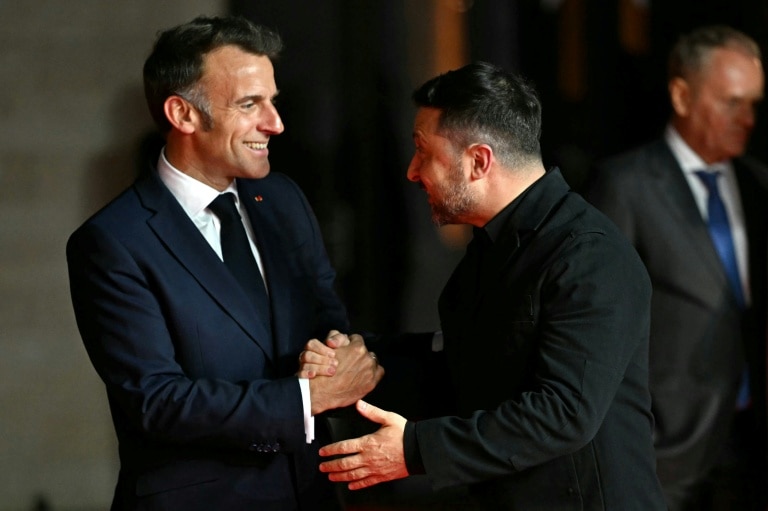
After months of diplomatic gridlock driven by Hungarian opposition, European Union leaders have formally given final approval to a €90 billion ($105 billion) aid package for Ukraine, paired with a new round of anti-Russia sanctions. The breakthrough comes as Ukrainian President Volodymyr Zelensky arrived in the Cypriot coastal resort of Ayia Napa for talks with EU leaders, where he immediately shifted the conversation to advancing Kyiv’s long-held ambition of full European Union membership.
Zelensky opened his remarks by expressing profound gratitude for the long-delayed financial support, noting that the funds would be critical to keeping Ukraine’s military equipped and sending a clear, unified message to Moscow that European backing for Kyiv remains unshaken. But speaking to reporters outside the seaside conference venue, the Ukrainian leader made clear that his priority now is moving accession talks forward, stating bluntly: “We will push everybody.” He added that his ultimate goal is securing full Ukrainian membership in the bloc by 2027.
The path to membership talks has recently cleared significantly, following the electoral defeat of Hungarian nationalist leader Viktor Orban earlier this month, who had spent months blocking progress on both the aid package and the opening of accession negotiating clusters. Orban, who skipped what would have been his final EU summit before leaving office, had wielded his veto over the €90 billion loan as leverage to force Ukraine to repair a pipeline damaged in a Russian strike. With repair work completed this week, Russian oil has resumed flowing through the pipeline to both Hungary and Slovakia, resolving the last sticking point for the aid package.
European Council President Antonio Costa, who represents the bloc’s 27 member states, signaled openness to moving forward, saying the EU must “look forward and prepare the next step”, which would include formally opening the first negotiating clusters for Ukraine’s accession. However, not all EU capitals are on board with accelerating the process. Several senior leaders have pushed back against a fast track, arguing that accession must follow a strict merit-based system that requires Ukraine to meet all membership criteria before advancing. “Fast tracks are not possible,” Belgian Prime Minister Bart De Wever said. Luxembourg Prime Minister Luc Frieden echoed that stance, noting that “you simply cannot become a member of a club without meeting the conditions.”
French President Emmanuel Macron declined to take a position on accelerated membership, but called on the EU executive branch to draft a clear timeline and outline next steps to be completed in the coming weeks. For his part, Zelensky has rejected calls for a lesser, symbolic membership status, reiterating that Ukraine will accept nothing less than full membership in the bloc. Zelensky also outlined plans for the aid, saying the €90 billion will go toward strengthening Ukraine’s military, expanding domestic air defense production, and shoring up the country’s damaged energy grid. He expects the first disbursement of funds to arrive by late May or early June at the latest.
Beyond Ukraine, the summit in Cyprus, which currently holds the rotating EU presidency, will tackle a range of pressing global and internal issues. EU leaders will turn their attention to the ongoing Middle East conflict and its economic fallout, which has driven sharp spikes in global energy prices. The island nation was drawn into the conflict in March when a drone struck a British military base located on Cypriot territory. On Friday, EU leaders will be joined by their counterparts from Lebanon, Egypt, Syria and Jordan for what a senior EU official described as “intensive dialogue” on regional stability.
A top economic priority for the bloc is addressing disruption to global energy supplies linked to tensions around the Strait of Hormuz. A de facto partial closure of the key shipping route has already pushed oil prices sharply higher and reduced jet fuel supplies across Europe. Leaders will also hold their first discussion on the EU’s 2028-2034 multi-year budget. The European Commission has proposed a expanded two trillion euro ($2.3 trillion) budget to account for new priorities including aid for Ukraine and defense spending, but many national governments have already pushed back against calls to increase their national contributions to the bloc.