A high-profile criminal trial unfolding at London’s Woolwich Crown Court this week has seen two Palestine Action defendants outline their motivations for a 2024 raid on an Israeli-owned arms factory near Bristol, as the prosecution detailed serious injuries sustained by a responding police officer.
Six activists — Charlotte Head, 29, Jordan Devlin, 31, Fatema Rajwani, 21, Zoe Rogers, 22, Samuel Corner, 23, and Leona Kamio, 30 — are currently facing joint charges of criminal damage linked to the August 2024 break-in at a facility owned by Elbit Systems, a major Israeli defense manufacturer. 23-year-old Corner faces an additional count of causing grievous bodily harm with intent, stemming from allegations that he struck a police officer with a sledgehammer during the incident.
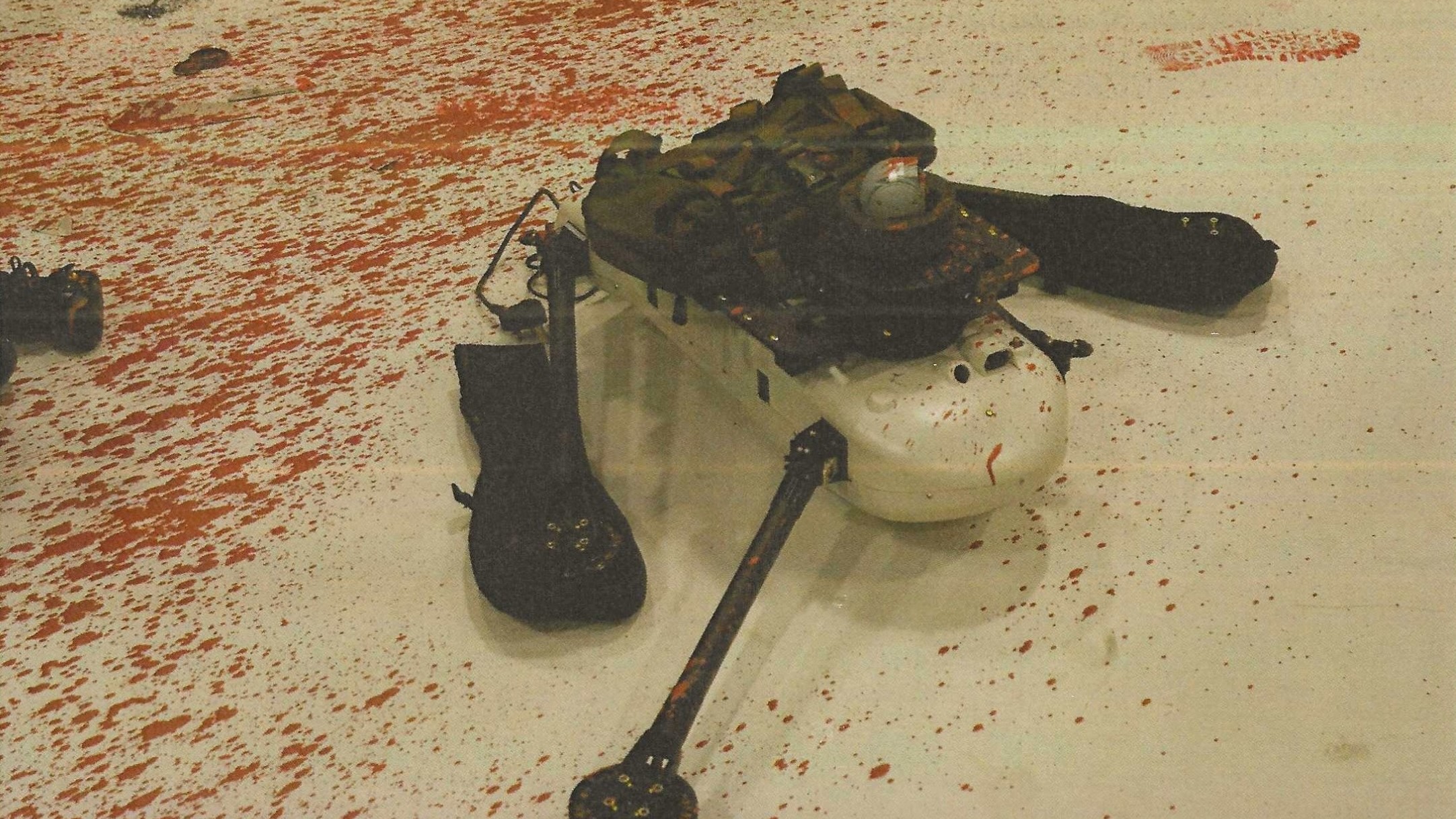
Giving testimony under cross-examination from lead defense counsel Rajiv Menon KC on Tuesday, Head openly acknowledged her intentional participation in the raid, stating she entered the facility with the explicit goal to “destroy as many weapons as possible and shut the site down”. Jurors were shown photographic evidence of damaged military hardware, which Head identified as including a battle simulator and military quadcopter drones.
In a pre-trial statement recorded in December 2025, Head explained the group’s strategy: activists were instructed to target military equipment first, and flood restricted areas they could not access to inflict maximum damage within their available window. While Head confirmed she damaged property that did not belong to her, she emphasized that she and her co-defendants held a sincere belief their actions were legally justified on moral and political grounds.
Head went on to trace her activist roots back to volunteer work supporting refugees in Calais when she was 19, where she said she witnessed firsthand violent assaults on asylum seekers by French police, including an incident where a child was blinded by police fire. Raised with a core value of compassion instilled by her mother and grandmother, Head told the court she repeatedly tried to step away from the high-stakes work but could not abandon people in crisis. In the years following her Calais experience, she became deeply involved in anti-war organizing, describing her work not as ideological grandstanding, but as a necessary effort to prevent civilian harm.
Two months before the Elbit raid, Head joined a protest camp outside Hackney Town Hall calling on the local council to divest its pension fund from investments linked to Israel and the global arms industry. She told the court she participated in a formal deputation to push for the policy change, but labeled the entire process a “farce” that left her feeling completely powerless. Frustrated by years of incremental activism that she described as a “sticking plaster” that produced no tangible change, Head said she felt repeated, polite requests for action had been entirely ineffective, leaving her demoralized. By the time she agreed to join the August 6 raid, she told the court, “I had tried everything else. At this point, it felt like I was watching all this awful stuff happen online, and I can’t live with myself if I don’t do everything that I can.”
On Wednesday, the court heard testimony from Corner, an Oxford University linguistics and philosophy graduate who was preparing to apply for a master’s degree at the time of the incident. Like Head, Corner confirmed he entered the factory intending “to destroy weapons and things needed to make weapons, which we believed were going to be used to cause death and destruction” in the Israeli-Palestinian conflict. Corner, who has diagnosed autism spectrum disorder and ADHD, told the court he struggles to recall details of past events or his emotional state during high-stress, overwhelming situations, and struggles to think quickly under pressure.
Both Corner and Head told the court the group had been assured by experienced Palestine Action activists that security guards would not intervene during the raid, matching the pattern of previous protests the group has carried out. After the group rammed through the facility’s shutters with a stolen prison van to gain entry, Corner said he immediately felt out of his depth and underprepared for what he encountered inside.
The court then heard details of the confrontation with responding officers. Jurors were shown body-worn camera footage that captured PC Aaron Buxton firing Pava incapacitant spray directly at Corner, who told the court the chemical hit him square in the face. He described being blinded, suffering overwhelming pain across his face, eyes and hands as he tried to walk away from the confrontation, unable to open his eyes. Additional footage showed Buxton struggling to detain Devlin, with Corner appearing to approach the officer from above and swing a sledgehammer at him. Further footage captured PC Peter Adams tasering Kamio, who can be heard screaming that officers were hurting her severely.
Corner told the court he could only vaguely make out shapes and hear the screams of his co-defendants as they struggled with security and police, describing a chaotic scene full of loud alarms, strong chemical fumes, and overwhelming stress. He said he feared his co-defendants, particularly the smaller-built Rogers, were being seriously injured. When asked about the allegation that he struck PC Kate Evans twice in the back as she attempted to arrest Rogers, Corner said he has no memory of the incident. He flatly denied ever intending to use his sledgehammer against any person, telling the court: “I wasn’t trying to cause any serious harm to anyone. It wasn’t something I ever saw myself doing or being arrested for or associated with.”
Under cross-examination from prosecutor Deanna Heer KC, Corner acknowledged that before the raid, when he was calm and lucid, he understood that a sledgehammer strike against a person could cause severe injury. But he explained that during the confrontation, he was panicking, in severe pain from the Pava spray, and that the potential for harm to other people was not something he had capacity to think through in the moment. “That wasn’t the plan. That’s not something you do in a situation that isn’t absolutely desperate and when you don’t have time to think,” he said. Defense counsel Tom Wainwright noted that Corner told police after his arrest that he was only acting to protect his co-defendants.
The prosecution outlined the severe harm Evans sustained in the attack. She told the court last week that after being struck, she felt the impact radiate across her entire body, and feared she had been paralyzed. Colleague PC Adams testified that Corner struck Evans with significant force. Evans was unable to return to work for three months after the incident, and continues to experience daily chronic pain that requires her to work restricted duties. Heer confirmed Evans suffered a confirmed fracture to the transverse process of her fourth lumbar vertebra, with probable additional fractures to the second and third lumbar vertebrae on her right side.
The trial of the six Palestine Action activists remains ongoing, with more evidence expected to be presented in coming days.