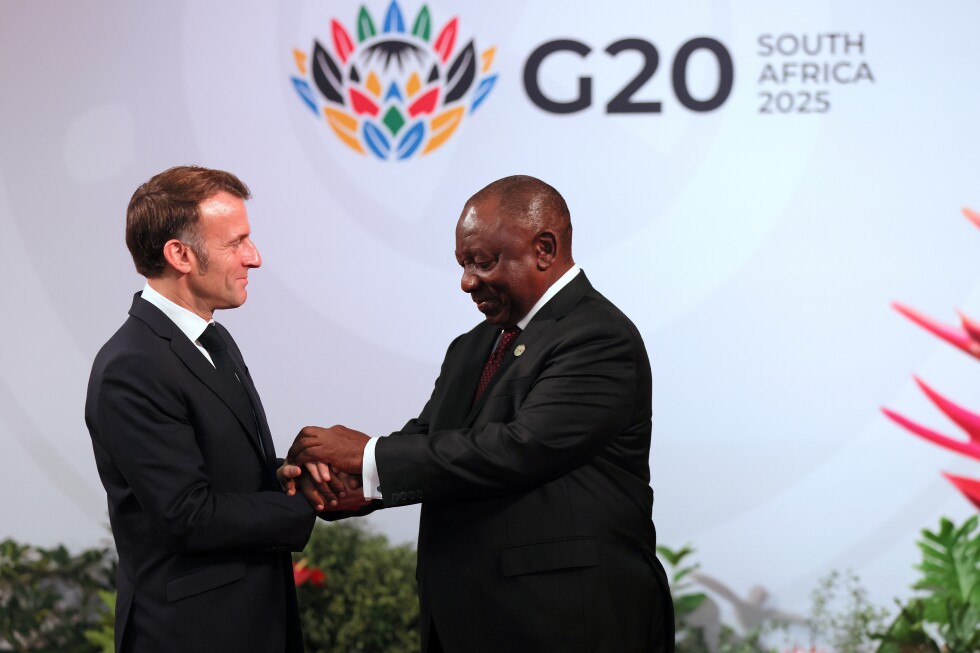
Diplomatic friction between the United States and South Africa has escalated into a cross-bloc controversy ahead of the 2025 G20 summit hosted by the U.S., with France publicly backing South Africa’s right to participate as a full, voting member of the bloc.
In a press briefing held in Johannesburg on Tuesday, French Ambassador to South Africa David Martinon made clear Paris’s official position: as a founding G20 member, France recognizes South Africa as a fully fledged member of the bloc, and thus it deserves a seat at all G20 proceedings, including this December’s summit scheduled at Trump National Doral Miami, U.S. President Donald Trump’s golf resort in south Florida.
The dispute traces back to 2024, when Trump announced he would not extend an invitation to South Africa — the only African nation with permanent G20 membership — for the upcoming U.S.-hosted summit. The exclusion comes amid already strained bilateral relations between Washington and Johannesburg, sparked by the Trump administration’s unsubstantiated criticism of South Africa’s Black-led government, which it has labeled anti-white and anti-American. Trump has repeatedly pushed baseless claims that South Africa is orchestrating a coordinated campaign of violence against its white minority farming population, claims that have been thoroughly debunked by independent fact-checkers and South African officials.
South African authorities have confirmed that beyond the main December summit, they have already been blocked from participating in the routine working-level G20 meetings held throughout the year leading up to the top-level leadership gathering. The South African government has described Washington’s exclusion as a punitive measure rooted entirely in false and misleading information.
This is not the first rift between the two nations tied to G20 governance. Last year, when South Africa made history as the first African country to host the G20 summit, the U.S. boycotted the event. tensions boiled over during the traditional host handover ceremony ahead of the 2025 summit: the U.S. sent low-ranking embassy officials to accept the handover from South African President Cyril Ramaphosa, a move that South African officials deemed a deliberate insult, and they refused to proceed with the ceremony under those terms.
Trump’s proposed exclusion of South Africa has already drawn pushback from across the G20 bloc, which operates on the core principle of consensus-based decision-making. Multiple member states have argued that no single country holds the authority to bar a full, standing member from official summit proceedings.
The controversy also spilled over into preparations for the upcoming June G7 summit, which France is hosting this year in the alpine resort town of Évian-les-Bains. Last month, Ramaphosa’s spokesperson initially claimed that a personal 2024 invitation to Ramaphosa to attend the G7 as a guest had been rescinded by French officials, who cited pressure from the Trump administration to block South Africa’s participation. Ramaphosa later walked back his spokesperson’s comments, stating he was not aware of any U.S. pressure, a move widely interpreted as a diplomatic effort to de-escalate rising tensions.
Addressing the G7 dispute on Tuesday, Martinon reiterated France’s official account: no invitation was ever retracted under U.S. pressure. Instead, France opted for a more streamlined guest list for the 2025 summit, extending guest invitations to the leaders of India, Brazil, Kenya and South Korea rather than adding additional non-member attendees. Quoting Ramaphosa’s own recent remarks, Martinon noted that South Africa is not a formal G7 member, so it cannot be uninvited from a forum it does not officially belong to.
As the only African permanent member of the G20, South Africa’s exclusion would mark an unprecedented break with the bloc’s founding norms of inclusive representation, raising questions about the future of consensus governance in the grouping ahead of the December summit.