A fragile ceasefire currently holds between the United States, Israel and Iran, but diplomatic efforts to resolve the deep-rooted disputes fueling the conflict have stalled, leaving the international community grappling with a critical question: where will this confrontation go from here? According to analysis from two international relations scholars, the most probable trajectory is not a comprehensive, lasting peace deal, but a frozen conflict — a state of unresolved, low-scale hostility that falls far short of full-scale open war but never reaches a formal political resolution.
Frozen conflicts are far from static; they linger for years or even decades with persistent underlying tensions that can erupt into renewed violence at any time. This pattern typically emerges when no overarching political agreement can be reached between warring parties. One well-documented example is the conflict in eastern Ukraine that persisted from 2014 until Russia’s full-scale invasion in 2022. Despite an estimated 14,000 deaths among military personnel and civilians, and constant covert cyber and information operations between the two sides, the conflict was widely categorized as frozen for eight years.
Even if new negotiations, scheduled to resume in Pakistan, eventually produce a tentative agreement, three core factors point strongly toward a frozen conflict rather than durable peace, the analysts argue.
First, U.S. President Donald Trump’s foreign policy approach frames ceasefires as an end to conflict in themselves, rather than a temporary pause to negotiate substantive political solutions. Trump has publicly claimed credit for ending ten separate conflicts, including the current US-Iran confrontation and Israel’s war in Lebanon. Closer examination of his track record reveals that most of these claimed successes amount to nothing more than fragile ceasefires, with core disputes still completely unresolved. This pattern has already left multiple frozen conflict hotspots around the globe with persistent high tensions: for example, a 2025 brief armed clash between India and Pakistan remains unresolved, with repeated risk of renewed fighting, while a lasting peace agreement to resolve 2025 border disputes between Thailand and Cambodia remains out of reach. In every case, Trump has declared victory and shifted focus to other global priorities as soon as major open fighting stops, leaving core issues unaddressed.
Second, the inherent dynamics of asymmetric conflicts make lasting political settlements far less likely than frozen outcomes. This current confrontation is distinctly asymmetric: the US and Israel hold overwhelming military superiority over Iran, pushing Iran to rely on unconventional tactics to counterbalance US power. These tactics have included targeting critical infrastructure in non-belligerent Persian Gulf states and closing the Strait of Hormuz to global commercial shipping, a move that disrupts international energy markets and the broader global economy. Academic research consistently shows asymmetric conflicts are inherently protracted and often open-ended, making frozen conflict far more likely than a lasting negotiated resolution. The dynamic is simple: the weaker side cannot win a conventional military victory against a much stronger opponent, so it instead relies on political, economic and psychological pressure to wear down the stronger power, forcing a withdrawal and ceasefire rather than surrender. This is exactly the dynamic playing out in the current conflict: Trump is facing mounting domestic and international pressure to end open hostilities, pushing him to pursue a ceasefire that he can frame as a US victory, while Iran has accepted the ceasefire as a survival tactic as the weaker party, not as a commitment to long-term conflict resolution. This echoes the decades-long frozen conflict between the US and the Taliban in Afghanistan, where the militant group survived 20 years of low-intensity conflict before retaking full control of the country after US withdrawal.
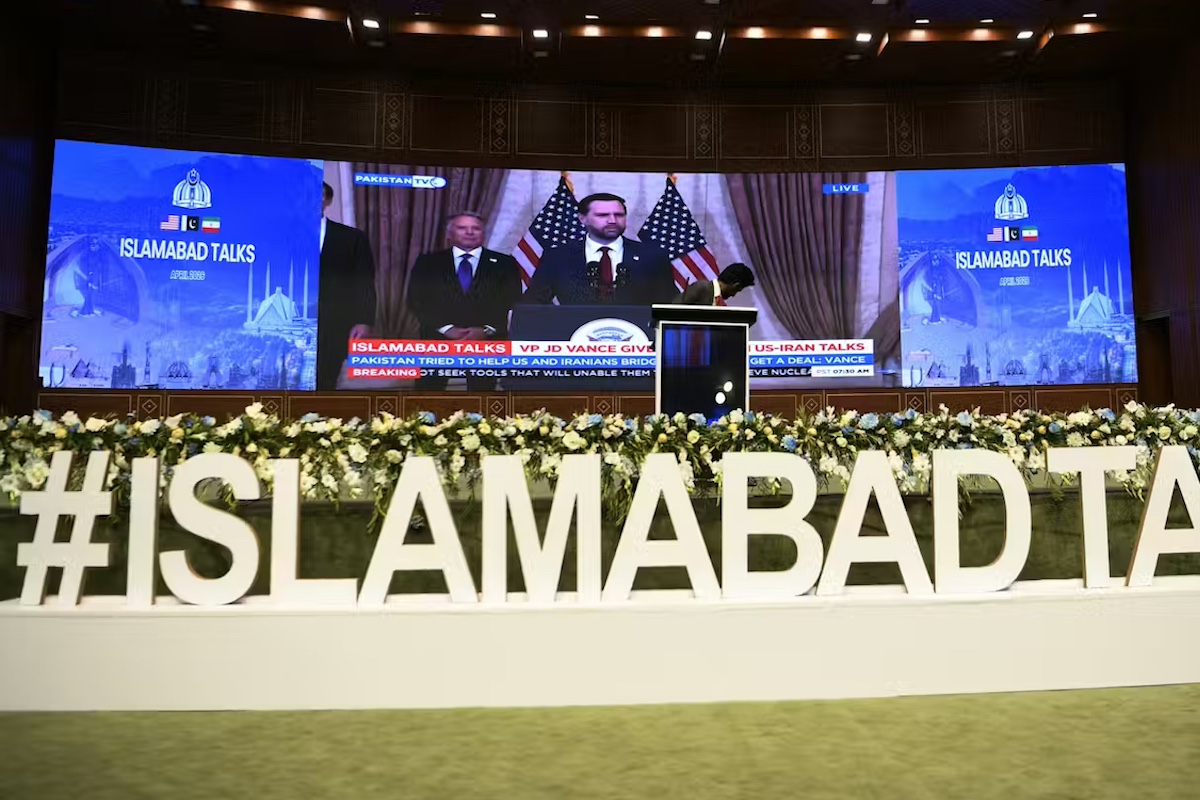
Third, neither party has shown any meaningful commitment to addressing the complex, core disputes that triggered the conflict in the first place, most notably the long-standing standoff over Iran’s nuclear program. The first round of peace talks held in Pakistan on April 11–12 collapsed entirely after Iran refused to make concessions on its nuclear activities, which Iran has repeatedly described as an inalienable right for civilian energy and medical purposes. It is worth noting that the 2015 multilateral Joint Comprehensive Plan of Action (JCPOA), the landmark nuclear deal with Iran, took 20 months of intensive negotiation to finalize. Just three years after the agreement was reached, Trump withdrew the US from the JCPOA, calling it a “horrible one-sided deal” that favored Iran. Given this troubled history, a quick resolution to this deeply complex dispute is effectively impossible. Some analysts have floated the possibility of a partial, surface-level agreement that delays negotiations on the most technical and contentious details to a later date, but Iran has shown no willingness to back down from its long-stated claims to sovereign nuclear rights, and has already demonstrated its geostrategic resolve by following through on threats to close the Strait of Hormuz and disrupt global commerce.
What would a frozen conflict mean for the Middle East? Even if the current ceasefire holds and a partial agreement is reached, unresolved underlying tensions will leave the region in a permanent state of instability, with regular threats exchanged over Iran’s nuclear program and periodic violent flare-ups between Iran and Israel, Iran and the US, or both. This mirrors the current frozen conflict in Gaza: in October 2025, Israel and Hamas agreed to a ceasefire under Trump’s 20-point peace plan, and the first phase was largely implemented, leading to a hostage and prisoner exchange, a reduction in heavy Israeli bombardment, and a resumption of humanitarian aid into the strip. But no progress has been made on the core complex questions of post-war Gaza governance, large-scale reconstruction of the enclave, and the critical issue of Hamas disarmament. As a result, Israeli troops have refused to fully withdraw from Gaza, and low-level violence continues to this day.
Historical precedent further underscores the risks of this outcome. The 1953 armistice that ended the Korean War was never followed by a formal peace treaty, leaving North and South Korea technically at war for more than 70 years. This decades-long frozen conflict directly pushed North Korea to pursue an underground nuclear weapons program that remains a major global threat decades later. Similarly, the 75-year frozen conflict between India and Pakistan has spurred a regional nuclear arms race, constant instability across South Asia, and repeated outbreaks of deadly violence.
Following this historical pattern, a frozen conflict between the US, Israel and Iran will almost certainly generate similar long-term instability across the Middle East. It would likely fuel a new regional arms race, increase the risk of irregular and cyber conflict, and create repeated disruptions to global energy supplies through periodic flare-ups over control of the critical Strait of Hormuz.
This analysis comes from Jessica Genauer, Academic Director at the Public Policy Institute of UNSW Sydney, and Benedict Moleta, a PhD candidate in the Department of International Relations at the Australian National University, originally published in *The Conversation* under a Creative Commons license.