Less than two months after a new round of open conflict erupted across the Middle East, a cascade of interconnected developments has deepened instability, derailed planned diplomatic efforts, and sent global markets reeling this week. From violated ceasefire understandings on the Lebanon-Israel border to tit-for-tat maritime seizures in the Gulf of Oman, the region remains mired in rapidly shifting conflict that threatens to spill beyond its borders.
Along the tense Israel-Lebanon frontier, a fragile ceasefire that took effect last Friday has already come under significant strain. Thousands of Lebanese displaced by weeks of fighting had begun returning to their southern communities when the Israeli military issued a stark warning, barring civilians from returning to dozens of villages. The military claimed that Hezbollah militant activities in the area already violate the terms of the truce. Despite the ceasefire, Israel’s Defense Minister Israel Katz doubled down on the country’s stance, warning that the Israeli military would deploy “full force” against Hezbollah even during the truce if any threat to Israeli troops emerges. In a small sign of post-conflict recovery, Lebanon’s military has reopened a key damaged road and bridge between the southern cities of Nabatieh and Khardali. Meanwhile, a separate incident has sparked international outcry: the Israeli military confirmed that a viral social media video showing one of its soldiers destroying a crucified Jesus statue in southern Lebanon is authentic. In an official statement posted to X, the military said it views the incident with “great severity,” emphasizing that the soldier’s actions run entirely counter to the ethical values the force expects from all personnel.
In Iran, a wave of convictions and executions linked to alleged Israeli espionage continues, with two more men put to death at dawn this week. Iran’s judiciary affiliate Mizan Online confirmed that the death sentences for Mohammad Masoom-shahi and Hamed Validi were carried out, marking the latest in a growing string of such executions since open hostilities broke out between Iran, Israel, and the United States.
Energy markets were rocked by sudden shifts in maritime access over the weekend: after briefly reopening the Strait of Hormuz, a critical chokepoint for 20% of global oil supplies, Iran closed the waterway again in response to what it described as a U.S. blockade of its ports. The resulting escalation sent global oil prices surging, while European stock markets opened sharply lower on Monday. The closure of the strait was followed by a dramatic maritime confrontation in the Gulf of Oman: former U.S. President Donald Trump announced Sunday that the U.S. guided missile destroyer USS Spruance fired on and seized the Touska, an Iranian-flagged cargo vessel. Trump added that U.S. Marines were in the process of searching the ship’s cargo and compartments. Iran quickly retaliated, with state-owned Tasnim News Agency confirming that Tehran launched drone strikes toward U.S. military vessels in response to the seizure.
Planned diplomacy between the U.S. and Iran has been thrown into complete disarray, just as Pakistan was preparing to host a new round of talks in Islamabad. Hours after Trump confirmed he was sending U.S. negotiators to the Pakistani capital, Iranian state broadcaster IRIB cited official sources saying Tehran has no current plans to participate in the proposed negotiations. Pakistan, which has positioned itself as a neutral mediator between the two sides, has moved to bolster security in Islamabad ahead of the expected talks. Pakistani Prime Minister Shehbaz Sharif confirmed Sunday he held a “warm and constructive” phone call with Iranian President Masoud Pezeshkian, and reaffirmed his government’s full readiness to continue mediating talks between Tehran and Washington.
In southern Syria, along the border with the Israeli-occupied Golan Heights, Syrian interior ministry officials announced Sunday that security forces foiled a cross-border sabotage attack by a militant cell linked to Iran-backed Hezbollah. Syrian officials claimed the cell planned to launch rockets from a civilian vehicle carrying hidden launching equipment to destabilize the region. Hezbollah has since issued a formal denial of the accusation.
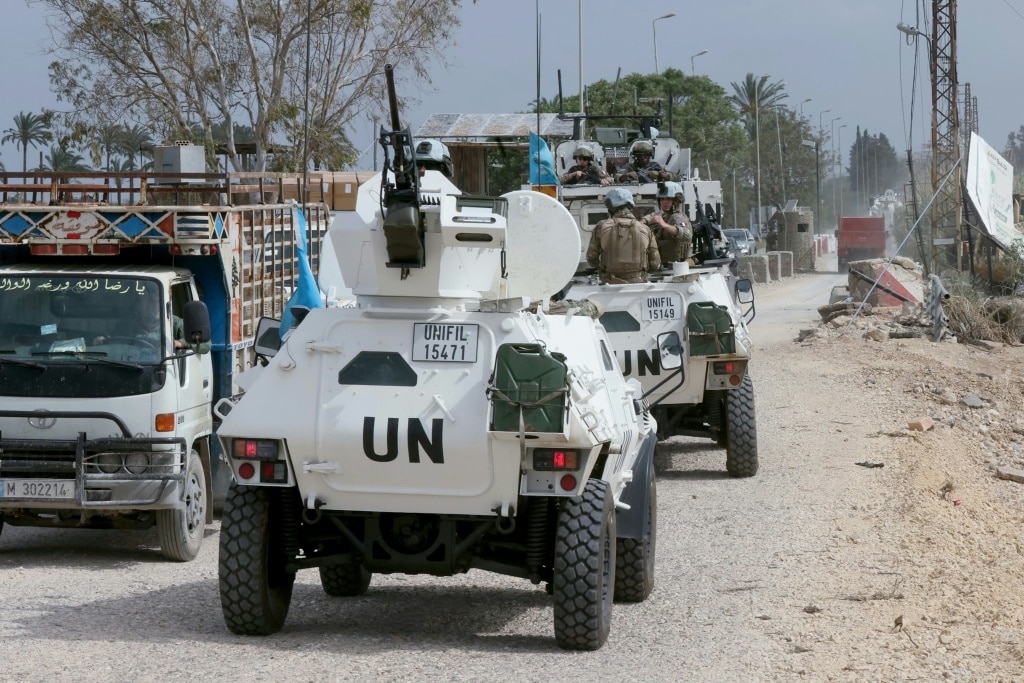
Diplomatic efforts are also underway in Lebanon, where a French peacekeeper was killed last week amid ongoing clashes. The Elysee Palace announced that French President Emmanuel Macron will meet with Lebanese Prime Minister Nawaf Salam in Paris on Tuesday, as international powers work to shore up the fragile 10-day truce between Israel and Hezbollah. On the domestic front in Iran, civil aviation authorities confirmed that Mashhad International Airport, located in the country’s northeast, will resume all international flight operations starting Monday after a temporary closure.