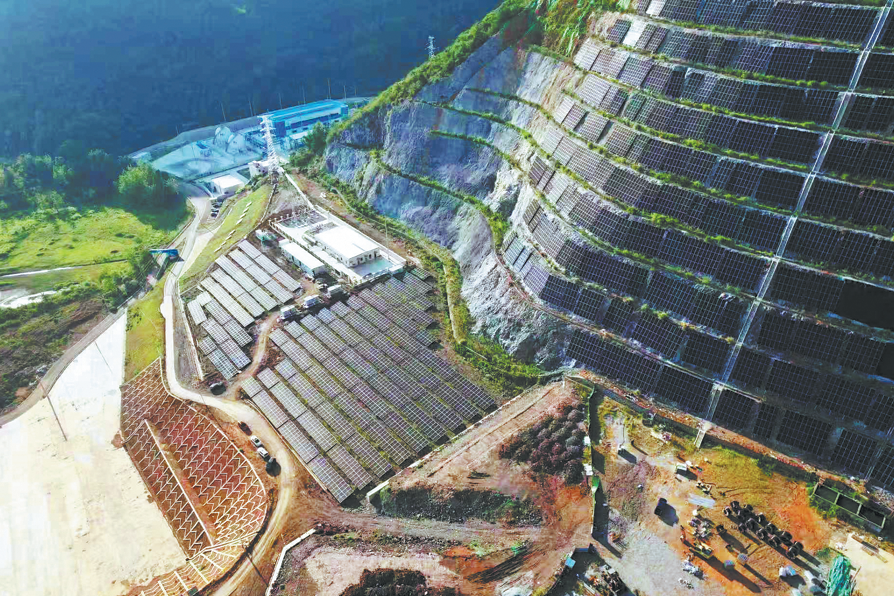
For decades, the sky over Songwan Village, tucked in the industrial heart of Daye, central China’s Hubei Province, was often choked by a thick, gritty dust that blew from the region’s hundreds of active mines. 57-year-old Zuo Zijian, who has lived in the village his entire life, recalls the grim reality of life in a mining community: on clear, windy days, the mineral dust was so dense it burned residents’ eyes and left them gasping for air, while heavy rain turned unpaved roads into muddy swamps that were nearly impassable.
Daye’s rich mineral deposits fueled China’s rapid industrial expansion for more than a century, building the foundation of the nation’s heavy industry while leaving a legacy of environmental devastation. Decades of intensive extraction stripped the landscape bare, drained local ecosystems, and left thousands of acres of abandoned mining pits scarring the countryside. By 2008, the city’s mineral reserves had been depleted to the point that China’s State Council officially designated Daye a “resource-depleted city,” forcing local leaders and residents to make a fateful choice: allow the city to fade into industrial decline, or reimagine the very mining pits that built the city as a launching pad for a new, sustainable future.
Today, that choice has delivered a remarkable transformation. The air over Songwan Village is now crisp and clear, and the once-barren hillsides that were stripped of vegetation by mining activity are now covered in dense, thriving green forest. The turning point for the village came when the large, abandoned Baoshan mining pit on its outskirts was redeveloped into a cutting-edge production facility for Lyuye Hydrogen Energy Co, turning a long-standing environmental hazard into a high-value asset for China’s fast-growing green economy.
Daye’s strategic pivot from a historic “mining capital” to a leading green energy hub aligns perfectly with the priorities laid out in China’s newly released 15th Five-Year Plan (2026-2030), which centers on accelerating the transition to a low-carbon economy and meeting national carbon reduction targets. As the central government has set a binding goal of cutting carbon intensity by 17 percent by 2030, former resource-dependent cities like Daye are stepping forward to turn their industrial legacies into assets for the nation’s clean energy transition. What was once a landscape of ecological damage is now becoming a core part of China’s rapidly expanding green hydrogen sector, turning century-old mining scars into economic opportunity.
For a city that anchored China’s mining industry for generations, the ecological restoration and economic reinvention of Daye delivers three layers of critical benefits: it heals longstanding damage to the natural environment, creates high-quality new jobs for former mining workers, and builds a sustainable, forward-looking economic base that aligns with global efforts to combat climate change. The transformation of Daye stands as a working model for resource-depleted cities across the world, showing how industrial history can be reimagined to deliver both environmental and economic prosperity.