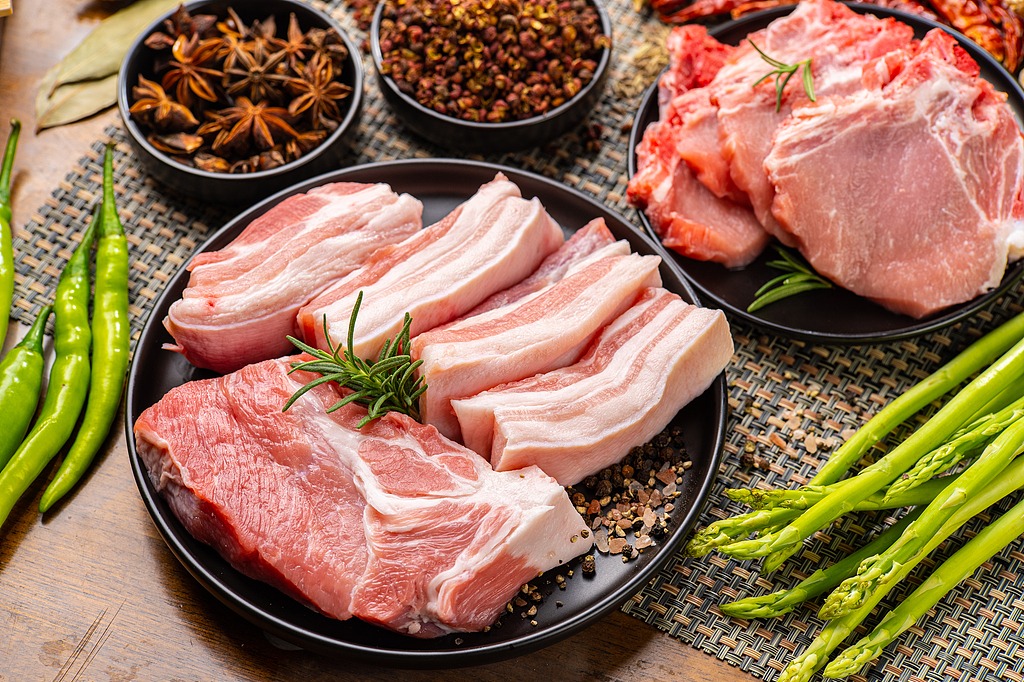
China has marked a new intersection of public health policy and agricultural innovation with the launch of its first domestically developed omega-3 polyunsaturated fatty acid-enriched pork, a breakthrough that addresses long-standing dietary imbalances while reshaping the country’s $200-billion-plus pork industry. The rollout, unveiled Friday, arrives alongside a landmark new national agricultural standard set to take effect May 1, which requires all fortified pork products to maintain omega-3 levels accounting for more than 2% of total fatty acids — creating the first official regulatory framework for this emerging product category.
For decades, public health experts have flagged a critical nutritional shortfall across China’s population: the average daily intake of omega-3 fatty acids sits at just 49 milligrams, less than one-fifth of the globally recommended daily allowance. Compounding this issue is a broader imbalance in the national diet, where Chinese consumers typically consume high volumes of dietary fat, but lack adequate proportions of the heart-healthy polyunsaturated varieties that support long-term wellness.
Omega-3 fatty acids are widely recognized by nutrition researchers for their multifaceted health benefits: they regulate blood lipid levels, reduce cardiovascular disease risk, support healthy inflammatory function, and are critical for fetal and childhood brain development. Experts across agriculture and public health sectors say the new fortified pork product offers a practical, accessible solution to close the country’s omega-3 gap, by integrating nutritional improvement into a food that is already the staple protein source for most Chinese households.
“Developing nutritionally fortified pork products delivers a dual win: it lifts public dietary health outcomes while adding significant value to China’s pig industry,” noted Wang Xiaohong, deputy director of the Institute of Food and Nutrition Development at the Ministry of Agriculture and Rural Affairs. Wang added that the new national standard does more than set a benchmark for omega-3 content: it establishes clear quality requirements across every link of the production and supply chain, laying a foundation for consistent, standardized growth for the niche nutritional pork segment.
Ding Gangqiang, lead nutrition expert at the Chinese Center for Disease Control and Prevention, emphasized that adjusting the fatty acid composition of the national diet through accessible fortified food sources is an urgent public health priority. Unlike less accessible omega-3 sources such as fatty fish or specialized supplements, omega-3-enriched pork fits seamlessly into existing consumer dietary habits, making it easy for everyday households to increase their intake of this essential nutrient, he explained.
The innovation also comes as China’s centuries-old indigenous black pig sector undergoes a major structural transformation. Wang Lixian, chief scientist of the pig genetic breeding innovation team at the Chinese Academy of Agricultural Sciences, explained that the industry has shifted its core focus from simply expanding breed populations and preservation to prioritizing end-product quality and nutritional density. “Nutritional enhancement will become a defining competitive advantage for pork producers moving forward,” he said.
The new product also addresses a pressing challenge facing China’s pork industry today: the market is currently in a prolonged low-price cycle, with live hog and retail pork prices falling to multi-year lows in most regions. Developing high-value, nutritionally differentiated products gives pork producers an alternative pathway for growth, helping them escape the intense price competition that plagues the commodity pork market, Wang added.
The omega-3-enriched pork being launched is developed by Qinglian Food using the indigenous Taihu black pig breed, a variety that has been continuously raised in Jiaxing, Zhejiang Province, for more than 7,000 years. To achieve the natural omega-3 enrichment, producers integrated established breeding techniques for nutritional enhancement and developed custom feed formulas that add natural, omega-3-rich ingredients such as flaxseed. This dietary adjustment allows omega-3 fatty acids to deposit naturally into the pork tissue, rather than relying on artificial fortification after processing.
“Just as human diets require balanced nutrition to support good health, pigs need balanced nutrition to produce healthier food for consumers,” said Miao Yu, head of Qinglian Food’s Taihu black pig brand division. With the new national standard now in place and the first commercial product hitting the market, stakeholders say the launch paves the way for a new wave of value-added agricultural innovation that aligns industry growth with national public health goals.