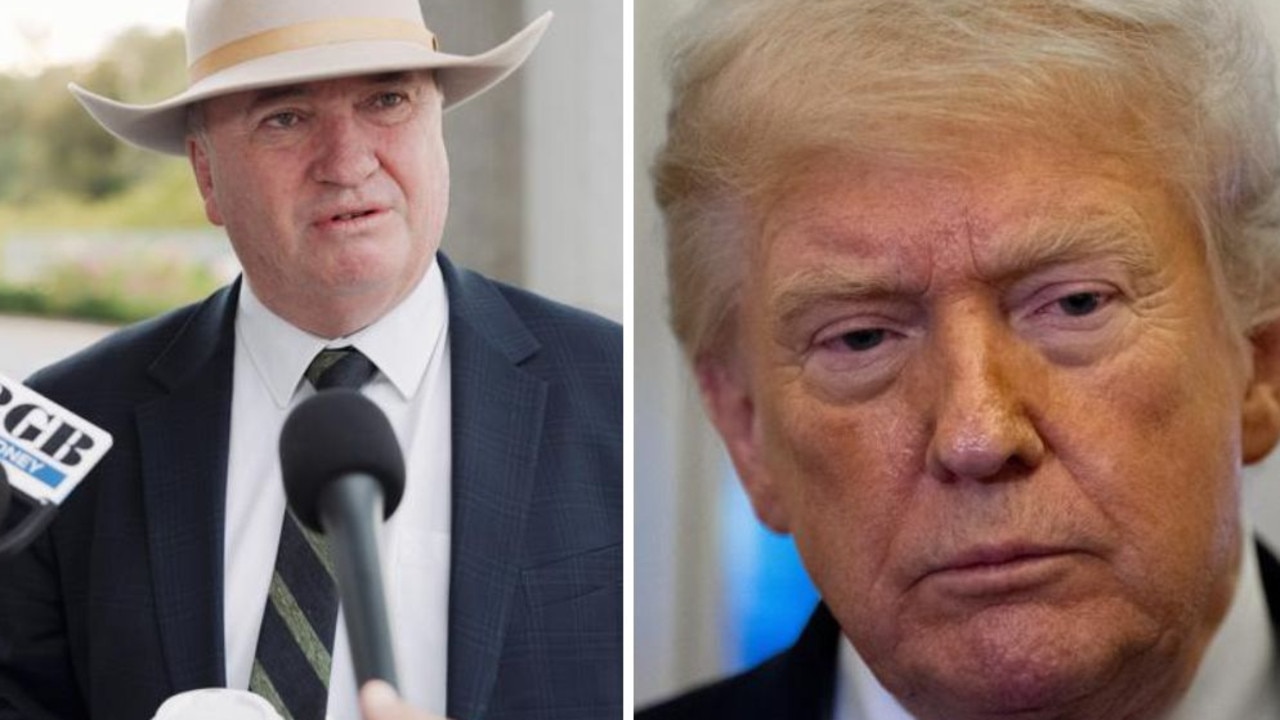
Fresh escalatory rhetoric from former US President Donald Trump targeting Iran’s civilian infrastructure has sparked quiet reaction from Australian political leaders, with a senior One Nation MP refusing to deliver a direct character assessment of the former US leader’s inflammatory comments.
In a post to his Truth Social platform, Trump doubled down on threats against Iran, promising that if Tehran does not agree to a proposed peace deal, the US will destroy every power plant and bridge across the country. In his uncompromising statement, he wrote: ‘NO MORE MR. NICE GUY! They’ll come down fast, they’ll come down easy and, if they don’t take the DEAL, it will be my Honour to do what has to be done, which should have been done to Iran, by other presidents, for the last 47 years.’
The threat lands at a fragile moment in Middle Eastern tensions, just two weeks after the US and Israel carried out coordinated strikes on Iranian targets, with both Washington and Tehran now trading accusations of breaking a shaky bilateral ceasefire. Australia’s official position has long aligned with international calls for an immediate end to hostilities, urging all involved parties to prioritize diplomatic negotiations to de-escalate the crisis.
On Monday, One Nation MP Barnaby Joyce echoed Canberra’s official call for peace, telling Seven Network’s Sunrise program that all Australians ‘hoped and prayed’ the conflict would wrap up quickly. When pressed by reporters to share whether he had faith in Trump’s leadership and to judge the validity of the former president’s threats, Joyce declined to offer a clear assessment. ‘Well, it doesn’t really matter,’ he said of his personal view of Trump. ‘We’ve got to deal with the cards that have been dealt with us.’
Joyce used the moment to reflect on the shifting global security landscape, noting that the ongoing conflict underscores the volatile nature of modern geopolitics. ‘It does show the world in a febrile nature, and we’re living in a different world now. And it shows that, as we’ve always known, there’s no such thing as a short war. They just go on, and this one’s going on,’ he added. The key takeaway for Australia, Joyce argued, is the urgent need to strengthen domestic preparedness for future global shocks. ‘We were not prepared for this. And if something like this happens again … we have got to be vastly better prepared than we were this time, because this is in some areas is a train wreck, economically,’ he said.
Social Services Minister Tanya Plibersek echoed calls for immediate peace during an appearance on the same broadcaster, acknowledging that ongoing global uncertainty surrounding the conflict benefits no side. ‘And we’ve seen real impacts on civilians in Iran and around the Middle East, which, of course, we’re concerned about,’ Plibersek said. ‘And although Australia is not formally a party to this conflict, Australians are paying a very heavy price for it. You certainly see the price at the petrol station, but you also see it flowing through to goods and services across the economy … We want to see de-escalation, and we want to see the situation resolved.’
The current tensions carry a specific awkward context for Australian diplomacy: Canberra was not given advance notice of the February 28 US-Israeli strikes on Iran, yet it became the first nation to issue qualified public support for the operation, backing the stated goal of limiting Tehran’s nuclear program. Prime Minister Anthony Albanese has since publicly called for greater transparency around Trump’s strategic objectives for the region. This story remains developing, with new details expected to emerge in coming hours.