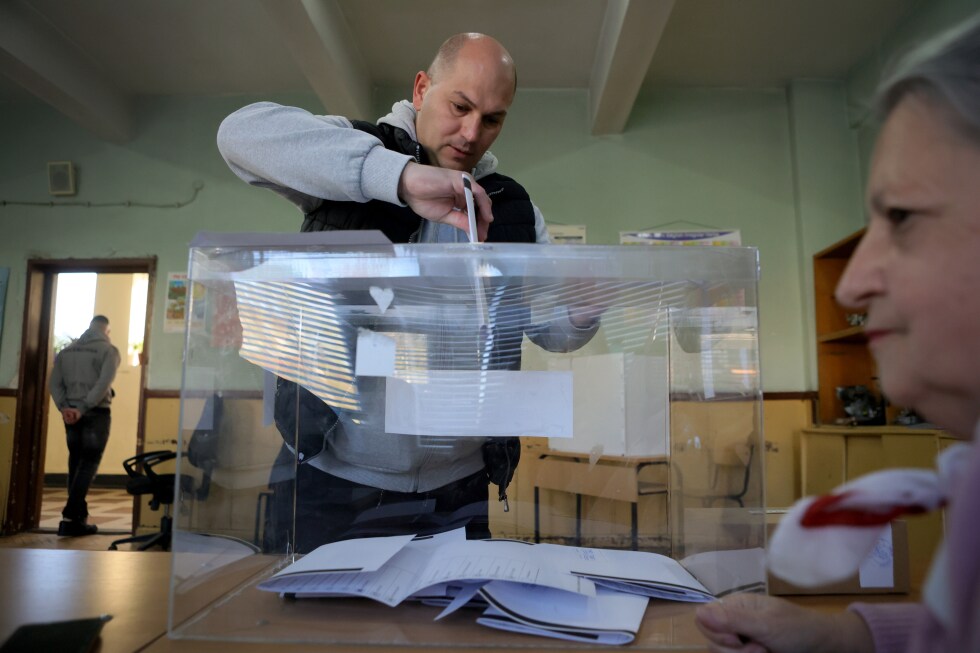
SOFIA, Bulgaria — Balkan EU and NATO member Bulgaria is heading into its eighth national parliamentary election in just five years on Sunday, a vote that comes after years of crippling political gridlock that has left the country starved of stable, effective governance. This snap election was triggered last December, when a conservative-led administration stepped down in the wake of mass nationwide demonstrations that drew hundreds of thousands of protesters, overwhelmingly young Bulgarians, to capital and city streets across the country. Demonstrators’ core demand was the creation of a truly independent judiciary capable of rooting out the deep, systemic corruption that has defined the nation’s political landscape for decades.
Since 2021, the country of 6.5 million people has been trapped in a cycle of fragmented legislative bodies that have only produced fragile, short-lived governments. No administration formed in that window has managed to hold power for more than 12 months, with every government falling either to mass public protests or unaccountable backroom power deals within parliament. This constant rotation of ruling coalitions has eroded public faith in democratic institutions, spurred widespread voter apathy, and driven a steady decline in election turnout across successive votes.
Sunday’s ballot carries outsized geopolitical weight, coming just days after Hungarian voters rejected the long-ruling authoritarian administration of Viktor Orbán, a prominent far-right leader who has maintained close personal and policy ties to Russian President Vladimir Putin. The clear front-runner in this election is Rumen Radev, a left-leaning, pro-Russian former president who resigned from his largely ceremonial post in January — months before the end of his second five-year term — to launch a campaign for the position of prime minister. The 62-year-old Radev, a former fighter pilot and ex-air force commander, is leading the newly organized center-left Progressive Bulgaria coalition, and stands as Bulgaria’s most popular active politician.
Radev has campaigned on a promise of a national fresh start, positioning himself as a vocal opponent of the country’s deeply entrenched oligarchic networks and their links to top political figures. At campaign stops across the country, he has vowed to “remove the corrupt, oligarchic model of governance from political power.” His support base is split between two broad groups: voters drawn to his anti-corruption platform, and backers who align with his open Eurosceptic and pro-Russia policy stances. While Radev has issued formal public condemnation of Russia’s full-scale invasion of Ukraine, he has repeatedly opposed sending military aid to Kyiv and has advocated for reopening diplomatic negotiations with Moscow to end the ongoing conflict.
Bulgaria’s geopolitical standing has shifted notably in recent months: the country joined the EU’s eurozone on January 1 of this year, shortly after gaining full membership in the EU’s border-free Schengen Area, even as its domestic political system remains mired in chaos. The current race was triggered by the 2021 resignation of three-time conservative prime minister Boyko Borissov, who stepped down after mass protests driven by public anger over corruption and systemic injustice. The closest rival to Radev’s coalition is Borissov’s center-right GERB party.
Opinion polling indicates Radev’s coalition is on track to capture more than 30% of the national vote, putting it roughly 10 percentage points ahead of GERB. Most published polls carry a margin of error between 3% and 3.5%. Polling stations opened across the country at 7 a.m. local time and are scheduled to close at 8 p.m., with initial exit polls set to be released immediately after voting ends. Preliminary full election results are expected to be published on Monday.