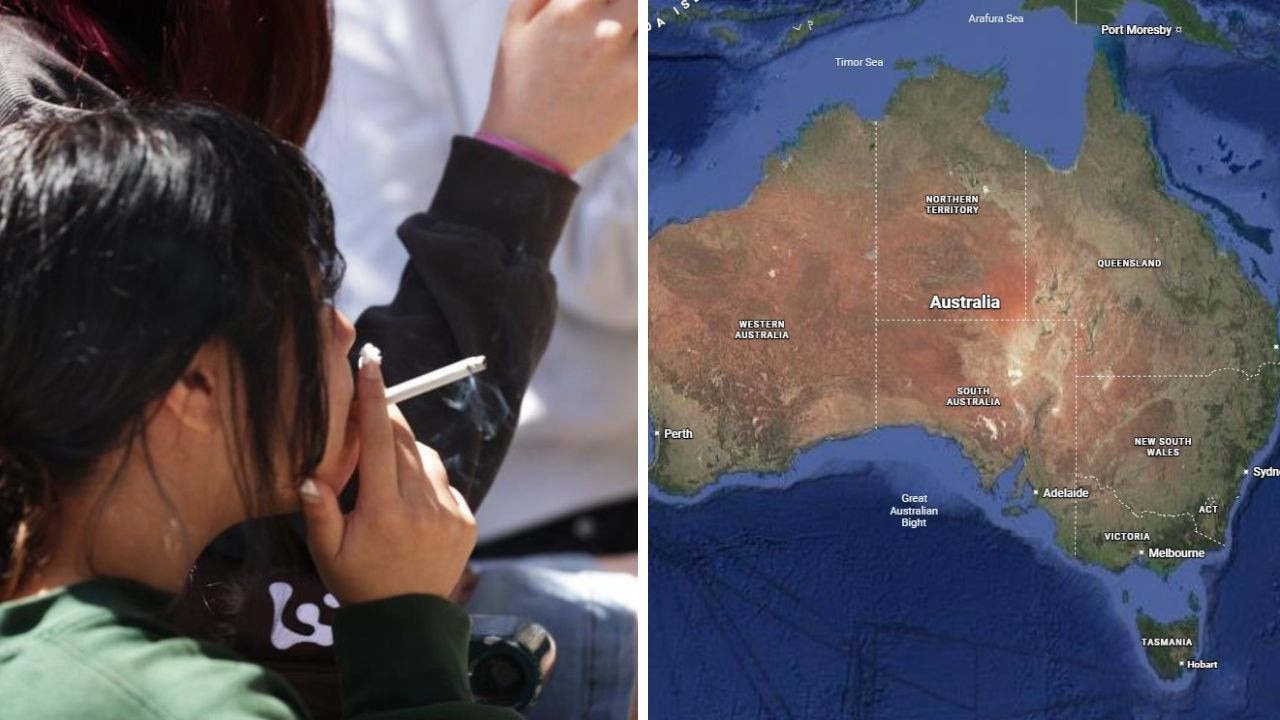
Australia’s fragmented response to the growing illicit tobacco trade has been laid bare in a new performance ranking from the Australian Council on Smoking & Health (ACOSH), which identifies two front-running jurisdictions leading the fight while calling out two laggard regions as drastically off pace.
The ACOSH Illicit Tobacco Ladder, published this week, evaluates every Australian state and territory across three core metrics: legislative frameworks, law enforcement operations, and public health interventions. The ranking comes amid rising concerns that the unregulated illicit tobacco industry has grown increasingly violent, with organized criminal networks dominating the trade and endangering communities across the country.
At the top of the ranking, Queensland secured first place, followed closely by South Australia in second. ACOSH credits both jurisdictions for their unwavering commitment to strong, proactive enforcement. Queensland, the report notes, stands out for its rapid, preventative responses to illegal trade, backed by the nation’s most robust enforcement infrastructure and a large on-the-ground workforce. South Australia, meanwhile, earns praise for its strict bans on online tobacco sales, consistent strong enforcement, and clear, dedicated leadership from state ministers.
ACOSH Chief Executive Laura Hunter explained that the ranking was developed to highlight successful strategies that other jurisdictions can replicate. “We created this ladder to demonstrate exactly how well governments across the country are controlling illicit supply, upholding the law, and applying meaningful penalties that deter criminal activity,” Hunter said. “Queensland and South Australia have incredible political buy-in: leaders are committed to tackling this issue, they are investing funding and resources into on-the-ground enforcement, and we are seeing illegal operations shut down every single day. That’s the model we want other regions to adopt.”
New South Wales claimed third place, but the ranking makes clear there is a significant gap between NSW and the two leaders — a gap large enough to “park a few semi-trailers,” as the report puts it. The state needs to substantially boost its performance by increasing enforcement resourcing, introducing harsher penalties for property landlords who enable illegal trade, and implementing fines large enough to act as a real deterrent, the report found. Hunter added that while NSW has made some progress, namely introducing lease termination powers that protect landlords, it still lacks the complementary penalties for property owners who knowingly allow illegal tobacco sales from their premises.
University of Sydney public health professor Becky Freeman, a leading researcher with more than 25 years of experience in tobacco and vaping control, said the ranking exposes a fundamental flaw in Australia’s current approach: a patchwork of inconsistent policies that has allowed the national crisis to spiral. “Some states have gotten on top of this, or are actively working to do so, while others are dragging their feet even with clear successful examples to copy,” Freeman said. Speaking from her base in NSW, she noted that the state only launched its tobacco licensing system in 2025, years after early adopters including Queensland, Tasmania, and Western Australia.
Freeman also pushed back on a common misperception about the illicit tobacco trade: that it operates as an invisible “black market.” In reality, she explained, the trade is openly conducted at legitimate retail locations across the country, with retailers selling untaxed illegal products as a core part of their business model, often without fear of consequence. “It’s an in-your-face market, not a hidden black market,” she said. “Retailers don’t even feel like they’re doing something wrong or working with criminals anymore.”
The professor also dismissed recent proposals from Federal Liberal MP Mary Aldred, who argued cutting the national fuel excise would reduce profit incentives for criminal networks and ease pressure on law enforcement. Freeman called the idea overly simplistic and harmful to public health. “It’s politically attractive to think that if legal cigarettes are expensive, lowering taxes will undercut the illicit trade. But that logic ignores basic reality: criminal networks can still undercut any legal price point, they haven’t hit rock bottom yet. Cutting tobacco costs across the board will only drive up smoking rates, which is the opposite of what public health policy should achieve,” she said.
At the bottom of the ranking, the Australian Capital Territory (ACT) and Northern Territory placed seventh and eighth respectively, with both labeled “totally off pace” compared to other regions. The ACT, the report says, “talks a good game but isn’t playing one,” citing a near-total lack of meaningful penalties and very few successful closure orders for illegal operations. The Northern Territory, meanwhile, has not passed any new legislative changes to address the crisis and needs to make massive new investments in enforcement resources, the report found.
Hunter outlined the core failures that have allowed the illicit tobacco crisis to grow in underperforming jurisdictions: weak licensing frameworks, an overabundance of unregulated tobacco retailers, insufficient on-the-ground enforcement, and inconsistent, toothless penalties that do nothing to deter illegal operators.
Federal Assistant Customs Minister Julian Hill welcomed the independent ranking, noting that while the scrutiny may be uncomfortable for some state governments, the ACOSH scorecard is a critical tool to drive improvement. “Combined efforts by Commonwealth, state and territory agencies are already delivering strong results: we’re raising the stakes for criminals, cutting into their profits, and pushing up the price of illegal tobacco,” Hill said. “Governments must never surrender public health policy to organized crime, or condemn the next generation of Australians to the devastating harm of tobacco addiction, chronic disease and early death.”
As of 2025, Australia has roughly 40,000 retail outlets selling tobacco products, even though only 10% of Australian adults report smoking. Australian Border Force data shows the agency seized a record volume of illicit tobacco and vapes in the 2024-25 financial year, averaging around 120 illegal shipments detected every day.