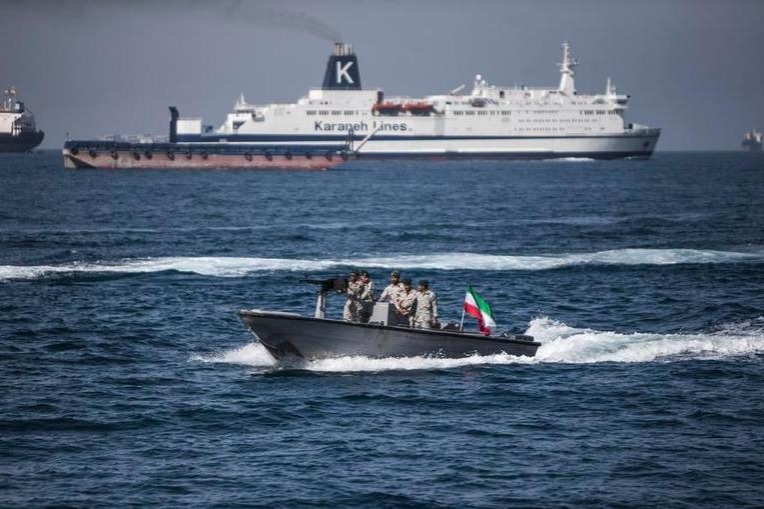
Escalating regional tensions have boiled over into a new standoff in one of the world’s most critical maritime chokepoints, as Iran’s Islamic Revolution Guards Corps (IRGC) Navy announced it has blocked all passage through the Strait of Hormuz, with the closure remaining in place until the United States withdraws its ongoing naval blockade of Iranian waters. The shutdown went into effect Saturday evening, the IRGC confirmed in an official statement published by its media wing Sepah News.
The action came in direct response to what the IRGC calls a clear breach of a two-week ceasefire agreement that entered force on April 8. Under the terms of that truce, the U.S. was expected to end its naval blockade targeting Iranian commercial vessels and national ports. That commitment never materialized, leaving Iran to follow through on its warnings of retaliatory action, the statement added.
In its advisory to global maritime operators, the IRGC urged all vessel crews and shipowners to monitor official updates through its dedicated communication channel and VHF Channel 16, the global standard for maritime safety and emergency communications. The IRGC also dismissed any statements from U.S. President Donald Trump regarding navigation rights in the strait and surrounding Gulf waters as entirely lacking credibility. The corps issued a stark warning: all vessels currently anchored in the Persian Gulf or Gulf of Oman are prohibited from moving, and any ship attempting to approach the blocked strait will be considered to be collaborating with the enemy, and will be met with defensive targeting.
This latest escalation builds on months of growing friction over control of the strategic waterway. Iran first ramped up access controls on February 28, shortly after the United States and Israel carried out joint airstrikes on Iranian sovereign territory. At that time, Tehran banned any passage for vessels owned by or affiliated with the two countries. Following the collapse of bilateral peace talks hosted in Islamabad, Pakistan, Washington responded by imposing its own naval blockade on the strait.
Just days before the closure, Iranian Foreign Minister Seyed Abbas Araghchi reaffirmed that the strait would stay fully open to non-military commercial shipping for the duration of the ceasefire with the U.S., aligning Iran’s position with the truce agreement reached between Lebanon and Israeli forces. But the U.S. refused to match Iran’s public commitment. On Friday, President Trump confirmed that the American naval blockade would remain in full effect, noting the restriction would only be lifted once Washington secured a new comprehensive deal with Tehran. One day later, on Saturday, Trump doubled down, accusing Iran of attempting to use the strategic strait as leverage for blackmail against the United States.
The Strait of Hormuz remains the most critical oil transit chokepoint in the world, with roughly 20% of the globe’s daily oil consumption passing through the narrow waterway. Any prolonged closure is expected to send shockwaves through global energy markets and raise the risk of open military conflict between Iran and the United States.