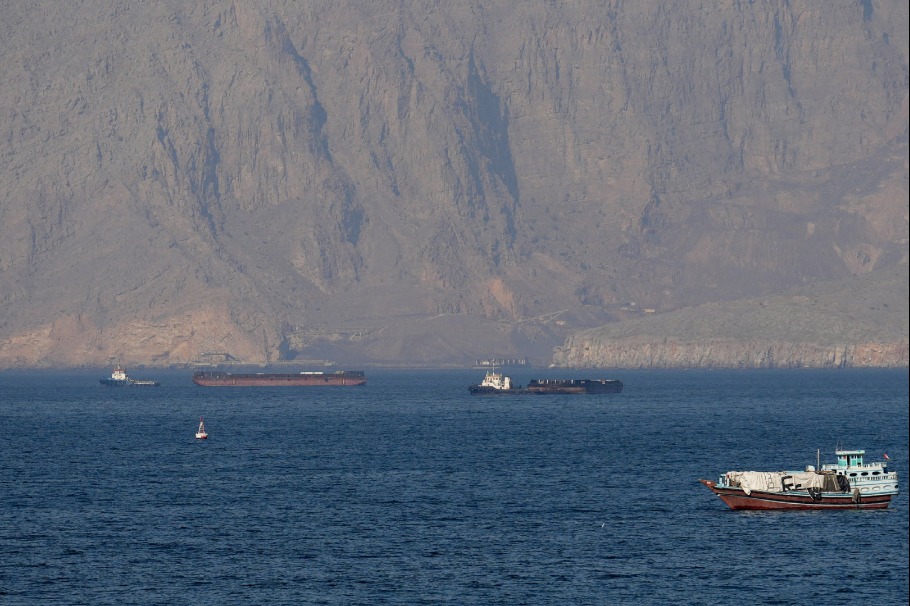
TEHRAN – In a decisive statement released Saturday, Iran’s Supreme National Security Council (SNSC) has confirmed the country will maintain full control and regulatory oversight of all maritime traffic passing through the strategically critical Strait of Hormuz until a definitive end to regional hostilities and the establishment of a lasting regional peace.
The official confirmation from Iran’s top security body comes only hours after the Khatam al-Anbiya Central Headquarters, Iran’s primary military command, ordered the resumption of strict Strait of Hormuz controls, citing the unbroken implementation of a U.S. naval blockade targeting Iranian commercial and maritime activity.
Under the new control framework laid out by the SNSC, Iran will manage all transits through the strait by mandating pre-submission of vessel identification and cargo information, requiring official passage permits for all ships, collecting fees for the provision of regional security protections and environmental monitoring services, and directing all maritime movement in line with Iran’s domestic regulations and active wartime protocols.
The statement clarified that any effort by adversarial forces to disrupt vessel transits, including the enforcement of a naval blockade that violates the existing two-week ceasefire agreement, will prompt Iran to abandon the conditional, limited reopening of the strait that was implemented during the truce.
The SNSC further emphasized that a large share of military equipment for U.S. military bases across West Asia transits through the Strait of Hormuz, a flow of materiel that the council characterizes as a direct threat to both Iranian national security and broader stability across the Persian Gulf region.
In a separate development included in the statement, the SNSC confirmed that Iran has received new diplomatic proposals from the United States, which were transmitted via Pakistani officials during a recent visit to Islamabad by Pakistan Army Chief Asim Munir. Iranian authorities are currently reviewing the terms of the new offers, the statement added, stressing that Iran’s negotiating team will refuse any concessions that compromise Iranian national interests and will defend the country’s sovereignty with full force.
The current standoff over the Strait of Hormuz dates back to February 28, when Iran first tightened restrictions on transits through the waterway immediately after the United States and Israel launched joint airstrikes on Iranian territory. Tensions escalated further after preliminary peace talks held in Islamabad broke down, prompting the U.S. to formalize its naval blockade of vessels traveling to and from Iran.
Just one day before Saturday’s announcement, Iranian Foreign Minister Seyed Abbas Araghchi had confirmed that the Strait of Hormuz would remain fully open to commercial commercial shipping for the duration of the two-week ceasefire between Iran and the U.S. that took effect on April 8, aligned with the broader truce agreement reached between Israeli and Lebanese forces. The reversal of that temporary opening comes as direct violations of the ceasefire terms by the U.S. have prompted Iran to reimpose full military and regulatory control over the strategic waterway, through which roughly 20% of the world’s daily oil supplies transit.