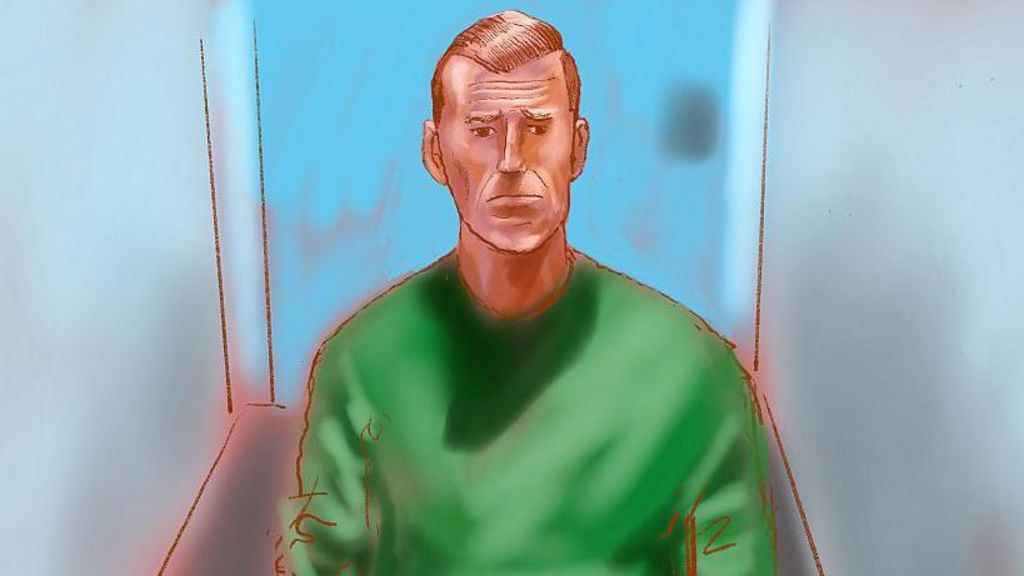
On a Friday in early 2026, Ben Roberts-Smith, Australia’s most decorated living ex-soldier, made his first court appearance via video link from a remote location to a small Sydney courtroom, standing silent as he faced unprecedented war crimes charges that have rocked Australia’s military establishment.
Weeks prior to the bail hearing, prosecutors had formally laid five counts of murder against the 47-year-old, all stemming from alleged atrocities he committed while serving as a Special Air Service (SAS) corporal deployed to Afghanistan on Australian national operations. Newly unsealed court documents, obtained and verified by the BBC, lay out graphic, detailed accusations of systematic war misconduct that have never before been tested in an Australian criminal courtroom.
According to the documents, the allegations span three separate operational missions between 2009 and 2012. The first incident unfolded in April 2009, when Roberts-Smith’s SAS team was called in to clear the Taliban-held Whiskey 108 compound near Tarin Kowt following an airstrike. Inside a hidden tunnel, troops pulled out two detainees, identified as father and son Mohammad Essa and Ahmadullah, both of whom were immediately restrained and cuffed. Prosecutors allege Roberts-Smith carried Ahmadullah, a disabled man who used a prosthetic leg, outside the compound’s perimeter, threw him to the ground, and fired multiple rounds from a belt-fed machine gun to kill him — an act witnessed by several Australian Defence Force (ADF) personnel posted on outer cordon duty. Returning inside the compound, the documents claim Roberts-Smith ordered an inexperienced rookie soldier, anonymized as Person Four, to execute Mohammad Essa in an initiation practice known within the unit as “blooding.” After the rookie followed the order, both Roberts-Smith and the patrol leader documented the event as a successful initiation.
The second alleged killing took place in September 2012, two weeks after an Afghan soldier turned on his Australian partners, killing three and wounding two. Roberts-Smith, who had received Australia’s highest military honor, the Victoria Cross, just one year prior, led a search team to Darwan village that captured three detainees, including a man named Ali Jan. Court documents allege Roberts-Smith physically assaulted the handcuffed detainees during questioning before escorting Ali Jan to the edge of a 10-meter cliff. Even with Ali Jan cuffed and restrained by another soldier, Roberts-Smith kicked him off the cliff, causing severe injuries including broken teeth. The prosecution claims that after climbing down to the injured detainee, an unnamed soldier acting on Roberts-Smith’s direction shot Ali Jan dead. To cover up the unlawful killing, the team planted a captured handheld radio on Ali Jan’s body to falsely frame him as an armed insurgent. During an earlier civil defamation trial, Roberts-Smith denied the entire event, claiming no detainees were captured that day and no such cliff existed at the search site.
The final two murder charges stem from an October 2012 mission in Syachow village, where Roberts-Smith served as patrol commander. Official mission reports claimed four insurgents were killed in active combat: two inside a compound, and two more in an adjacent cornfield after they refused to surrender. Prosecutors say this narrative is a deliberate cover-up. A junior soldier, Person 66, testified that the two men in the cornfield were already detained and unarmed when Roberts-Smith ordered their execution. According to the court documents, a senior soldier shot the first detainee, before Roberts-Smith ordered the first-tour Person 66 to kill the second. After the shooting, Roberts-Smith threw a grenade into the cornfield to create false evidence that the men had been killed during a legitimate engagement. Forensic analysis of post-mission photos found ligature marks consistent with handcuff restraint on both men’s bodies.
Roberts-Smith’s military career began in 1996, when he joined the ADF at 18. He completed two tours of duty in East Timor before passing selection for the elite SAS in 2003, building a reputation as one of Australia’s most decorated serving soldiers by the height of his Afghanistan deployment. He stepped back from active service at the end of 2012 and formally retired from the ADF in 2015, six years before allegations of war crimes would lead to a high-profile legal battle.
In 2016, senior Australian military leadership launched an official inquiry into widespread rumors of war crimes committed by Australian special forces in Afghanistan, with media reports soon naming Roberts-Smith as a primary suspect. In 2018, he launched a landmark defamation suit against media outlets that published the allegations, but he ultimately lost the civil case. Transcripts of his sworn testimony from that trial have been entered into the current criminal case, where Roberts-Smith repeatedly denied violating the Geneva Conventions, claimed he knew killing restrained detainees was never permissible, and denied ever planting “throwdown” items to justify unlawful killings. Court documents note that Roberts-Smith has exercised his right not to amend or add to his previous sworn testimony for the criminal case.
Prosecutors have outlined consistent patterns across all five alleged murders: every victim was cuffed, detained, and questioned before being killed, all killings occurred when ADF forces had full control of the area with no active enemy combat ongoing, and every incident has at least one direct eyewitness testimony. Three of the witnesses are former soldiers who have testified they themselves participated in executing detainees under Roberts-Smith’s orders when he was their commanding officer.
To date, Roberts-Smith has not formally responded to the detailed allegations contained in the unsealed documents, and he has not yet entered a plea. At Friday’s bail hearing, Justice Greg Grogin granted the former soldier strict conditional bail, noting that the trial would not proceed for years, rather than weeks or months, due to the complexity of the unprecedented case. Australia has never held a war crimes trial in its history, and Roberts-Smith’s defense team has already noted the case falls into “uncharted legal territory” for the Australian judicial system. Roberts-Smith continues to vehemently deny all charges against him.