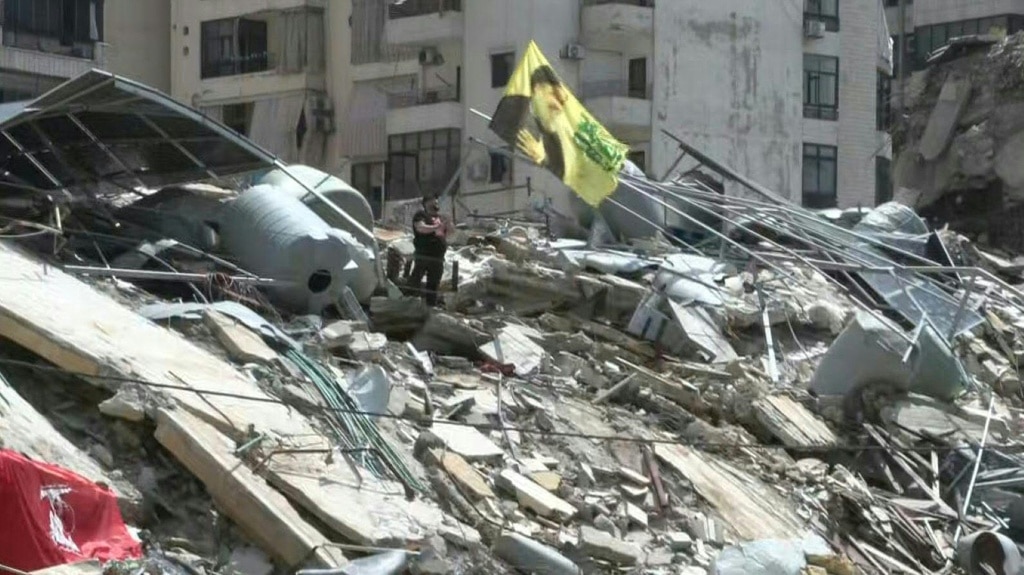
Hours after a fragile ceasefire took hold between Israel and Hezbollah, displaced residents of Beirut’s southern suburbs — a long-standing Hezbollah stronghold — began a tentative journey home on Friday, threading past crumpled building facades and mountains of concrete rubble to assess what remains of their lives.
Streaming back in private cars and on motorbikes, many carried only the few belongings they grabbed when they fled, their arrivals marked by equal measures of relief at the lull in fighting and heartbreak over the scale of destruction left by weeks of Israeli airstrikes that began on March 2.
Among the early returnees was 42-year-old Insaf Ezzedine, who fled the neighborhood of Hay al-Sellom and spent the duration of the conflict bouncing between makeshift street shelters after formal evacuation centers hit capacity. Speaking to Agence France-Presse on a Hezbollah-organized media tour of the area — where independent journalist movement remains restricted — Ezzedine described the overwhelming force of the bombardments that shook the district’s aging, densely packed residential blocks. As her young daughter clung to a plastic doll on the back of their motorbike, she voiced what many returning residents echoed: a desperate longing for lasting peace. “We hope the war will stop and we’ll all go back to our homes and live in peace,” she said. “We want to live with our kids in safety. Our own home was badly damaged, so we’re heading to my brother’s place now.”
The scope of damage is visible on every major thoroughfare in the southern suburbs. Piles of broken concrete, toppled solar panels and dented water tanks block roadside verges, while storefronts along main roads stand gutted, their metal doors blown off their hinges and shop windows shattered into shards. Occasional cars bearing Hezbollah’s yellow flags pass families walking and driving through the rubble-strewn streets, many loaded with whatever personal items they have been able to salvage.
Seventy-five-year-old Samia Lawand traveled back with her daughter and grandchildren only to confirm the worst: their home was too damaged to reoccupy. “We came to check on the house and pick up a few things, but we found the place was too damaged, so we’re leaving again,” Lawand said from the front passenger seat of her family’s car. Her 42-year-old daughter Mariam added that shattered glass and scattered belongings made the space unlivable. In one particularly striking scene on a major artery, a mid-rise building had its entire side torn away by a strike, leaving office furniture and even a complete dentist’s chair exposed to open air. Opposite a blackened, destroyed building just steps from a large portrait of Hezbollah leader Naim Qassem, the twisted wreckage of burned-out cars sits abandoned.
For 34-year-old Hassan Hanoud, who fled to central Beirut with his wife, children and mother to escape the bombardment, the ceasefire represented a chance to return to the only home his family has. “We left for the kids’ sake,” Hanoud explained, a young child resting in his lap as a young daughter behind him held a worn plush toy. “The last time we went back, all the doors and windows were broken, but now the kids just want to come home.”
In the Tahouitet al-Ghadir neighborhood, the first signs of slow recovery are already emerging. Shopkeepers have begun sweeping away debris to reopen their storefronts, and small groups of residents have begun to gather. Long-separated relatives hugged and wept when reunited for the first time since the escalation of hostilities.
Sixty-five-year-old Mustafa, who owns a local garage and spent the war moving between makeshift beachfront tents near the Beirut coast, was one of the first to return, arriving just minutes after the ceasefire went into effect at midnight. “There’s no better feeling than coming back to your area and your people,” he said.
But for many, the fragile truce comes at a devastating cost, bringing a complex mix of fear and cautious hope. Seventy-six-year-old retired soldier Ezzedine Shahrour, who fled the southern Lebanese town of Kfar Hammam and now has one son serving in the Lebanese army and another in security forces, has been begging his children to take him home, even as they warn the security situation remains unstable. “There’s fear and hope” after the ceasefire, he acknowledged.
Seventy-three-year-old Jaafar Ali, who fled the southern Lebanese city of Tyre with his family to shelter in Beirut, came to southern Beirut to check on the home of his relatives. He recalled fleeing so abruptly that the family left in their nightclothes, with no time to grab belongings. “We don’t know how we got out, and we don’t know what’s happened to the house,” he said. While he is relieved the fighting has paused, the loss has been overwhelming. “We’re happy about the ceasefire, but we’ve paid a high price. Our homes were badly damaged. We’ve lost a lot… I feel like crying. Thank God we’re still alive, but what about all the people who died under the rubble?”