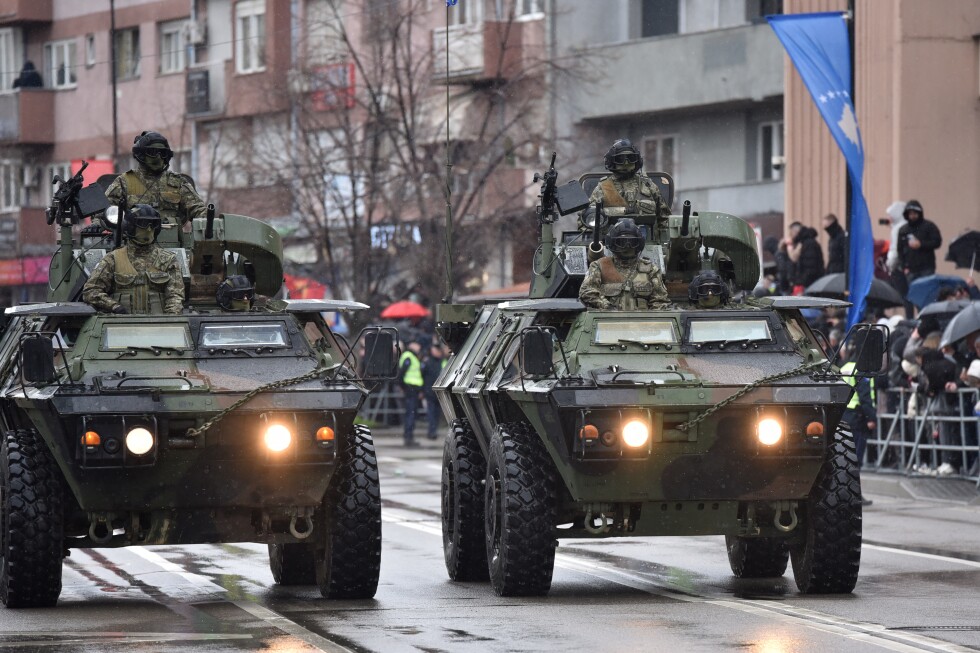
PRISTINA, Kosovo — The small Balkan country of Kosovo is set to become the latest contributor to a new U.S.-backed international stabilization mission in Gaza, a step national leaders frame as a historic turning point: after relying on NATO-led peacekeeping for its own security for nearly 25 years, Kosovo is now stepping forward to provide security to a conflict zone abroad.
Kosovo’s parliament is scheduled to vote Friday to formally approve the government’s earlier decision to deploy a contingent of several dozen security personnel to the International Stabilization Force (ISF), a multinational mission established following last year’s ceasefire between Israel and Hamas. The force, which will support peacekeeping and post-conflict reconstruction in Gaza under the Trump administration’s Board of Peace initiative, counts Kosovo among its participating members, alongside other nations including Indonesia, Albania, and Kazakhstan, which have already pledged contributions.
For Kosovo, the deployment carries far more symbolic weight than its small troop size suggests. The country has viewed the contribution as tangible proof of its progress and growing international standing since it declared independence from Serbia in 2008 — a sovereignty declaration that Belgrade still refuses to recognize.
The modern context of Kosovo’s security journey traces back to the 1998-1999 conflict between Serbian forces and Kosovo separatist fighters. When Belgrade launched a brutal crackdown on separatist movements, NATO launched a military intervention in 1999 that ousted Serbian troops from Kosovo territory, clearing the way for the deployment of the alliance’s KFOR peacekeeping mission. Ever since, NATO member states have shouldered the responsibility of maintaining Kosovo’s security, a reality that has shaped the country’s perspective on international peacebuilding.
“Our country has been a security consumer, meaning NATO countries have contributed to the security of the Republic of Kosovo,” Defense Minister Ejup Maqedonci told the Associated Press in an interview. “Today we are entering a phase where we are becoming a provider, or exporter, of security.”
Maqedonci detailed that the Kosovo contingent will include personnel from the country’s demining units along with other specialist officers. Once deployed, the troops will carry out a range of duties aligned with the ISF mandate: delivering humanitarian aid to civilian populations, providing local security support, and other tasks as assigned by mission leadership. The minister added that preparations for deployment are in their final stages, with a U.S. diplomatic representative assisting with critical logistical arrangements, including troop vaccinations, visa processing, and other administrative requirements.
Currently, Kosovo’s domestic security force numbers approximately 4,000 personnel. The force is currently undergoing training and restructuring to evolve into a small, professional military aligned with NATO integration goals.
Public reaction to the deployment decision has been largely supportive among Kosovar citizens. Milot Hoxha, a 43-year-old musician from Pristina, voiced strong backing for the mission, noting that Kosovo’s own post-conflict experience gives the country unique perspective on the value of international support. “We ourselves have gone through such a transition and every small help for us has been very significant,” Hoxha said. “I believe it will be the same for them, that any kind of help will be positive. I strongly support this decision.”
Despite the milestone for Kosovo’s international engagement, cross-border tensions with Serbia remain unresolved. Friction between Belgrade and Pristina has simmered constantly since the 1999 war, with occasional outbreaks of violent confrontation. The European Union has led long-running mediation efforts to normalize relations between the two sides, but those negotiations have stalled in recent months.
Global recognition of Kosovo’s independence remains split: the United States and a majority of European Union member states recognize Kosovo as a sovereign state, while Russia and China continue to back Serbia’s territorial claim to the region.